


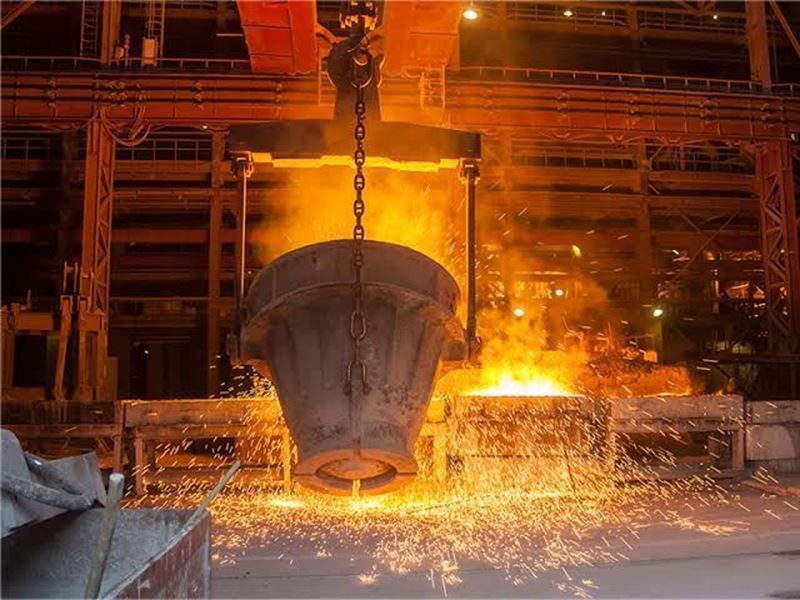
Germany's crude steel production recorded a notable recovery in the first half of 2026 compared with the same period last year. However, the German Steel Federation (WV Stahl) warned that the increase in output should not be interpreted as a sign of a sustainable recovery for the industry. The federation emphasized that weak steel demand, strong import pressure, and high energy costs continue to weigh on the sector.
Germany's crude steel production reached 18.6 million tonnes in the first six months of 2026, up approximately 9% year on year. However, the federation noted that full-year output is expected to reach around 37 million tonnes, remaining below the 40 million tonnes considered necessary to achieve economically sustainable capacity utilization.
"The increase in production does not indicate a genuine recovery"
Kerstin Maria Rippel, Managing Director of the German Steel Federation, stated that the rise in production figures should not be misleading and stressed that a real recovery will only be possible once steel demand starts to improve again.
"Production figures are increasing, but a genuine recovery will only occur when steel demand returns. The increase in output does not mean that steel companies have overcome their current difficulties. This rise is largely the result of a technical rebound and factors such as inventory replenishment. What is concerning is that demand from our most important customer industries remains very weak," Rippel said.
According to the federation, steel demand in Germany continues to remain at exceptionally low levels. The construction, machinery and plant engineering, and automotive industries—the sector's main customer groups—showed only limited signs of recovery during the first half of the year.
New EU trade measures seen as critical for the sector
The German Steel Federation stated that, in addition to weak demand, import pressure in the EU steel market remained high during the first half of 2026.
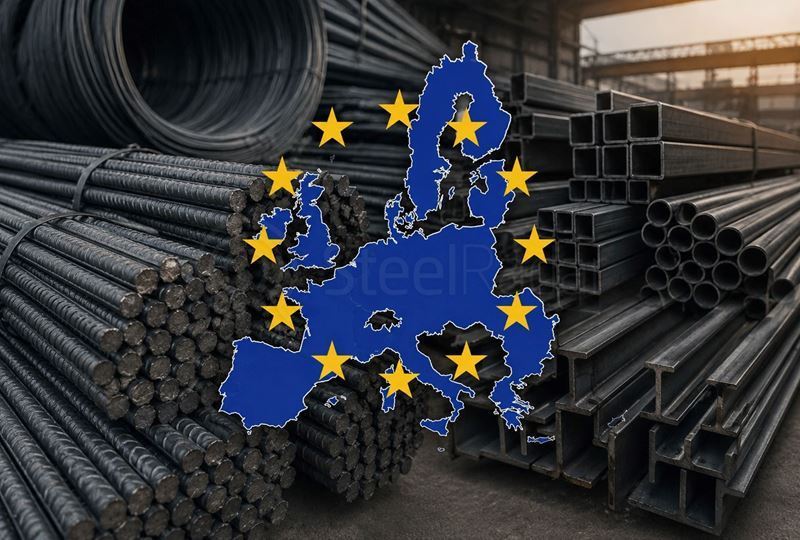
For this reason, the federation underlined the importance of the new EU steel trade defense instrument that entered into force on July 1. Under the new system, country- and product-specific tariff-rate quotas are applied, while imports exceeding the quotas are subject to an additional 50% duty.
"The trade defense instrument is indispensable if Germany and Europe are to maintain their position as steel production centers. When demand recovers, it will help ensure that the benefits are reflected in the capacity utilization rates of steel producers in Germany and other EU countries," Rippel commented.
Infrastructure investments and public procurement highlighted
The federation stressed that trade measures alone would not be sufficient to secure a sustainable economic recovery and that investments capable of generating additional demand must be implemented without delay.
It stated that infrastructure investments and projects planned under the Special Fund for Climate Neutrality (SVIKG) should be translated into economic activity as quickly as possible. Such investments could simultaneously support economic growth, industrial production, and the climate transition in Germany and across Europe.
Rippel noted that public procurement would play a key role in this process and argued that public funds should not be directed solely toward the lowest-cost imported products.
"When billions of euros of taxpayers' money are being spent, attention should not be focused exclusively on the cheapest suppliers in the Far East. Brussels and Berlin should adopt a procurement approach that takes into account sustainability, security of supply, and industrial value creation in Europe, in addition to price," she said.
The federation added that public infrastructure projects could create a lead market for low-emission steel products and emphasized that the introduction of a binding "Made in EU" criterion would be crucial in this regard.
Energy costs continue to challenge competitiveness
The German Steel Federation also stated that, alongside measures to stimulate demand, cost-related policies aimed at preserving industrial competitiveness must be implemented.
Rippel stressed that economic stimulus measures alone would not be enough, pointing out that high energy prices continue to seriously undermine the international competitiveness of the German steel industry.
The federation called for a reliable electricity price of €50/MWh for the sector, including grid charges, taxes, and other statutory levies. It also urged policymakers to maintain grid fee subsidies, reduce electricity taxes, and preserve and further strengthen support mechanisms for industrial power consumption.
According to the data, Germany's crude steel production in June increased by 9.5% year on year to 2.934 million tonnes. During the same period, basic oxygen furnace (BOF) crude steel production rose by 9.6% to 1.906 million tonnes, while electric arc furnace (EAF) crude steel production increased by 9.2% to 1.028 million tonnes.
In the January–June period, BOF crude steel production climbed by 11.5% to 12.759 million tonnes, while EAF crude steel production rose by 3.5% to 5.870 million tonnes.
Pig iron production increased by 6.3% year on year in June to 1.733 million tonnes, while output in the first six months of the year rose by 9.3% to 11.625 million tonnes. Production of hot-rolled steel products increased by 8% in June to 2.693 million tonnes and by 5.4% in the January–June period to 16.108 million tonnes.



Comments
No comment yet.