


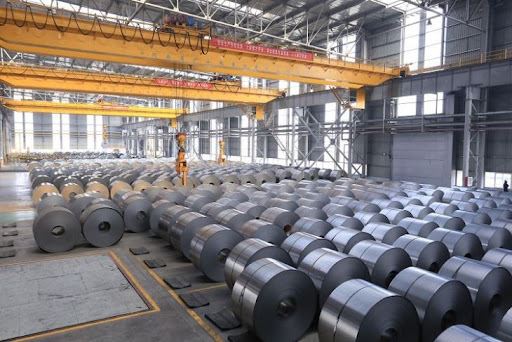
The benchmark prices for HRC remained relatively stable, ranging between ₹54,000 to ₹54,500 per tonne. Some mills even offered discounts of up to ₹2,000 per tonne to stimulate sales.
During early February trading, HRC prices were recorded around ₹53,900 per tonne, showing either a slight decrease or remaining flat compared to January prices. However, by the second week of the month, prices stabilized within the ₹54,000–54,500 per tonne range, indicating a marginal increase of 0-1% over January figures. Nonetheless, these prices remained lower than those observed in December, when they hovered around ₹55,000 per tonne before settling at ₹54,900 per tonne in January.
Cold rolled coil (CRC) prices remained steady at ₹62,000 per tonne in February, similar to January rates, with only a slight decline of ₹300 per tonne compared to December. Rebar prices, commonly used in construction, remained unchanged at ₹49,250 per tonne from January but saw a 1% decline compared to December rates of ₹49,500 per tonne.
Market sources reported that major players like SAIL announced price hikes for flat steel and HRCs in February, with prices ranging between ₹55,500 to ₹56,000 per tonne. However, these mills also offered rebates ranging from ₹2,000 to ₹2,500 per tonne.
The price hikes were attributed to increased raw material costs globally, with slight upticks observed in steel prices in China, Vietnam, and Europe. However, market sentiments remained subdued, largely due to high domestic HRC prices, leading to cautious buying behavior and sustained import activity, thereby offering cheaper alternatives.
In terms of exports, Indian HRC prices remained range-bound, with prices for West Asia around $600-635 per tonne and $715-720 per tonne for Europe, indicating competitive pricing strategies in international markets.
Steel Ministry data revealed a 13% year-on-year increase in crude steel production from April to January, reaching 113.85 million tonnes. Consumption also saw a significant uptick of nearly 15% during the same period, standing at 112.42 million tonnes. Despite this growth, India remained a net importer of steel, with imports exceeding exports by 1.3 million tonnes during the period.




Comments
No comment yet.