


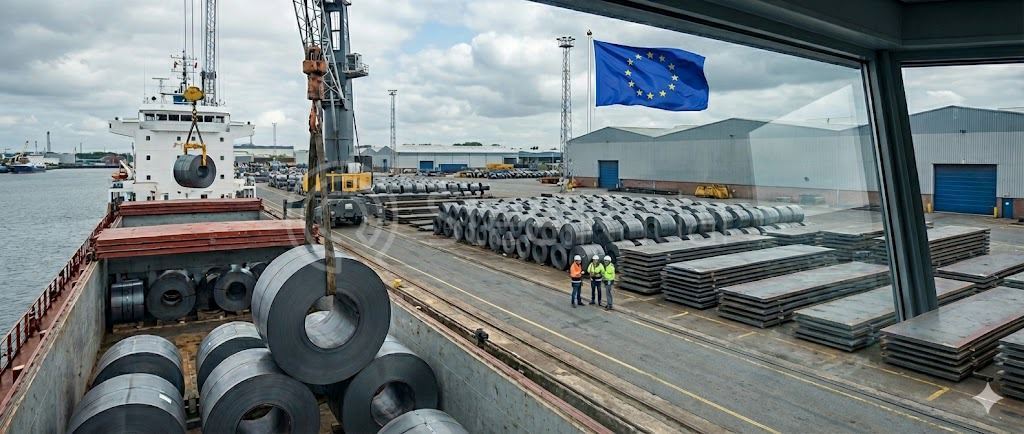
HRC markets in Northern and Southern Europe show a similar trend. In Germany and Italy, July delivery HRC offers are reported at around €700/t EXW, while workable levels are in the €680–695/t range. In Germany and Italy, HRC has risen to €690/t EXW, but the monthly downward trend continues. In Italy, offers remain at €700/t, while transactions are taking place in the €670–680/t EXW range.
HRC prices in Spain are at €730–740/t EXW, with CPT levels around €750/t, although consumers are unwilling to accept new price increases. Overall, demand remains weak.
The main factor limiting price declines in the European market continues to be the cost side. Energy costs, rising freight expenses, and geopolitical risks in the Middle East keep production costs elevated. In addition, the European Union’s new trade protection measures to be implemented in July and the CBAM regulation are also among the key agenda items in the market.
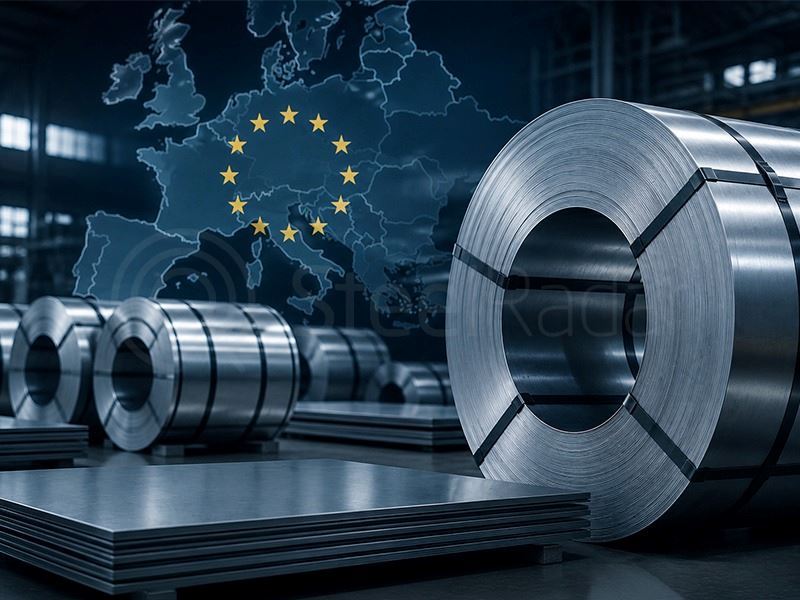
In this context, the European Parliament has approved new trade measures aimed at protecting the EU steel market against global oversupply. Under the regulation expected to enter into force on 1 July 2026, the duty-free steel import quota will be limited to 18.3 million tonnes annually, approximately 47% lower than 2024 quotas. In case of quota exceedance, the tariff rate will increase from 25% to 50%. The new regulation also strengthens the “melted and poured rule,” making it mandatory to determine the true origin of steel based on where it was first produced.
The low level of interest in imported HRC in Italy and Germany is mainly due to high freight costs, delivery risks, and trade protection measures. Although Turkey-origin HRC offers to Italy are reported at around €600/t CFR, when anti-dumping and other costs are included, they rise to the €660–690/t range. Asia-origin HRC offers are at €640–660/t DDP levels, while Algerian offers are reported at €670/t CFR.
Regarding the Italy slab market, recent assessments indicate that Chinese-origin offers are positioned slightly below $600/ton CFR, while Baosteel-related supply is trading at premium levels due to CBAM compliance. It is assessed that FHS has not yet entered active sales, is waiting for late May–early June for August shipment sales, and available volumes may remain limited. Low-priced HRC flows from Indonesia are putting pressure on the market, while Taiwan’s Dragon Steel is reportedly not actively offering at present. Overall, S235JR/A36 slab import offers to Italy from China, Vietnam, Taiwan, Indonesia, and South Korea are reported in the $600–620/ton CFR range.
Imported long product offers continue to remain competitive in the European market. Turkey-origin rebar offers are at €550–565/t CFR, while wire rod offers are at €560–570/t CFR. Egyptian offers are reported at €560–565/t for rebar and €565–575/t for wire rod, while Algerian offers remain at lower levels of €540–555/t for rebar. Ukraine’s offers to the Baltic region are around €660/t CPT for rebar and €680–690/t CPT for wire rod.
The Balkan steel market also continues to be affected by these developments in Europe. Since the region is largely integrated into the European market, CBAM, quota systems, and rising logistics costs have become determining factors in the Balkan market. In particular, countries such as Albania and Kosovo continue to rely heavily on Turkey for rebar supply. In Kosovo, imported rebar from Turkey is subject to additional taxes of around $50–90/t. Serbia, on the other hand, follows a more domestic-market-oriented structure, while many producers in the region struggle to remain competitive in exports due to high logistics costs.




Comments
No comment yet.