


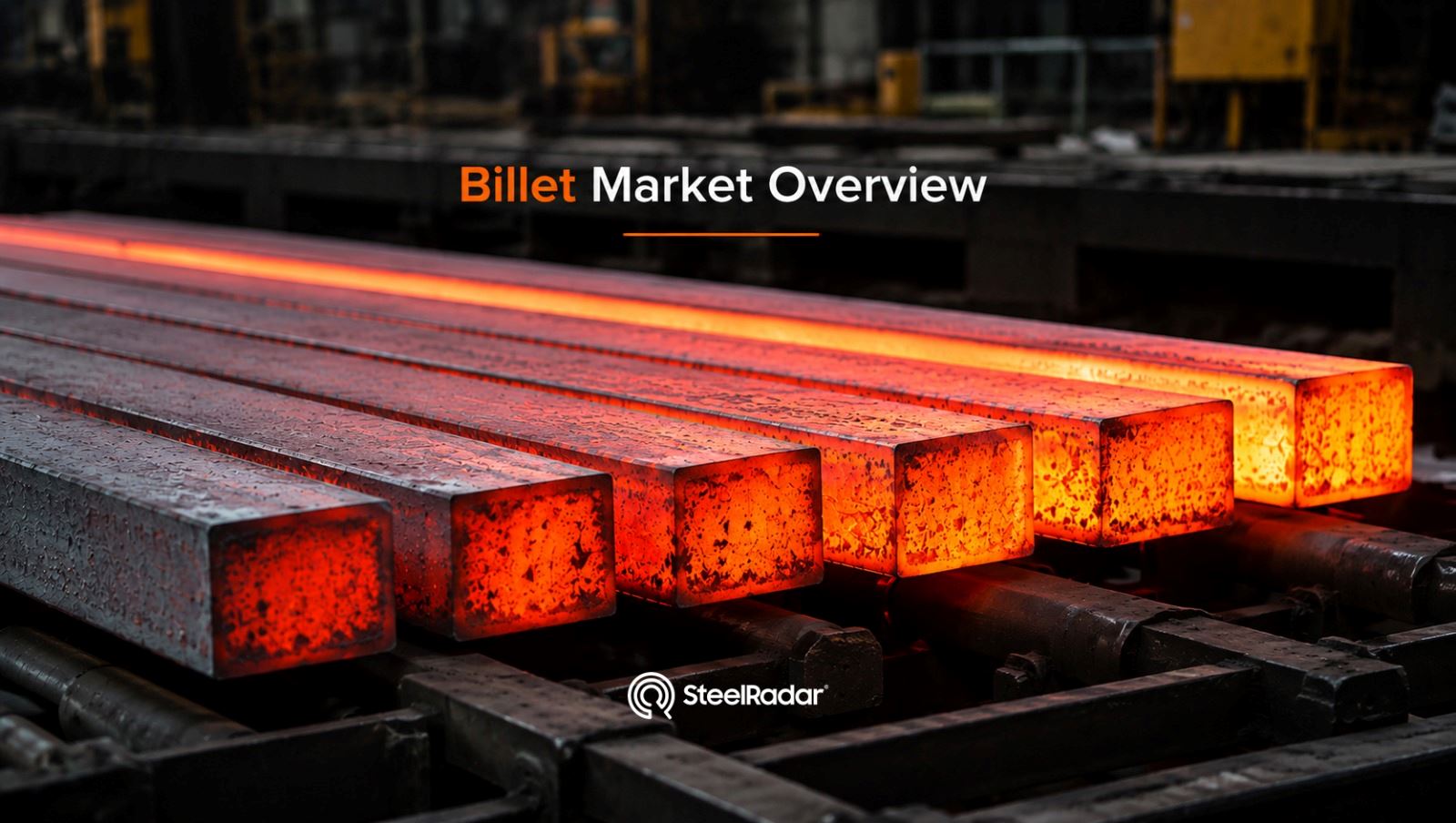
In the Middle East, Iranian billet was offered to Jordanian mills at approximately $480/t DDP, providing buyers with an attractive regional supply option. Russian suppliers also remained active in the export market, with billet offers for late August-September shipment reported at $473-475/t FOB Black Sea. Material destined for Türkiye was offered at $490-495/t CFR, where competition among foreign suppliers continued to keep purchasing decisions price-sensitive.
Asian billet exports softened further. Chinese billet export prices declined by $3/t on July 13, with offers from Jiangyin port settling at $456-459/t FOB. Market participants noted that Chinese export quotations remain above competing origins, making them less attractive in key overseas markets. At the same time, weakening prices in several importing countries encouraged buyers to negotiate more aggressively, resulting in limited trading activity.
Indonesia also adjusted its export strategy to remain competitive. Dexin reduced its billet export offers by $5/t, bringing prices down to $460/t FOB. The price cut aligns with the broader trend of exporters seeking to secure orders amid subdued international demand and increasing competition across Asian markets.
The slab market also showed signs of easing, particularly in Europe. Offers for Asian-origin S235JR/A36 slab to Italy were reported at $570-580/t CFR, compared with $590-610/t CFR two weeks earlier. The decline suggests that suppliers have become more flexible as European buyers continue to purchase cautiously and competitive pressure from multiple exporting regions intensifies.
Meanwhile, Brazilian slab exporters kept September shipment offers unchanged at $575-595/t FOB. Demand from major overseas destinations remained healthy, with Brazilian material continuing to benefit from its competitive carbon footprint, particularly in the European market. However, strong competition from Asian suppliers limited sellers' ability to increase prices. Although exporters indicated that available September production has largely been allocated and additional volumes are limited, the current competitive environment is expected to keep export offers broadly stable in the near term.




Comments
No comment yet.