


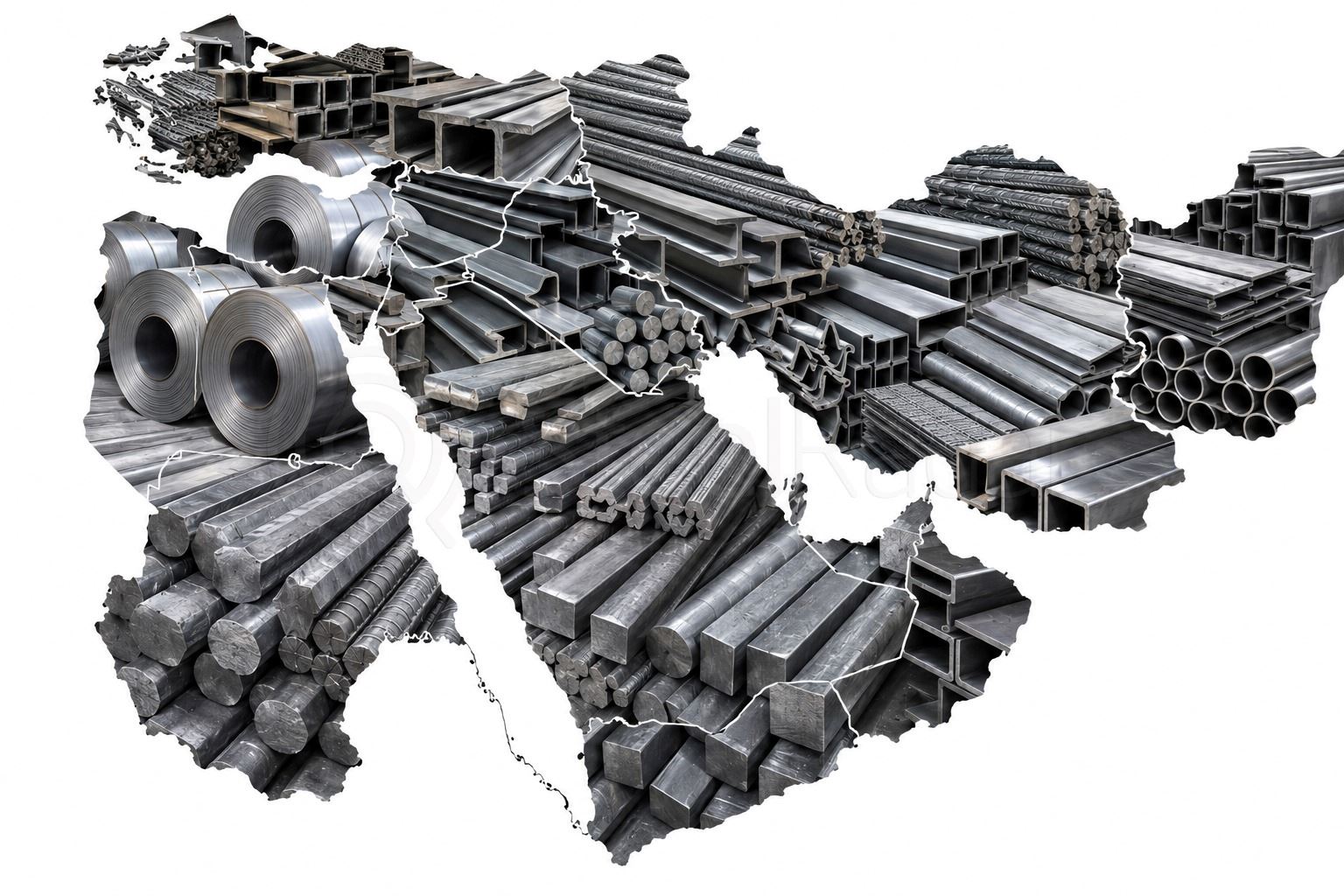
In the steel market during the 22–25 June 2026 period, prices across the African and Middle Eastern markets continued to show a flat-to-weak trend, with competitive offers from Chinese suppliers remaining the key factor shaping regional pricing. Chinese origin material, particularly in the rebar, hot-rolled coil (HRC), and billet segments, continues to exert downward pressure, influencing both domestic producers' and importers' pricing strategies.
In the African market, Chinese rebar offers continue to serve as the primary price benchmark. In Senegal, rebar prices are currently around $857/mt CFR. In South Africa, certified domestic rebar prices are holding at approximately $750/mt, while lower-grade material is reportedly available in the $650-700/mt range. This price disparity is increasing competitive pressure on local producers amid subdued demand.
A similar picture is emerging in East Africa. In Kenya, HRC prices at the Port of Mombasa are trading at around $605/mt CFR, while billet prices stand at approximately $540/mt CFR. In Djibouti, billet prices are estimated at around $545/mt CFR. Strong import flows into the region continue to limit local producers' ability to implement price increases.
In North Africa, Egypt's regional export activity remains noteworthy. Egyptian mills are supplying rebar to Lebanon at approximately $600/mt CFR, while offers to Libya are reported at around $570/mt CFR. Competitive pricing in the Libyan market is influencing the pricing strategies of other regional suppliers and highlights Egypt's continued strength in nearby export destinations.
South Africa's pipe market also remains under pressure, with prices staying relatively low. Domestic prices for 193x6 mm round pipe are around $300/mt, while S355 grade 3 mm pipe is priced at approximately $265/mt. However, rising costs such as energy, logistics, and fuel surcharges continue to put upward pressure on final selling prices.
In the Middle East, market conditions vary from country to country. In Jordan, domestic rebar prices are around $725/mt, while EXW offers have fallen to approximately $605/mt. Weak construction activity and high inventory levels continue to weigh on prices.
In the Gulf region, rebar prices in Kuwait range between $665-672/mt EXW, depending on the producer, while domestic rebar prices in the United Arab Emirates are holding at around $796/mt.
In Iraq, price differences among producers have become increasingly evident. According to market sources, Darin Steel is offering rebar at around $540/mt, significantly below the prices of major producers such as Van Steel, FF Steel, and Mass Steel. Van Steel's rebar is quoted at approximately $580/mt, FF Steel at $575/mt, and Mass Steel at $625/mt, while other local producers are offering material in the $525-545/mt range.
Officials at Darin Steel stated that the company has adopted a more aggressive pricing strategy in response to intense market competition, keeping prices below those of its rivals in an effort to increase sales volumes. Weak construction activity and abundant regional supply continue to push producers toward price-based competition, with low-priced offers remaining the dominant factor influencing the market.
This situation indicates that Iraq's long steel market remains firmly a buyers' market, with producers continuing to sacrifice margins in order to secure orders.
Meanwhile, Iran's export market remains relatively stable. Iranian rebar export prices are assessed at $430-438/mt FOB, wire rod at $510-520/mt FOB, and billet at $410-415/mt FOB Bandar Abbas. Iranian slab is trading at around $450/mt FOB, while direct reduced iron (DRI) is priced at approximately $230/mt FOB, and iron ore pellets are assessed in the $95-110/mt FOB range.
Overall, both African and Middle Eastern steel markets continue to face downward price pressure due to weaker-than-expected demand and competitively priced Chinese material. In Africa, abundant Chinese long steel and semi-finished steel supplies, together with Egypt's active regional export strategy, continue to intensify price competition, putting additional pressure on the margins of domestic producers in import-dependent markets. Market participants generally do not expect a significant recovery in demand in the short term and believe that regional prices will continue to be largely driven by international offer levels.






Comments
No comment yet.