


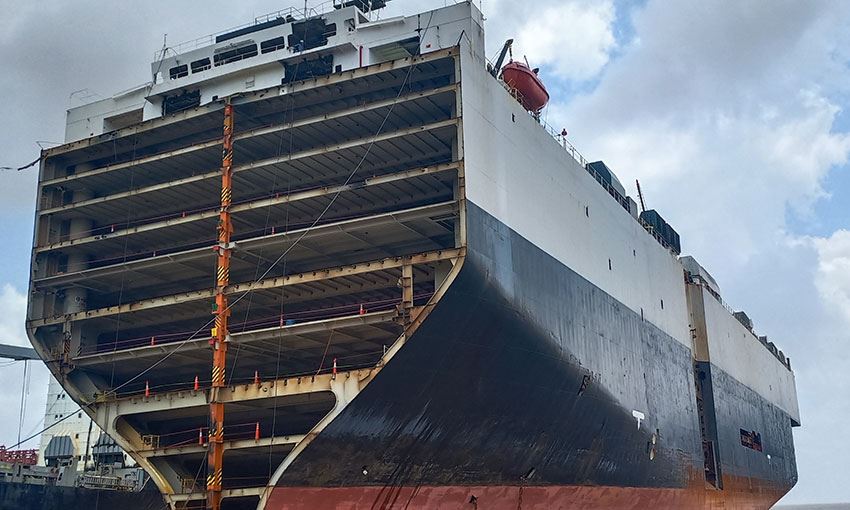
Faced with multiple challenges, the shipbreaking market is facing uncertainty due to rising geopolitical tensions and unexpected political developments. Recent news in the Middle East has affected markets in other regions.
The political and economic situation in Bangladesh has had some impact on the Far East region. Steel prices fell in India and the currencies of countries important for shipbreaking depreciated against the USD.
The lack of new ships coming to Pakistan, the world's largest shipbreaking destination, is causing concern in the sector. The shipbreaking market, already on shaky ground, faces even greater challenges as global instability continues to disrupt markets.
Indian and Bangladeshi shipyards, which have recently reported the arrival of major ships, are grappling with falling steel plate prices. Following the general elections in India, local steel prices fell by around USD 60 per ton and prices have continued to fall this week. While bids for dry bulk units at Alang have fallen below USD 500/LDT (Light Displacement Tonnage), container prices are hovering just above this threshold. This downward trend has been ongoing for more than six weeks and is casting a long shadow over India’s shipbreaking market.
The launch of four HKC (Hong Kong Convention)-compliant yards in Bangladesh could shift existing HKC units away from Alang. This development comes at a time when many Indian yards are idle and the challenges facing the sector are increasing.
Despite this turmoil, signs of potential stability are emerging in Bangladesh. While it is hoped that the end of the protests in July will lead to increased stability and renewed interest in shipbreaking, concerns of a USD shortage in Bangladesh remain a significant risk.
Pakistan, meanwhile, continues to be a critical player in the market, outperforming regional rivals. However, its passive approach to capitalizing on its advantageous position creates uncertainty about its long-term market impact. Meanwhile, Türkiye appears to be repositioning itself, with prices falling by USD 15 per ton amid prolonged market silence.
In conclusion, the global shipbreaking market is moving in a direction where geopolitical tensions, economic instability, and political turmoil are contributing to a highly uncertain market environment. Stability is urgently needed to restore confidence and enable the sector to recover and develop. Until such stability is achieved, shipbreaking markets are likely to remain volatile with volatile prices and limited growth opportunities.







Comments
No comment yet.