



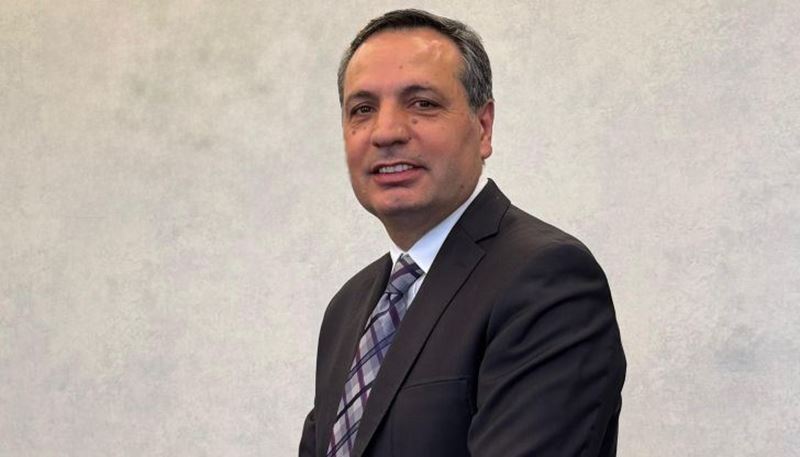
Dalbeler highlighted the importance of international cooperation in overcoming the challenges facing the sector, stating that Steel Networking Summits 2026, to be held in Istanbul on October 25–27, 2026, will be an important platform bringing together the global steel industry.
Türkiye rises to first place in Europe in steel production
Dalbeler noted that Türkiye produced 38.1 million tonnes of steel last year, surpassing Germany to rank first in Europe and seventh globally.
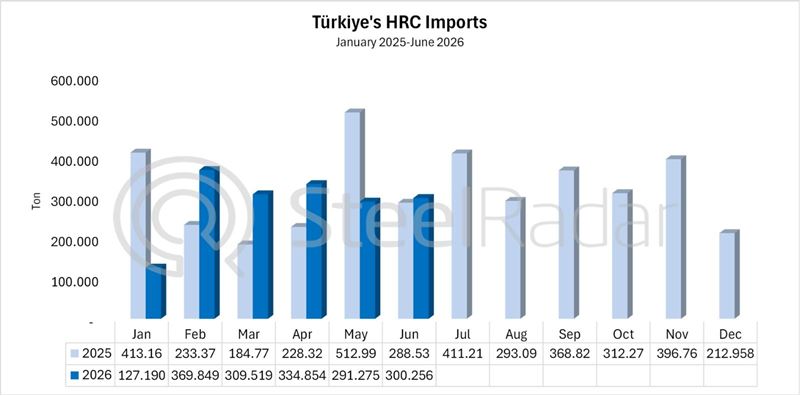
However, he said steel imports have increasingly become a major issue in foreign trade. Considering certain product groups, Türkiye exported approximately 20 million tonnes of steel last year, while total imports stood at around 23 million tonnes.
“We have actually been running a trade deficit for some time. When we look at the six-month figures, we see that imports and exports are more or less balanced,” Dalbeler said.
“The issue is not free trade, but equal competition”
Pointing out that the share of imports in Türkiye’s steel consumption is considerably higher than in many other countries, Dalbeler stressed that the sector is not against imports; rather, the key issue is establishing equal competitive conditions.
He said imports account for around 10–20% of total consumption in many countries, whereas this ratio is approaching 50% in Türkiye. He noted that products from countries benefiting from government support and different cost advantages are putting pressure on domestic producers.
“We have no problem with trade being free. The issue is that, when we compete, the other side has advantages that we do not have, allowing them to offer whatever price they want to the market without having to worry about costs,” Dalbeler said.
Low-priced steel from China increases competitive pressure
Dalbeler also highlighted the competitive pressure created by low-priced products from China. He said that following import quotas in Europe, steel prices had risen from around USD 600 to USD 800–850, while prices in the US had reached approximately USD 1,200 due to the 50% tariff.
By contrast, he noted that China can still offer steel at around USD 550. “When you have a product that costs you USD 650 and a Chinese producer comes in offering it at USD 550, you have no chance of surviving,” he said.
“We cannot increase the competitiveness of our industry by importing steel”
Dalbeler said criticism that Türkiye had needed imports because it lacked sufficient production capacity had changed over time, as major investments had significantly increased the country’s production capacity.
Emphasizing that steel is not merely a raw material but is strategically important for the continuity of industry, Dalbeler said: “The Chinese produce the same products that you produce using the material you source from there. We need to create a difference. The input cost of steel within that added value is minimal. But as long as you have the material available, you have a chance to keep the industry here alive. You cannot keep the mill running with water carried from elsewhere.”
He noted that competition from China in sectors ranging from automotive to white goods is bringing producers and users together around the same challenge. He added that supply chain security has become a strategic priority for countries following the pandemic and subsequent wars, increasing the importance of reliable production sources in nearby regions.
Global steel industry to meet in Istanbul
Dalbeler said they are making significant efforts to overcome the problems facing the steel sector and emphasized the importance of international cooperation in this process. He stated that Steel Networking Summits 2026, to be held in Istanbul on October 25–27, 2026, will be an important platform for the industry.
The event, organized at Swissôtel The Bosphorus with the cooperation and support of the Turkish Steel Exporters’ Association, will bring together more than 400 industry representatives, over 200 international participants and delegations from more than 80 countries.
The summit will feature more than 30 high-level speakers and address global steel markets, trade policies, protectionist measures, international competition, investment opportunities, the green transition and the future of the industry.
Dalbeler stated that with more than 30 hours of targeted networking programs, B2B meetings and buyer delegations, Steel Networking Summits 2026 is designed not merely as a conference but as a platform focused directly on commercial cooperation. “We aim to make Istanbul one of the most important meeting centers for global steel trade, not only regionally but globally,” he said.
Dalbeler added that Istanbul’s position at the crossroads of Europe, Asia, the Middle East and Africa could further strengthen its role in global steel trade through the event, while new commercial connections established at the summit could contribute to the international competitiveness of Türkiye’s steel industry.
“Steel is a strategic product; no country is giving up production”
Dalbeler pointed out that despite global overcapacity in steel, countries are not abandoning production, emphasizing that the main reason is the strategic nature of steel.
“Without steel, you become a weak, non-industrialized country with no prospect of developing your industry,” he said, adding that trade wars since 2018, the pandemic and supply chain disruptions have changed how countries view their steel industries.
He stated that countries now see protecting their domestic steel production as a strategic necessity and noted that Türkiye has an important advantage thanks to its strong production infrastructure. However, he stressed that maintaining this advantage requires sustainable competitiveness and that Türkiye must focus not only on production capacity but also on production costs.
Dalbeler identified rising costs as one of the sector’s most important recent challenges, noting that labor costs have increased significantly following developments in energy costs.
He said energy costs rose sharply following the war in Ukraine and that developments in Iran created another cost pressure, while increased hydropower generation provided some relief in electricity prices.
However, he noted that labor costs have increased approximately threefold in USD terms over the past five years. “Overall, labor costs account for between 15% and 20%. In the past, they were below 5%. Compared with Europe and the US, our labor costs are still relatively low. But they are no longer our competitors. We are competing with Indians, Egyptians, Pakistanis, Vietnamese, Indonesians and Chinese. As a result, we have started to become expensive. What we gain from energy costs, we lose in labor costs,” he said.
High costs also threaten investment in plant upgrades
Dalbeler stated that steel production is a capital-intensive industry involving demanding working conditions and emphasized that production facilities need continuous upgrades to remain competitive.
He noted that machinery operating with molten metal at temperatures of approximately 1,600°C undergoes significant wear and that plants require annual modernization investments. However, he said these investments may have to be postponed if the sector cannot generate sufficient profitability.
“When you cannot generate the money to spend, plants deteriorate and become outdated. As they age, they begin to lose their competitiveness. Abroad, companies implement every new technology every year, increase efficiency and reduce costs. We are becoming unable to do the same,” Dalbeler said.
Dalbeler noted that the need for modernization at long-established facilities such as Kardemir and Erdemir should be considered in terms of the sector’s overall competitiveness. He emphasized that keeping production infrastructure up to date is important not only for individual companies but also for the future of Türkiye’s industrial sector.



Comments
No comment yet.