


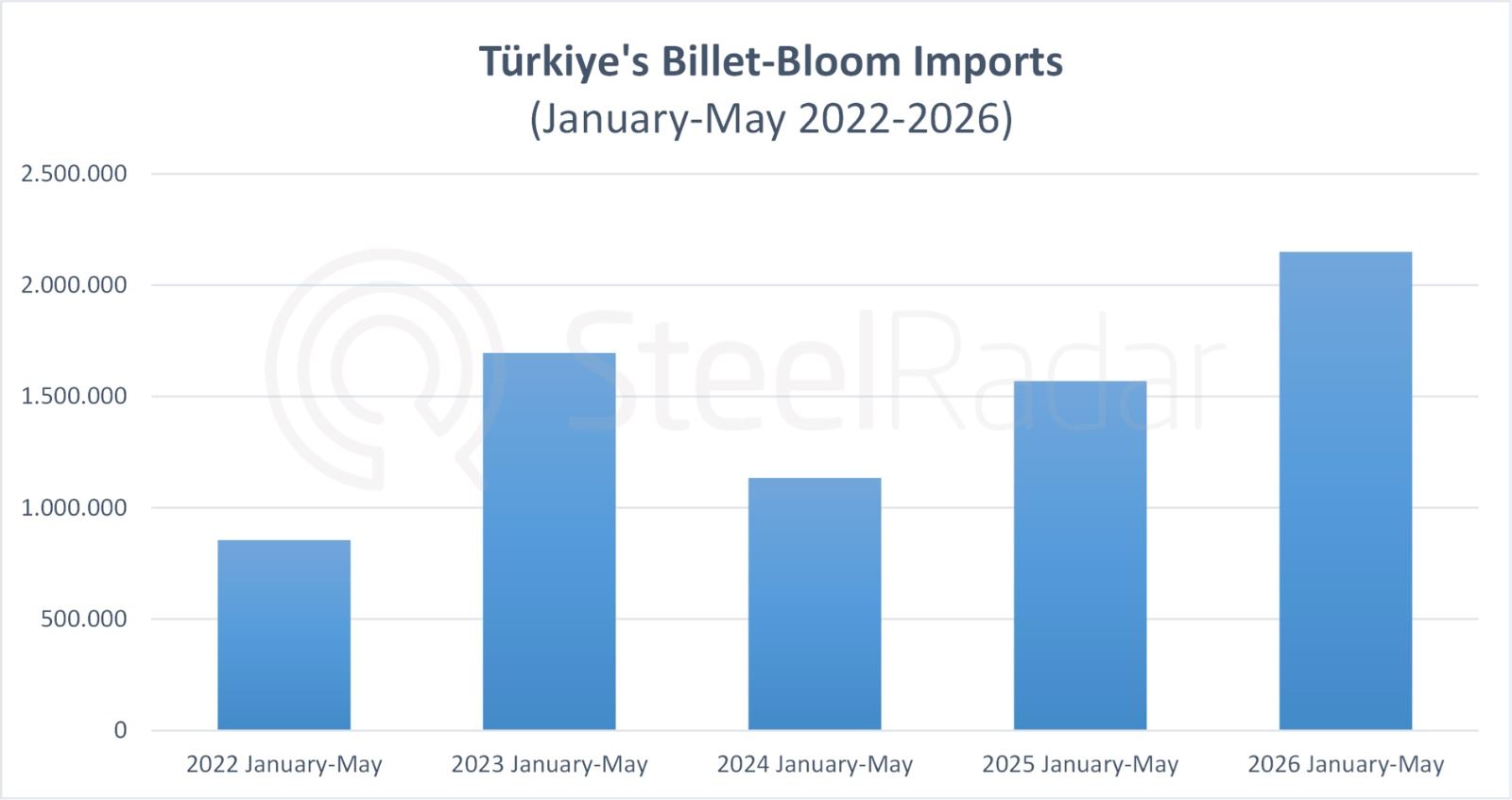
According to data compiled by SteelRadar based on figures released by the Turkish Statistical Institute, Turkey's billet and bloom imports increased by 36.95% year on year to 2,150,046 metric tons in the January-May period of 2026, up from 1,569,909 metric tons in the corresponding period of the previous year.
During the same period, billet and bloom imports totaled 1,569,909 metric tons in 2025, 1,134,724 metric tons in 2024, 1,695,970 metric tons in 2023 and 855,040 metric tons in 2022. As a result, imports in the first five months of 2026 reached their highest level for the 2022-2026 period under review.
Compared to the corresponding period of previous years, imports in the January-May period of 2026 rose by 89.5% from 2024 levels, by 26.8% from 2023 and by 151.5% from 2022.
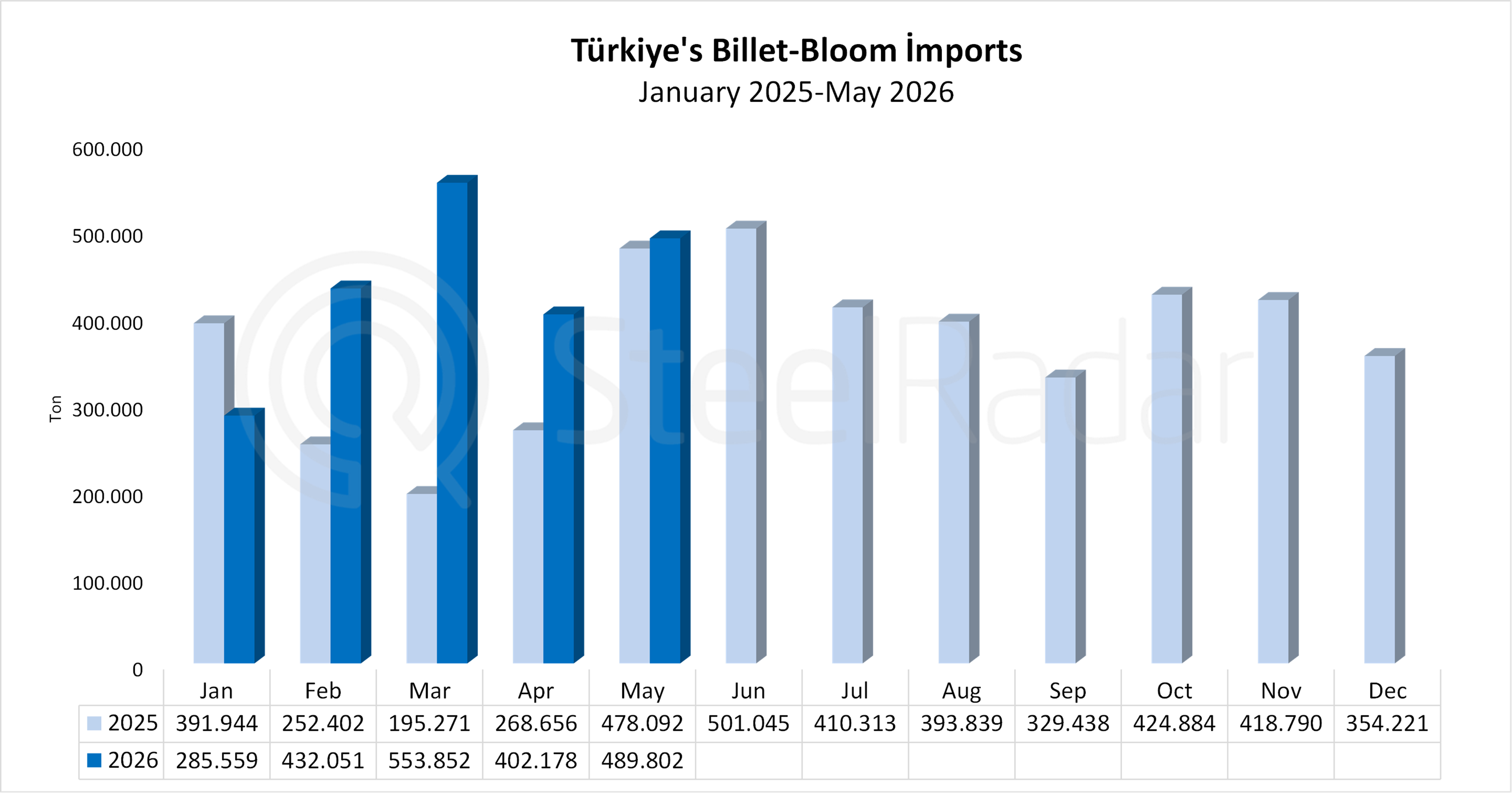 May imports increased by 2.5% year on year
Turkey's billet and bloom imports increased by 2.5% year on year in May 2026. Monthly imports rose to 489,802 metric tons in May, up from 477,874 metric tons recorded in the same month of the previous year.
On a monthly basis, imports increased by 21.8% in May compared with 402,211 metric tons recorded in April.
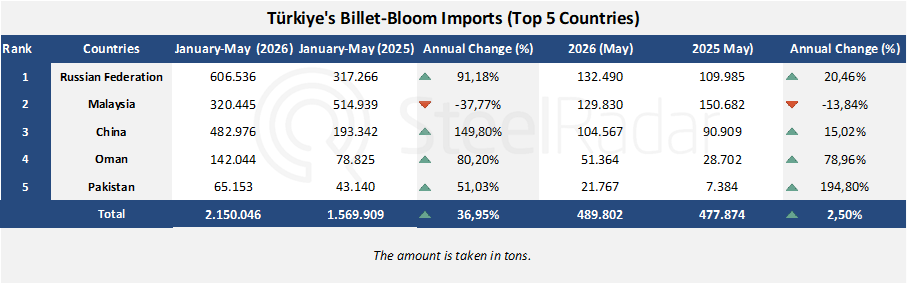
A breakdown of May imports by country shows that the Russian Federation ranked first with 132,490 metric tons. Malaysia followed with 129,830 metric tons, while China ranked third with 104,567 metric tons. Imports from Oman totaled 51,364 metric tons, while shipments from Pakistan amounted to 21,767 metric tons.
During the January-May period, the Russian Federation became Turkey's largest billet and bloom supplier, with total shipments of 606,536 metric tons. Imports from China amounted to 482,976 metric tons, followed by Malaysia with 320,445 metric tons, Oman with 142,044 metric tons and Pakistan with 65,153 metric tons.
 According to market sources, the increase in billet and bloom imports in 2026 was primarily driven by competitive prices offered by Russia and China in international markets. In addition, elevated scrap costs in Turkey weakened the cost advantage of electric arc furnace (EAF) production, while pressure on finished steel prices continued due to weak end-user demand in the construction and manufacturing sectors. Narrowing profit margins led producers to turn to lower-cost imported semi-finished products, supporting higher import volumes.





Comments
No comment yet.