


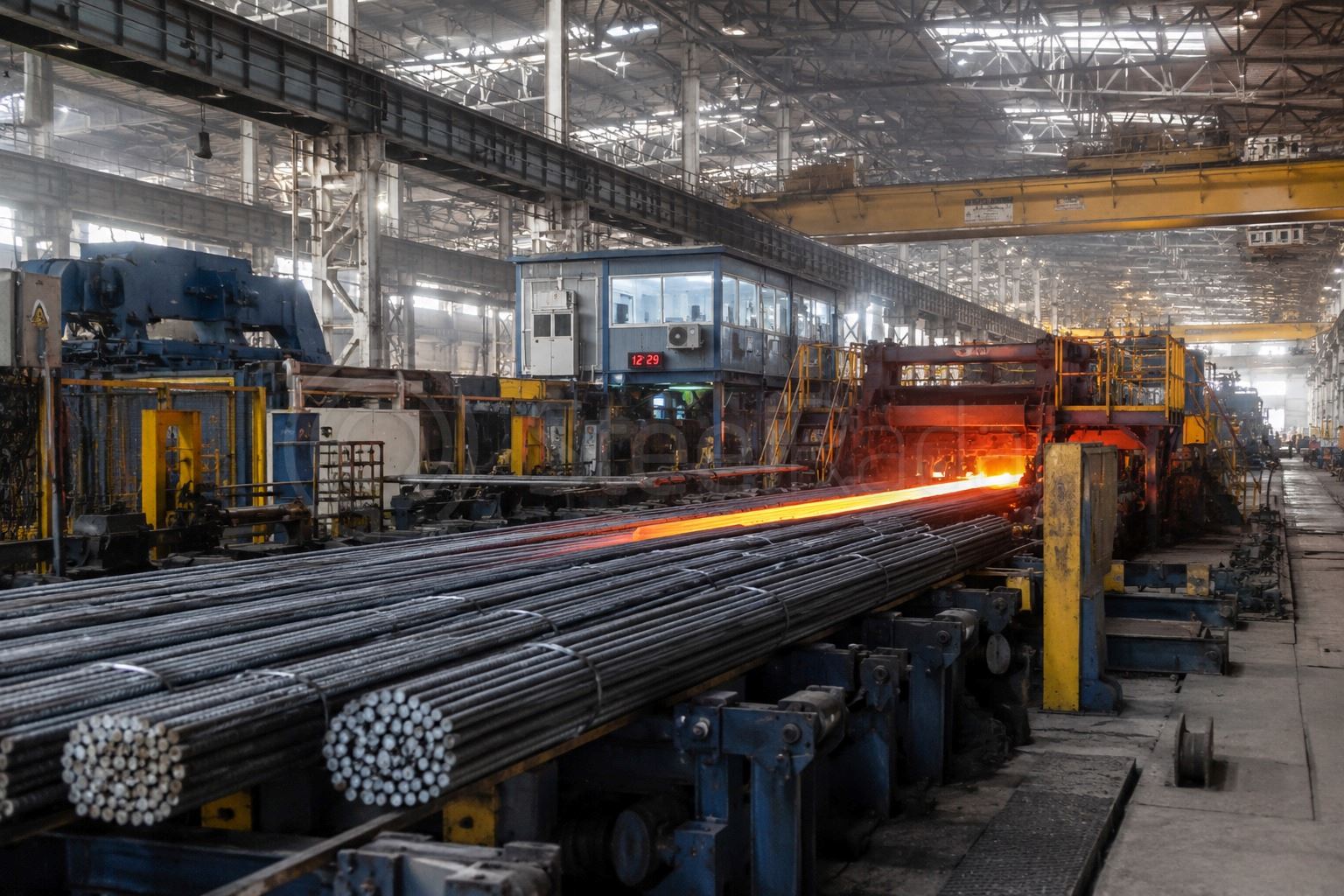
As Turkish long steel market enters the second half of June, the overall outlook remains unchanged. Transaction volumes in both rebar exports and the domestic market continue to stay at low levels, while no significant activity is observed in either local or imported billet segments. Cautious buyer behavior and differing price expectations across the market remain the main factors limiting trading activity.
On the rebar export side, producers continue to offer prices in the range of $595-610/ton FOB Turkiye, while workable levels are reported to be forming around $585-595/ton FOB. The $600/ton FOB target set by producers has not yet been widely accepted by buyers, and sales remain limited, particularly due to weak demand in key export markets.
Market participants note that the expected post-Eid al-Adha demand recovery has not materialized, while ongoing geopolitical tensions in the Middle East are pushing buyers toward short-term purchasing decisions. Concerns over energy costs, oil prices, and freight rates are causing many buyers to avoid taking long-term positions. This situation is leading to prolonged price negotiations and delayed purchasing decisions in export markets.
In the domestic market, prices continue to vary by region. In Izmir, levels around $580/ton stand out, while in Marmara prices are forming around $600/ton. In the Iskenderun region, some producers have pushed prices up to $585/ton.
The billet market also reflects a balanced yet weak outlook. Although Kardemir’s continued closure of sales is somewhat limiting spot supply, low demand is preventing any upward price pressure.
In the imported billet segment, the gap between seller and buyer expectations remains wide. Russian-origin billet offers are at around $510/ton CFR Turkiye, while buyers are targeting levels closer to $490/ton CFR, making new deals difficult. For Chinese-origin semi-finished products, offers in the $525-530/ton range are considered competitive, but there is still no strong buying appetite.
The scrap market remaining flat is also providing no new cost direction for long steel producers. As a result, producers are trying to maintain current price levels, while buyers continue a wait-and-see approach in anticipation of lower prices.
Looking ahead, the direction of the market will be shaped by the new trade quotas expected to come into effect in July, developments in the Middle East, and the trajectory of scrap prices. The current outlook suggests a gradual recovery in transaction volumes rather than prices in the short term, but a stronger upward trend in the market would require a more pronounced improvement in end-user demand.






Comments
No comment yet.