


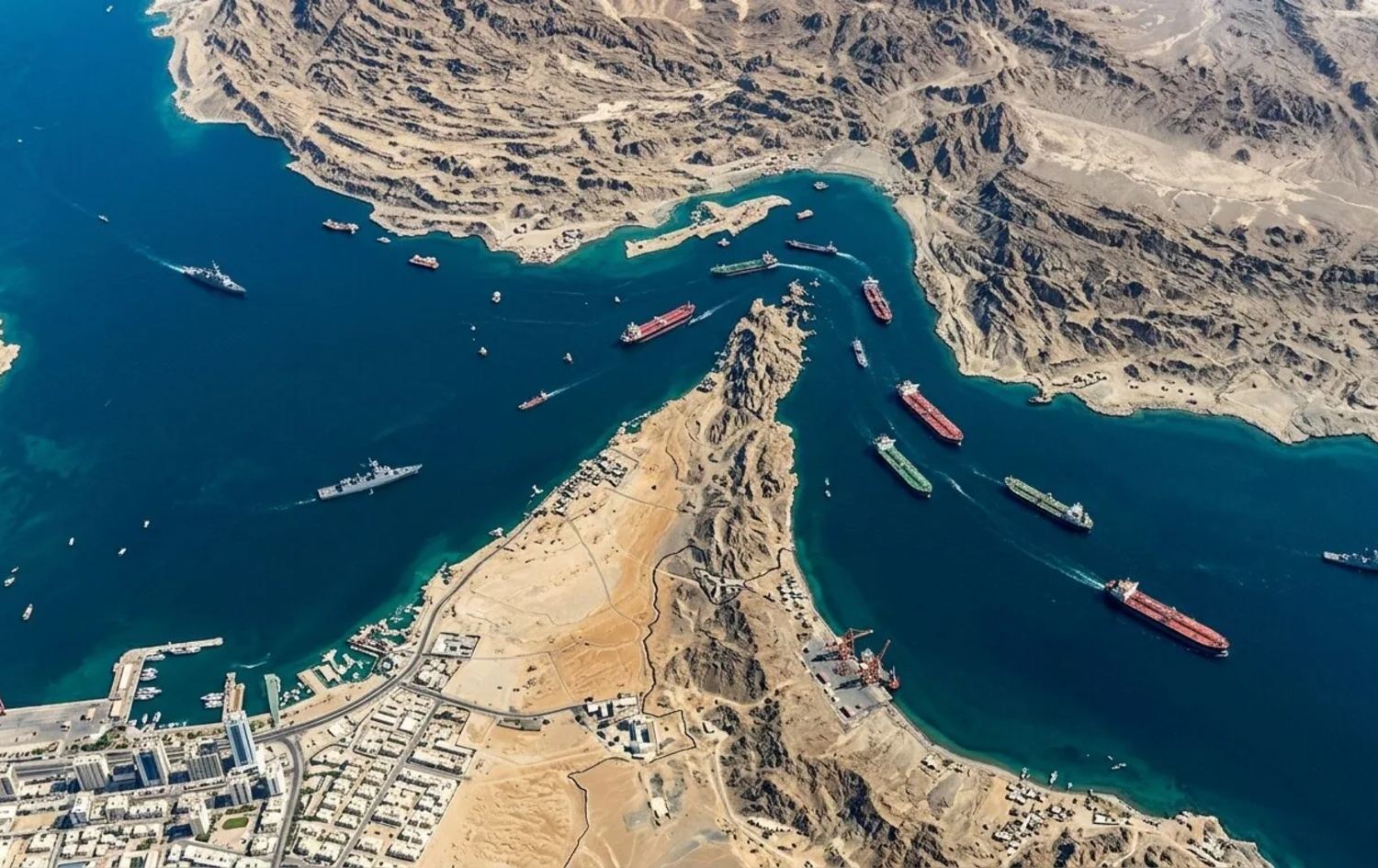
Commercial shipping through the Strait of Hormuz, one of the world's most critical chokepoints for global energy trade, continues uninterrupted despite renewed security concerns following the latest incident in the region. While vessel traffic data indicate that maritime operations remain largely stable, an attack on a container ship off the coast of Oman has once again highlighted the fragile security environment in the strategic waterway.
According to MarineTraffic data, a total of 54 commercial and energy-carrying vessels safely transited the Strait of Hormuz during the 24-hour period ending June 25. Of these, 39 vessels were westbound to eastbound, while 15 sailed in the opposite direction.
Shipping data show that the majority of vessels continued to use the international navigation corridors running along Oman's coastline, with increased traffic observed on routes recommended by the International Maritime Organization (IMO). Some ships also transited close to Iranian territorial waters, while a limited number followed alternative routes with restricted AIS visibility. Maritime analysts believe the growing preference for the Omani corridor reflects shipowners' renewed confidence in internationally recognized safe transit routes.
However, the relative stability in vessel traffic was overshadowed by a security incident later the same day. The United Kingdom Maritime Trade Operations (UKMTO) reported that the Singapore-flagged container vessel Ever Lovely, operated within Evergreen's fleet, was struck approximately 7.5 nautical miles south of Dahit, Oman, by what is believed to have been an unidentified missile or unmanned aerial vehicle (UAV).
According to the vessel's master, the impact caused damage to the ship's bridge. No injuries were reported among the crew, no pollution was observed, and the vessel was able to continue its voyage under its own power.
The attack drew particular attention as it occurred shortly after the launch of a UN- and IMO-backed evacuation and safe transit initiative aimed at assisting commercial vessels that had remained stranded in the region since February. Following the incident, the implementation of the humanitarian transit corridor is now under renewed review.
IMO Secretary-General Arsenio Dominguez announced that evacuation operations have been temporarily suspended until security conditions in the area become clearer. Only hours earlier, Iran's Islamic Revolutionary Guard Corps (IRGC) had rejected the IMO-supported transit corridor, stating that only routes designated by Iranian authorities would be recognized for passage through the Strait of Hormuz and warning that unauthorized transit would be subject to enforcement measures.
The latest developments suggest that uncertainty over maritime security persists despite the temporary understanding reached between the United States and Iran last week, which had been expected to ease regional tensions. Market observers note that although commercial shipping has not experienced significant disruption, security risks continue to pose a major concern for global energy supply chains and international maritime trade.
US Secretary of State Marco Rubio, who remains engaged in regional diplomatic efforts, also emphasized the importance of keeping the Strait of Hormuz open to international shipping, warning that any disruption to traffic through the waterway would have serious consequences for the global economy.





Comments
No comment yet.