


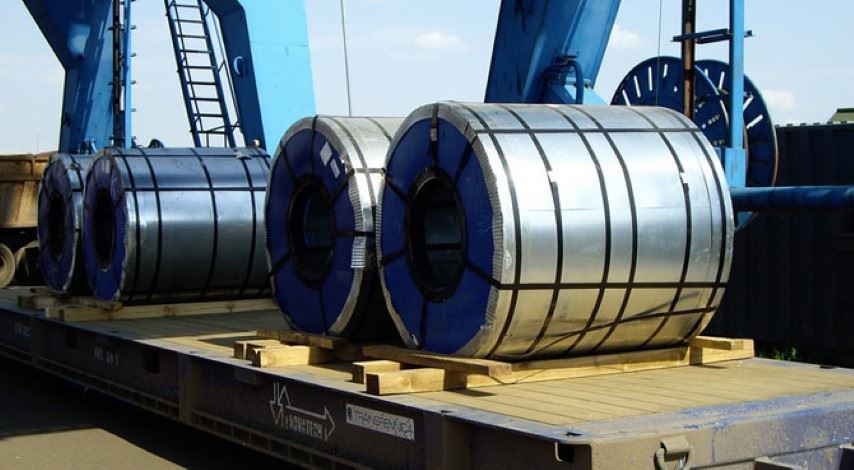
Steel exporters, who turned their eyes to new markets as the EU and the USA increased their protectionist measures, turned their way to the markets left by China, which concentrated on domestic demand. According to the news of Erkan Çakan from Dünya newspaper; Steelmakers, taking growth steps in alternative markets, especially in Latin America, Far East and South Asia, aim for a permanent market share in these regions. It is stated that China's removal of 13 percent tax support on exports and Russia's imposition of tax on exports will create an important opportunity for the Turkish iron and steel industry to fill the market gap.
Steel exporters focused on alternative markets as the EU and the US increased their protectionist measures. Developing their activities in alternative markets, especially in Latin America, the Far East, and South Asia, steelmakers aim to increase their export share in addition to being permanent in these regions emptied from China. Especially recently, China's focus on its own domestic market and giving priority to the demand from its domestic market makes the Far East/South Asian market an attractive position for steel exports. Increasing its steel exports in the region, Turkey aims for a sustainable export in the Far East/South Asian markets, where China has withdrawn.
Stating that China showed the lowest performance in steel exports in the last six years, Turkish Steel Producers Association (TÇÜD) Secretary General Veysel Yayan said, “Our total steel exports to the Far East/South Asian market have increased gradually since 2019. As of the first six months of 2021, our exports to these regions increased by 62.4 percent in quantity and reached 1 million tons, and in value increased by 102.6 percent, to 574.6 million dollars, with the effect of EU protection measures and the search for new markets by our exporters.
64% increase in value in exports
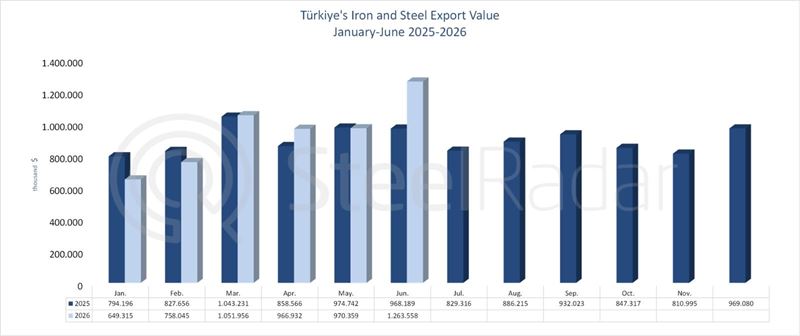
Stating that new capacities in flat products will come into operation as of the second half of 2021, Yayan said, “Thus, there will be a production surplus in flat products and this situation will provide additional opportunities not only in terms of exports but also in terms of import substitution. Especially in this product group, imports will be prevented and excess products will be transferred to export. Expressing that the fluctuations in production and consumption values remained significantly behind in the first half of 2021, Yayan said, “The sector reached pre-pandemic figures in production and exports in the first six months of 2021. Turkey ranked 8th in the world crude steel production with 19.7 million tons of crude steel production in the January-June period, an increase of 20.6 percent compared to the same period of 2020. In the first six months of 2021, our crude steel production increased by 16.6 percent compared to the same period of 2019. In the first six months of 2021, our total steel exports rose to 9.2 million tons with an increase of 17.1 percent in quantity compared to the same period of 2020, and increased to $6.7 billion in value with an increase of 64.9 percent.
Israel is first
In addition, it was observed that this increase continued in the export data for July announced by TİM. Israel ranked first with 734 thousand tons of steel exports in the first half of 2021. Exports to Peru, one of the countries with a high increase in exports, increased from 71 thousand tons to 474 thousand tons. Exports to Canada from 41 thousand tons to 251 thousand tons, to Brazil from 4 thousand to 236 thousand tons, to Tunisia from 82 thousand tons to 167 thousand tons, to England from 60 thousand tons to 154 thousand tons, to Colombia from 32 thousand tons to 147 thousand tons.
The move of China and Russia will pave the way for new markets
Yıldız Demir Çelik Deputy General Manager Erhan Özdemir said that China's turning to the domestic market by removing the 13 percent tax support and Russia's export tax on iron and non-ferrous metal exports will again create an important opportunity for the Turkish iron and steel industry to fill the market gap. told.
Özdemir continued as follows; “We hope that this situation will not cause problems in terms of raw materials. On the other hand, we can say that the gradual increase in domestic production capacity in the coming period will give the market a production volume. With the introduction of idle capacities and new investments, the domestic market demand will be met faster.”




Comments
No comment yet.