


China
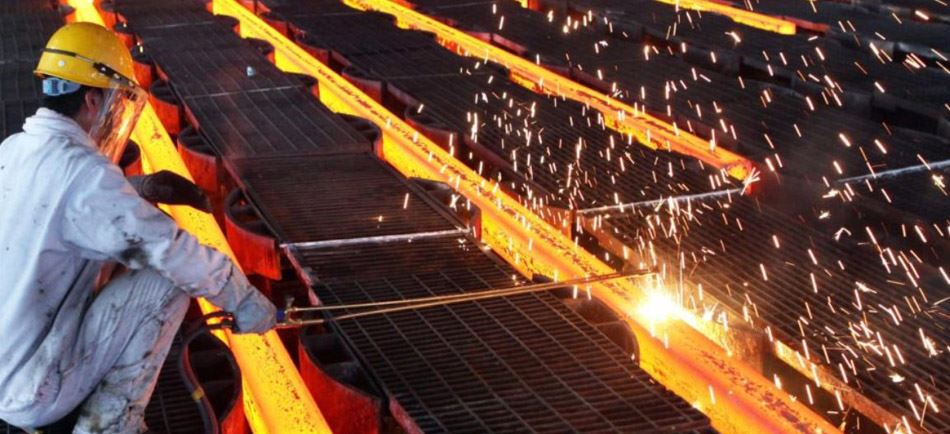
In February, China's rebar prices initially remained stable but later declined post-Chinese New Year due to sluggish demand recovery. The national price of HRB400E 20mm dia rebar hit a 3.5-month low of Yuan 3,983/t by February 29, down by Yuan 57/tonne ($7.9/t) from the end of January. Chinese steelmakers exercised caution in boosting production, with rebar output averaging lower than the previous month. While inventory levels of rebar and wire rod grew, the pace was slower than the previous year. Spot trading volumes plummeted significantly, mainly attributable to the holiday period.
Production of hot-rolled coils (HRC) among Chinese flat steel producers decreased, attributed to maintenance activities in Northeast China. Despite logistical services recovering after the Lantern Festival, HRC stocks at surveyed mills decreased, while commercial warehouse inventories continued to rise, albeit at a slower pace. Prices of hot coils experienced further declines in both spot and futures markets.
As of March 1, the spot price of Q235 4.75mm hot-rolled coil was at Yuan 4,038/t ($560.9/t), down by Yuan 18/t or 0.44% compared to the previous week. Similarly, the most-traded HRC futures contract for May delivery on the Shanghai Futures Exchange closed the daytime trading session at Yuan 3,885/t on March 1, losing Yuan 26/t or 0.66% from the settlement price on February 23.
As of March 3, the price of Q235 150mm square billet in Tangshan remained unchanged at Yuan 3,520/tonne ($489/t) consistent with the assessment on February 25. However, billet trading activities improved, leading to decreased billet stocks among surveyed re-rollers and retailers in Tangshan. The daily output of billets slightly increased, and losses suffered by steelmakers on billet sales eased due to lower production costs.
India
Steel consumption in India reached a six-year high of 112.5 million tons in the first ten months of the fiscal year ending in March, marking a significant surge of 14.5%. This surge underscores the robust steel demand in the country, which is expected to remain strong as the government anticipates surpassing global economic growth in the next fiscal year.
India's steel mills have urged the government to address the influx of surging imports. However, despite these appeals, the Ministry of Steel has declined to intervene, citing the strong domestic demand for steel.
From April 2023 to January 2024, China exported approximately 2.2 million tons of alloy products to India, reaching a six-year peak and establishing itself as the leading exporter of finished steel to the country.
Taiwan
Feng Hsin Steel Co., Ltd., a Taiwan-based steel manufacturing, processing, and trading company, announced its product prices for the current week. Rebar and scrap prices both decreased by NT$300/ton to NT$19,400/ton and NT$10,500/ton, respectively, while section steel prices remained unchanged at NT$26,700/ton. Feng Hsin noted a lack of quotations for the US scrap shipment last week, with Japan's H2 scrap prices dropping to US$375/ton and US containerized scrap prices decreasing to US$358/ton. Additionally, the price of Australian iron ore declined to US$115.7/ton.
China Steel Corporation (CSC), Taiwan's largest carbon steel manufacturer, has announced that it will maintain its prices unchanged for March. This decision applies to general steel plate, hot-rolled steel, and cold-rolled steel, aligning with current market conditions. Following the price adjustment, general steel plate remains priced at NT$24,000/ton, while hot-rolled steel ranges from NT$18,650/ton (hard quality) to NT$19,650/ton (soft quality), hot-rolled steel plate is set at NT$19,900/ton, and cold-rolled steel is priced at NT$21,650/ton.
Tung Ho Steel Enterprise Corporation (Tung Ho Steel), a construction steel products manufacturer in Taiwan, has decided to maintain the base prices of its H-beam for the first half of March, along with unchanged surcharges for sizes and other methods. Salespersons will individually notify dealers of their order volumes, with the steel mill accepting orders up to 50% of the distributor's quota. Order details must be provided by March 5 for production arrangement. Previously, the company increased prices by NT$400/ton for the first half of January and maintained prices for the second half. In February, prices remained steady for the first half and were raised by NT$500/ton for the second half.
Vietnam
The Vietnamese hot rolled coil (HRC) market is experiencing a decline due to weak demand. Formosa Ha Tinh Steel (FHS), a domestic mill, has reportedly reduced its monthly domestic HRC prices, announced last week. According to trading sources in Vietnam, FHS has lowered its sales prices by approximately $10/tonne to about $598/t for orders exceeding 20,000 tonnes. Orders ranging from 10,000 to 20,000 tonnes are offered at $602/t. These prices apply to non-skin passed SAE 1006 HRC and SS400 grade HRC for shipment in April/May on a CIF Vietnam port basis. Previously, the mill had set prices on February 23 at around $608-615/t CIF Vietnam, depending on booking tonnages.
The other Vietnamese HRC producer, Hoa Phat Dung Quat, is also expected to reduce prices when it announces its new HRC allocations at the beginning of March. The slow export market for Vietnamese coated steel products has contributed to decreased demand for HRC, as noted by another trader. Estimates suggest that Hoa Phat could lower its domestic HRC prices to around $580-585/t CFR Vietnam, although another trader predicts a slightly higher price of around $590/t CFR.
A recent export deal for rebar from Vietnam to Singapore and Hong Kong reflects the weakness in the region's home markets. The deal involved 65,000 tonnes of mostly rebar and some deformed-bar-in-coil, sold at $560/t CFR to both destinations. The cargo, split with 25,000 tonnes sold to Hong Kong and 40,000 tonnes to Singapore, was brokered through Chinese traders. The Singapore-bound cargo incurred higher freight costs due to port terms, leading to a $17/t difference compared to Hong Kong. Despite the low-priced deal, the Vietnamese mill's offer price for March/April was initially pegged at $565/t FOB, later increasing to $570/t FOB. The market has been quiet due to Lunar New Year celebrations, with the latest deal involving a 10,000-tonne cargo of rebar from Malaysia ordered at $565/t trucked to Singapore.
Thailand
The Federation of Thai Industries (FTI) released a newsletter on March 4 expressing concerns within Thailand's steel industry regarding the influx of cheap and substandard products into the domestic market. This has led to a decline in local goods sales by an estimated 10% to 30%. The Iron and Steel Institute of Thailand (ISIT) warns that the Thai steel sector is facing challenges due to the presence of Chinese products, resulting in decreased utilization of the country's steel capacity to 31% in 2023. Without timely government intervention, Thai steel mills may face closure and significant job losses. Rising production costs have further exacerbated the challenges for Thai steel products to compete in the ASEAN market. ISIT suggests imposing safeguard duties of up to 25% on all steel imports to address the situation. Additionally, there have been operational suspensions and layoffs in Thai steel companies due to the influx of Chinese steel through dumping, subsidies, and circumvention measures.






Comments
No comment yet.