


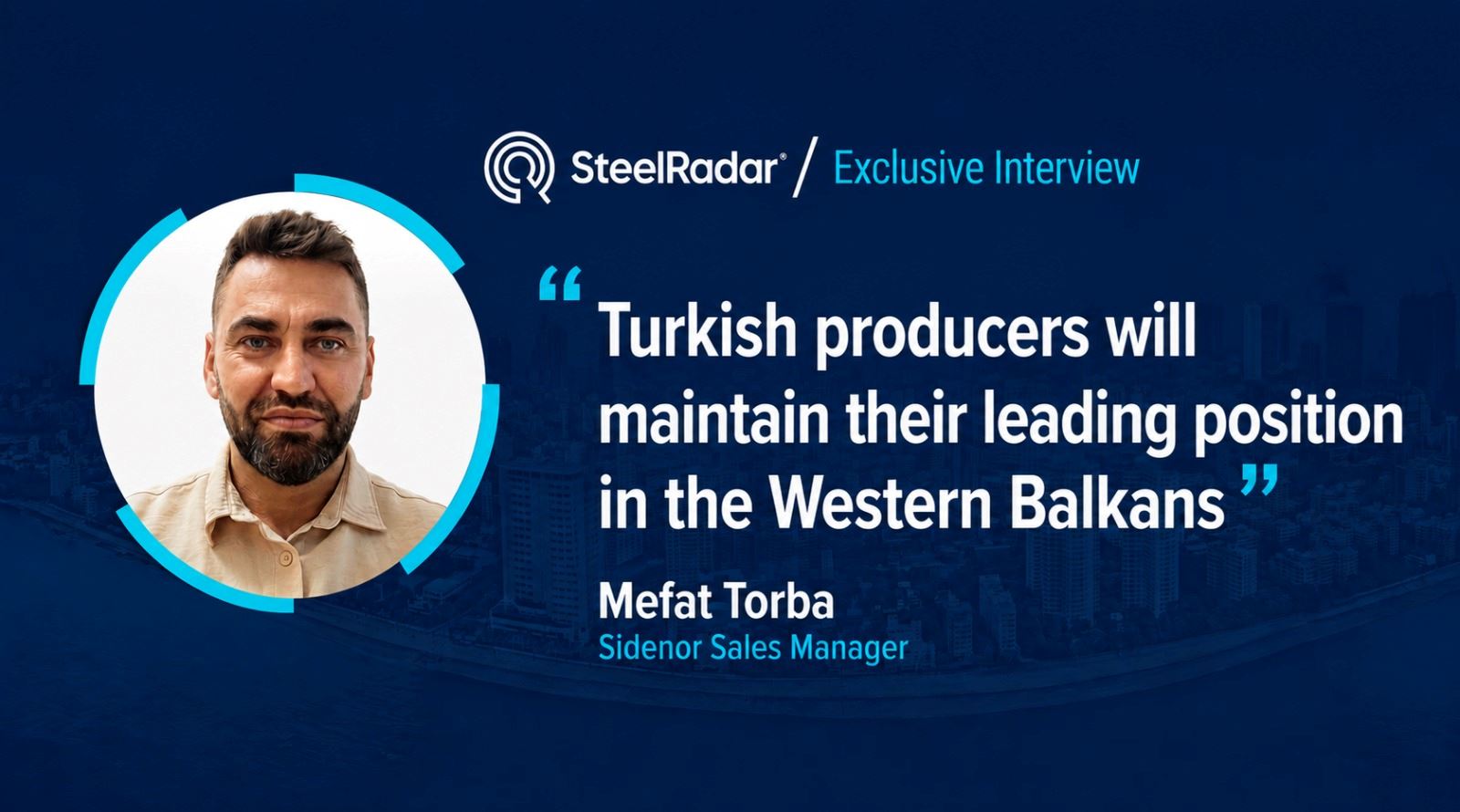
Speaking to SteelRadar about the steel markets in Albania and the Western Balkans, Torba said steel demand in Albania remains strong, driven particularly by major projects in Tirana and coastal areas, foreign buyers, diaspora investments and the tourism sector. He said Turkish producers are expected to maintain their leading positions in the Albanian and broader Western Balkan steel markets until local production resumes.
How would you assess the current state of the Albanian steel market as 2026 progresses? What are the main trends you are observing in terms of demand and market activity?
The Albanian steel market is currently in a very strong position. The main reason for this is that construction activity across the country is at peak levels. Demand remains uninterrupted, with major projects in Tirana and coastal areas, foreign buyers, diaspora investments and the tourism sector keeping market momentum strong. Total consumption across the country reached approximately 350,000 mt last year, and we expect this level to be maintained in 2026. For a country with a population of 2.3 million, this level of per-capita consumption is quite remarkable.
Another notable development on the operational side is that major local players have made significant investments in automated cutting and bending operations over the past two years. The prefabrication model clearly indicates that this is the direction in which the local market is heading. In addition, Albania is strategically positioned as a transit point for the Western Balkans and is outside the EU quota system. This makes the country a highly attractive destination for major producers in Türkiye, Algeria, Egypt and China. Overall, given stable demand and ongoing investments, we expect market conditions to remain positive for the rest of the year.
Albania is a gateway to Western Balkan steel trade
Based on your experience in the Albanian steel market, how do you assess the country's role in the broader Balkan steel industry? What are the key factors shaping regional market dynamics?
Albania is one of the main gateways for steel trade in the Western Balkans. Through the ports of Durrës and Porto Romano, Albania imports significant volumes of steel, not only to serve its domestic market but also to directly meet the needs of the construction and manufacturing sectors in Kosovo and North Macedonia.
The closure of local producer Kurum in 2024 brought a significant shift in regional dynamics. Kurum had historically supplied a substantial share of the regional market, and the closure of the facility changed trade balances across the Western Balkans. Major players in the region quickly redirected their supplies toward major exporters, primarily in Türkiye, as well as Egypt and Algeria.
Looking at the broader region, Serbia remains somewhat separate due to its local protectionist regulations. Albania, by contrast, continues to have a significant influence across the rest of the Western Balkans. Thanks to ongoing infrastructure investments and its exclusion from EU quota restrictions, Albania's role as a logistics and supply hub for steel trade in the region is expected to strengthen further in the coming years.
The factors shaping regional dynamics include:
- Consistent and stable demand from the regional market,
- Aggressive pricing and trade policies from producers in the East,
- The significant price gap between EU producers and producers in Türkiye, Algeria and Egypt.
Kurum's closure strengthened Türkiye's position in the region
Türkiye plays an important role in supplying steel to the Balkans. How do you assess the current trade relationship between Türkiye and Albania in terms of steel products?
Türkiye has always had a strong presence in the regional steel market, but trade relations changed significantly following the closure of local producer Kurum in 2024. This development immediately created a supply gap in the market and increased Albania's and the broader Western Balkans' dependence on direct supplies from Turkish producers.
Today, with the exception of EU member states such as Croatia, Turkish suppliers are effectively the leading suppliers in these markets. This has created a clear trade divide between exporters in the East and producers in the West. Suppliers from the East, particularly Türkiye and Algeria, offer large volumes and flexible pricing, while EU producers struggle to compete at these price levels due to high operating costs, tariffs and regulatory pressures.
I believe this dependence on Türkiye will remain one of the defining characteristics of our market over the next few years. Although Kurum has committed to rebuilding its operations with a new production facility, this investment is not expected to come online before the end of 2028. Until local production returns to the market, Turkish producers will continue to maintain their leading positions in Albania and the broader Western Balkan steel market.
“We expect 2026 to end with modest growth compared with 2025”
What are your expectations for the Albanian and Balkan steel markets for the remainder of 2026?
From a broader perspective, making long-term market forecasts is extremely difficult for everyone in our industry given the current global geopolitical and economic environment. However, when we look at the regional and local dynamics in Albania and the Western Balkans, we see that the fundamentals remain quite solid.
We do not expect any major shocks in the remaining months of 2026, such as sudden price fluctuations or sharp declines in demand. Construction activity continues steadily, and we expect to end the year with generally strong results and modest growth compared with 2025.
A clear indicator of regional resilience is order activity. Forward orders with major suppliers, including Sidenor and major Turkish producers, indicate that stability will remain the underlying market trend through September and the fourth quarter of the year.
Although global markets are facing broader uncertainties, local consumption in the Balkans continues to be supported by ongoing infrastructure projects and steady demand. This provides a relatively stable outlook for the remainder of the year.



Comments
No comment yet.