


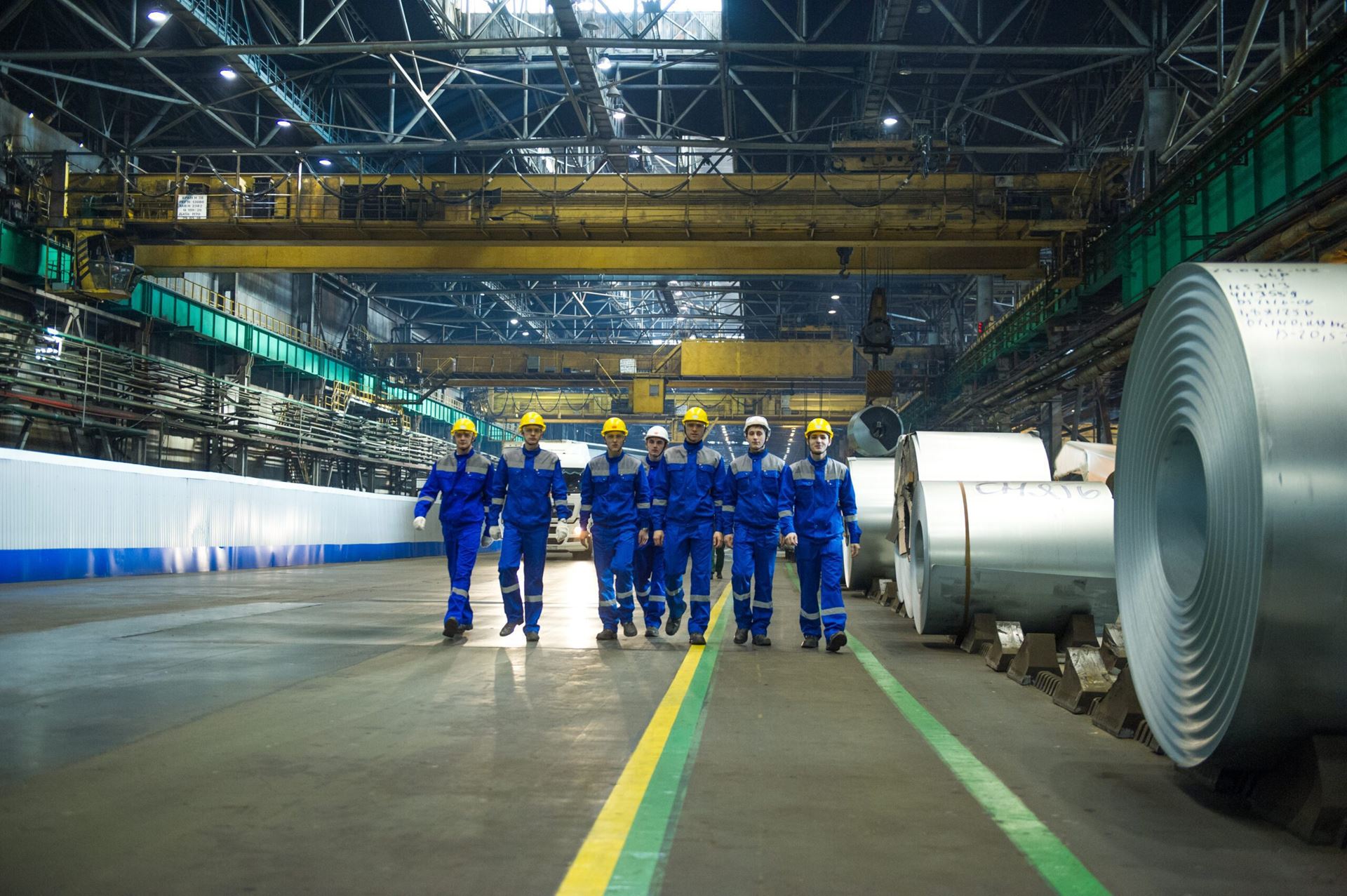
This week in the Far Eastern iron and steel market, the main focus is on the situation where cheap steel from China is putting other Far Eastern countries in trouble. Due to the stagnation in the domestic construction sector, China is pushing construction steel materials to the market at competitive prices. While China is pushing construction steel materials abroad, domestic producers in countries importing these products are struggling against increasing competition. Among the countries affected are South Korea, India, Thailand, Pakistan, and other important steel producers in the Far East.
China's iron ore futures rose on Monday on news that the government is increasing bond issuance to support economic growth.
The most-traded September iron ore contract on China's Dalian Commodity Exchange (DCE) rose 2.42% to settle at USD 122.75 per metric ton. Coking coal DJMcv1 and coke DCJcv1 fell by 1% and 0.79%, respectively.
On the Singapore Exchange, the iron ore benchmark for June rose by 1.25% to trade at USD 117.25 per metric ton.
Market experts noted that demand has increased and therefore hot metal production has also strengthened. Ore stocks at the ports are still high and this may have an impact on prices in the coming days.
On the Shanghai Futures Exchange, rebar SRBcv1 rose 0.93% and hot rolled coil SHHCcv1 rose 0.61%, while stainless steel SHSScv1 was flat and wire rod SWRcv1 fell 0.13%.
As of May 13, the domestic price of HRB400E 20mm diameter rebar, an indicator of China's domestic steel market sentiment, was assessed at 3,817 Yuan (527 USD) including 13% VAT, down 28 Yuan (3.88 USD) from the previous week.
According to SteelRadar data, 6 mm scrap prices were assessed at USD 379 on May 14, after rising as high as USD 380 on May 8 and then falling slightly.
Some local steel mills have increased their scrap prices and the overall market prices have been stable. Steel mills continue to raise scrap prices by 10-50 yuan (USD 1.39-6.93) per ton. The increase in scrap prices indicates an optimistic attitude in the market.
India's steel sector is experiencing a remarkable upturn, with forecasts pointing to a growth rate of 10% in the coming years. This expansion is driven by factors such as robust infrastructure projects, ongoing construction work, a booming automotive industry, and increased manufacturing activity spurred by economic initiatives.
According to price data from SteelRadar, rebar grades 012-32 mm fluctuated between May 3-14. Prices ranging between USD 609-632 reached their highest levels in the last 6 months.
HMS1 scrap prices also fluctuated in the same week. Priced between USD 419-443, scrap reached its highest levels in the last 6 months, just like rebar.
Lastly, 62% Fe iron ore prices were flat between USD 116-118. In contrast to other commodity prices, iron ore was on a downward trend in 2024. On April 8, iron ore hit its lowest price in recent times, after which it started to recover and has been flat in recent days.
This can be attributed to the fact that India's stockpiles are dwindling due to increasing iron ore exports. However, the vital importance of exports in terms of foreign exchange earnings for iron ore-producing regions means that export restrictions are unlikely. This suggests that prices are likely to maintain their current course.
In Taiwan, Feng Hsin Steel, the country's largest rebar producer, decided to change its rebar list prices and local scrap buying prices for the May 13-17 trading period.
For trade negotiations until this Friday, the company continued to offer 13mm diameter rebar at USD598 EXW, the same as the previous week, while the buying price for local HMS 1&2 80:20 scrap remained unchanged at USD 342.
According to a local market source, as of May 13, the price of US HMS 1&2 80:20 scrap decreased by USD 2 from the previous week to USD 353 CFR Taiwan, while the price of Japan-origin H2 scrap was reported at USD 365 CFR Taiwan, up USD 4 from two weeks ago. It was reported that there were no offers for H2 scrap originating from Japan in the first week of this month due to public holidays in Japan.
Moreover, finished steel prices in China fell slightly last week as steel demand from end-users failed to meet market expectations following the country's Labor Day holiday that ended on May 5. This also aggravated the cautious sentiment in Taiwan's steel market to some extent.





Comments
No comment yet.