


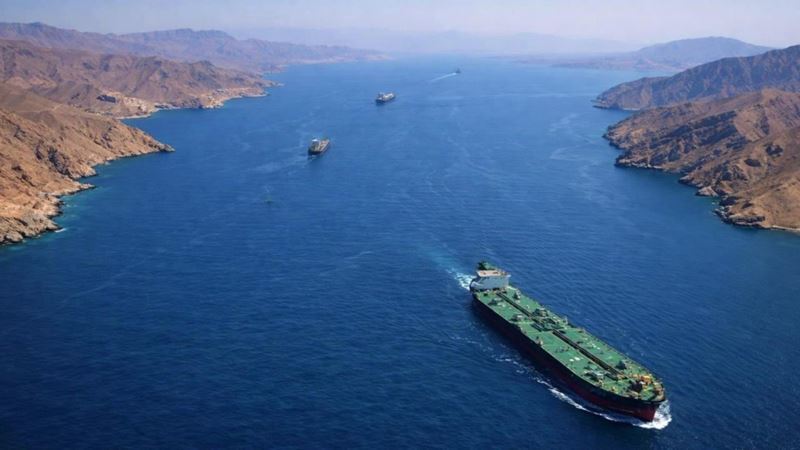
Maritime traffic at the Straits of Hormuz and Bab el-Mandeb, which are critical transit points for global maritime transportation, moved in different directions. According to data published by MarineTraffic, transits through the Strait of Hormuz declined by 28% to 77.
The number of cargo-carrying vessels passing through the Strait of Hormuz also decreased from 45 to 33. Transits by sanctioned vessels and vessels belonging to the shadow fleet declined from 50 to 23.
While the routes of 40 of the transits through the Strait could not be determined, 32 vessels were reported to have used the one-way traffic arrangement implemented by Iran.
Traffic Recovers in Bab el-Mandeb
In contrast to the decline in the Strait of Hormuz, maritime traffic in the Bab el-Mandeb Strait recovered. Transits increased by 9.7% to 248, while the number of cargo-carrying vessels on the Red Sea route rose from 103 to 109.
The number of transits with transponders switched off, making their movements untraceable, remained at around 23. The compliance rate with the Traffic Separation Scheme (TSS) was approximately 91%.
The data reveal that vessel movements at the two critical maritime transit points diverged. While traffic in the Strait of Hormuz declined, activity along the Bab el-Mandeb Strait and the Red Sea route showed a recovery.








Comments
No comment yet.