


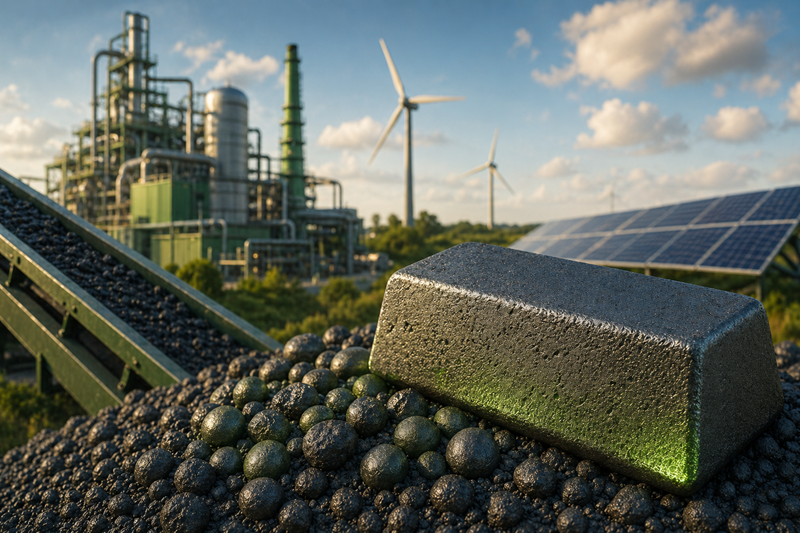
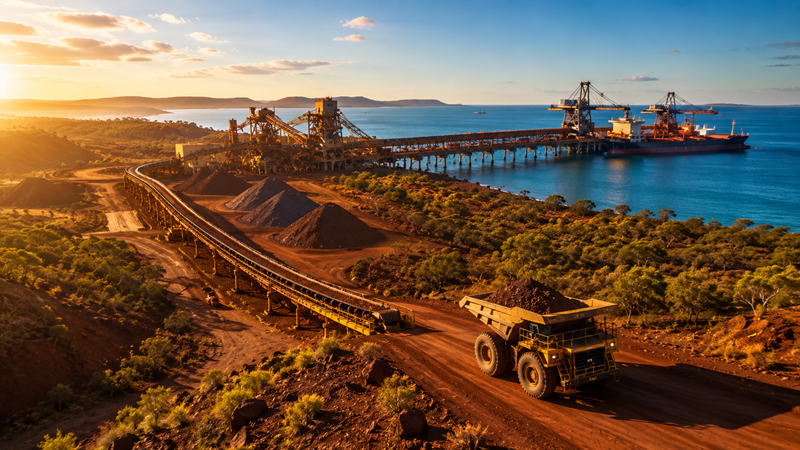
Basirat stated that the conflict in the Middle East could open a narrow window of opportunity for Australia to catch up with its competitors in the global green iron race, adding that Australia should be ready to seize this opportunity by offering options to buyers seeking supply diversification.
He also noted that for Australia, facilitating project approvals, securing offtake agreements, and early adoption of hydrogen-based low-emission iron production could provide a competitive advantage in a volatile market.
Emphasizing that the Middle East has long been a key hub for low-emission iron production and exports to steelmakers in Europe and Asia through direct reduced iron (DRI) technology, Basirat said the ongoing conflict in the region could alter this balance.
Basirat stated that steel production facilities in the region, particularly in Iran, have been significantly affected, and that some major plants may not be able to sustain crude steel production for an extended period due to severe damage. He added that this situation may have led to the loss of part of the global low-emission DRI-EAF-based capacity.
Noting that the effects of a closure of the Strait of Hormuz are becoming increasingly evident across the Middle East, Basirat pointed out disruptions in value chains, higher transportation and insurance costs, shipping uncertainties, shortages of direct reduction-grade pellets, and constraints in DRI supply. He also stated that this has driven up scrap prices, with steelmakers attempting to sustain production by increasing scrap usage.
Basirat noted that two major pellet producers in Bahrain and Oman are facing difficulties in sourcing iron ore concentrate, particularly from Brazil, adding that some shipments have been redirected to alternative Asian ports.
He also stated that the semi-finished steel market has been affected, noting that Iran—accounting for approximately 11% of global semi-finished steel trade—has effectively been removed from the market.
Basirat said that, similar to the prolonged recovery seen in oil and natural gas export facilities in the Middle East, a similar outlook is emerging for the iron and steel sector, and that producers in Europe and Asia may reconsider their dependence on low-carbon iron imports via the Strait of Hormuz.
Highlighting that uncertainties are affecting low-emission projects, Basirat stated that this situation creates significant uncertainty for investors, increases inflation, disrupts supply chains, raises fuel and energy costs, and heightens risks in financial markets. He noted that even if these conditions do not lead to project cancellations, they may slow decarbonization processes and delay new DRI investments.
Basirat stated that all newly announced low-emission plants in Saudi Arabia are planned to be built in the Ras Al-Khair industrial zone and port on the Persian Gulf, but the area is currently under complete blockade. These projects include Essar Group, Vale’s Mega Hub, the Aramco–Baosteel–PIF joint venture, and Tosyali’s flat steel complex.
He also noted that Japanese companies Itochu and JFE are considering building a DRI plant in Abu Dhabi, UAE, while Vale’s Mega Hub concept includes potential developments in the UAE and Oman in addition to Saudi Arabia.
Basirat stated that some projects in Oman have been less affected, noting that Meranti Green Steel reported no delays to its decision or construction timeline due to the conflict and is considering future expansion. He added that Jindal Steel continues construction of a 2.5 million ton per year hot briquetted iron (HBI) plant and is sourcing key equipment from China.
He pointed out that projects at Oman’s Duqm Port are better positioned due to their location outside the Strait of Hormuz, while Salalah Port and Saudi Arabia’s Yanbu oil terminal have been affected by drone attacks.
Basirat emphasized that a key question is how prepared Australia is to take advantage of this opportunity, noting that geopolitical turmoil in the Middle East could make investors hesitant and delay final investment decisions. He stated that while the fundamental dynamics in the region remain unchanged, the war environment has created a narrow window of opportunity for other producers.
Basirat concluded that Brazil is in a strong position in this process, and that Australia could also capitalize on the opportunity as a major supplier.



Comments
No comment yet.