


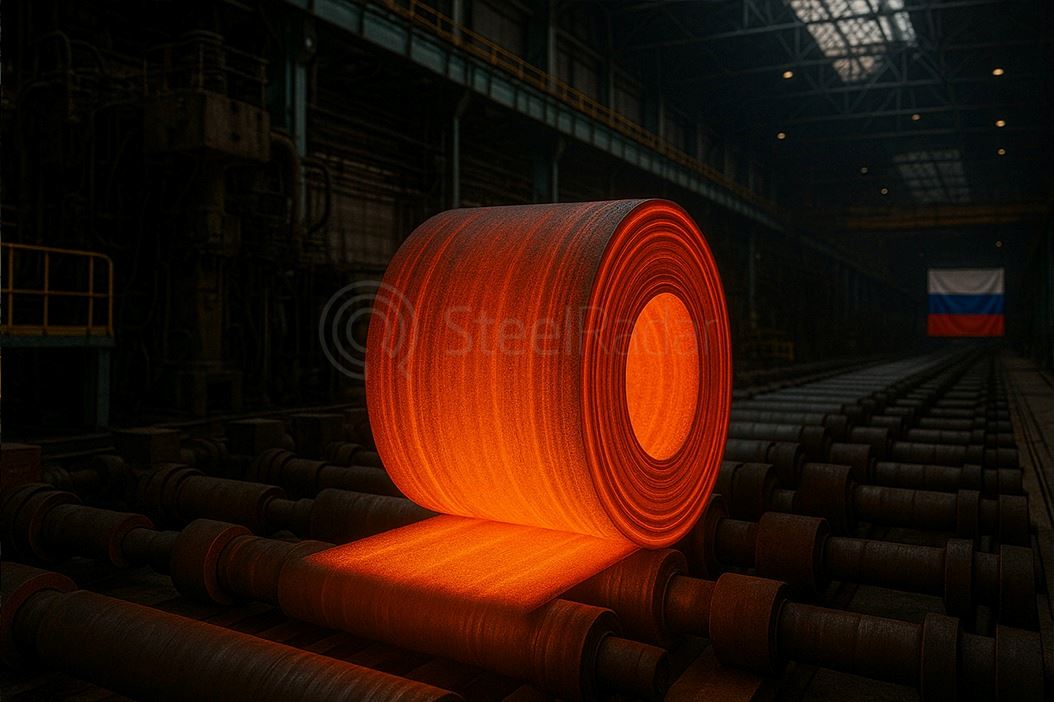
In the domestic spot market, hot rolled coil (HRC) prices have shown little movement in recent weeks. At the same time, higher value-added products such as cold rolled coil (CRC) and coated steel are gradually becoming cheaper. There is a growing expectation that producers may officially lower prices for these products in April. In contrast, HRC prices are more likely to stay relatively stable, although this stability offers little comfort to either buyers or sellers.
One of the main challenges is the sharp drop in apparent demand during the first quarter of the year. Even though steelmakers have reduced output, supply still exceeds demand, creating additional pressure on the market.
Globally, the situation looks quite different. Flat steel prices have been rising, mainly driven by higher energy costs and freight rates linked to the ongoing conflict in the Persian Gulf. These cost increases are unlikely to reverse quickly, which continues to support international steel prices. However, demand in many regions is not strong, raising doubts about how long this upward trend can last.
Russia and China remain among the few countries that actively export steel. Russian suppliers have attempted to increase HRC export prices in recent weeks, but success has been mixed. Non-sanctioned producers have kept their offers around $485–490/t FOB Black Sea, with actual deals slightly lower, near $480/t. Attempts to push prices higher were not widely accepted by buyers, leading to some adjustments.
Offers to Türkiye have been reported at around $540–545/t CFR, equivalent to roughly $500–510/t FOB Black Sea. This indicates that suppliers are still testing higher price levels in nearby export markets, although buyer resistance remains visible.
Sanctioned producers, on the other hand, have managed to secure slightly better prices, with deals reported around $473–475/t FOB Black Sea. Some suppliers have even paused sales temporarily to reassess their strategies for upcoming shipments, indicating uncertainty about future demand.
For CRC, non-sanctioned suppliers have been offering material at around $585–595/t FOB, while sanctioned producers are slightly below this level. Slab prices for export markets have been reported in the range of $465–475/t FOB Black Sea.
Meanwhile, the construction steel segment in Russia presents a mixed picture. In some regions, an early start to spring has brought a small increase in demand and slight price improvements. In others, market conditions remain unchanged, with weak activity and unsuccessful attempts by traders to raise prices.
The construction sector itself is under pressure. Mortgage lending declined in February, partly due to tighter conditions on government-supported housing programs. This has reduced demand for new housing projects, and developers are expected to cut back on new construction this year. There are also concerns about infrastructure projects, as government funding may decrease.
Overall, the Russian flat steel market is facing a combination of weak domestic demand and uncertain export conditions. While global prices are supported by rising costs, local market fundamentals remain fragile, and recovery does not appear imminent.






Comments
1 comments