


There is a slowdown in the flat steel market. Green flat steel trading in Europe has remained very weak over the past three weeks, and despite declining prices, demand from buyers remains limited. Market sources state that it will be difficult for the current stagnation to be broken without new quota regulations or additional regulatory support.
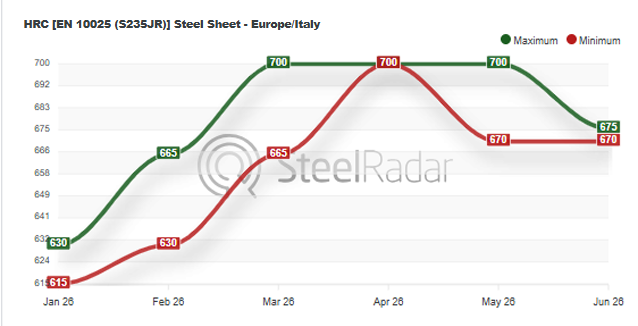
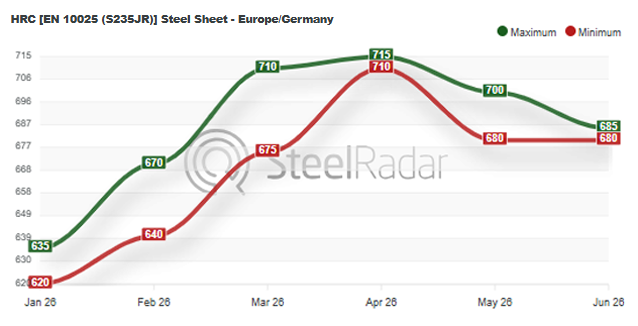
This situation is also reflected in the hot-rolled coil (HRC) market. As of the beginning of the week, domestic HRC prices stood at €675-680/mt in Northern Europe and €670-675/mt in Italy, while trading activity remained very low. Buyers continue to adopt a wait-and-see approach ahead of the new EU safeguard measures that will come into effect on July 1. Imported HRC offers vary depending on origin, ranging from approximately €650-700/mt.
At the same time, Europe’s leading green steel producers are calling for the EU Emissions Trading System (ETS) not to be weakened. According to producers, strong and predictable carbon prices are critical for investments in low-emission steel production technologies. In contrast, some traditional producers argue that high carbon costs are negatively affecting competitiveness and are calling for a temporary suspension of ETS cost increases. As a result, while the European steel sector is assessing the impact of weak demand and new quota regulations, it is also engaged in an important debate over the cost and implementation of the green transition.
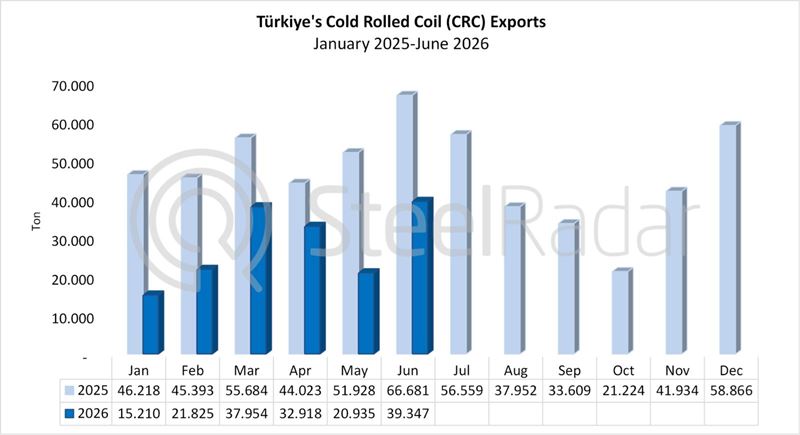
In the Balkans, it is reported that purchasing activity has recently begun to gradually shift toward European-origin products. According to market sources, rising freight costs following the war have weakened Türkiye’s competitiveness, particularly in flat steel products, while the deferred payment and financing options offered by European producers provide a significant advantage for buyers. For this reason, some buyers are said to be shifting their sourcing preferences toward Europe.



Comments
No comment yet.