


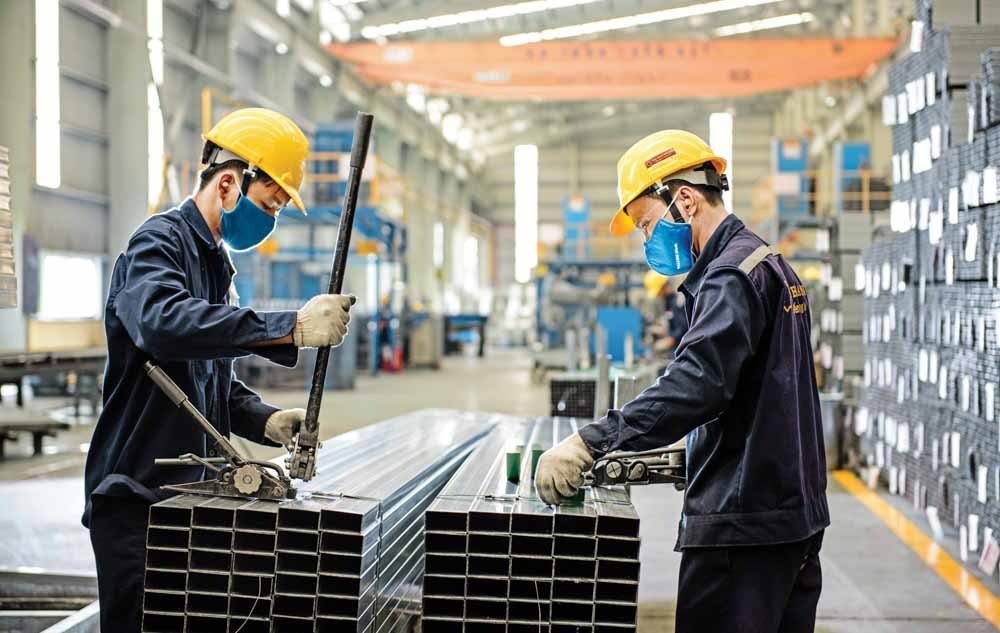
According to Nguyen Ngoc Quynh, Deputy General Manager of Vietnam Commodity Exchange (MXV), the world iron and steel market has followed a volatile course since the beginning of the year. While prices fell sharply from the beginning of the year to the end of March, the price of hot-rolled coil steel in China fell 13% to CNY 3,662/tonne (USD 505.00), and iron ore prices on the Singapore Exchange fell below USD 100.00/t, falling to a seven-month low.
The prosperity in the domestic market since the end of last year helped the steel industry maintain its stability early this year. In the first quarter of this year, crude steel production increased by 21% compared to the same period last year, reaching 5.3 million tons. In the same period, steel consumption increased by 14% to 5.3 million tons. This led to a steady rise in steel prices. However, the consumption outlook still faces challenges and limits price increases.
Hoa Phat increased its revenue by 16% in the first quarter of the year and its net profit increased sevenfold. Similarly, Hoa Sen and Nam Kim's revenues increased by 32% and 21% respectively. Most steel companies are showing signs of recovery after hitting the lowest levels since 2022, with pre-tax profits generally rising to positive levels.
Steel industry experts predict that there will be fluctuations in the prices of steel, coking coal and iron ore in 2024, but the profit margins of businesses that manage inventory well will become more evident. Expectations that both prices and demand will recover in the domestic construction steel market are increasing. Some construction material traders state that the sales pace of residential customers increased in the second quarter.
Vietnam Steel Association estimates that steel consumption will increase by 7% to 21.7 million tons, and production will increase by 7% to approximately 29 million tons. It is emphasized that the government should support steel producers to reduce energy consumption and carbon emissions. Additionally, high-quality special steels and alloys need to be developed to serve industrialization and modernization goals.
Economic experts state that appropriate trade defense measures should be taken to protect the domestic steel market to support the recovery of the steel industry. The use of public investments in major transportation and construction projects will encourage domestic production, leading to growth in the sector.



Comments
No comment yet.