


According to a statement published by Recycling Europe, stakeholders including NGOs, steel companies, ship recycling facilities and trade unions have objected to the European Commission’s 16th proposal concerning the list of approved ship recycling facilities.
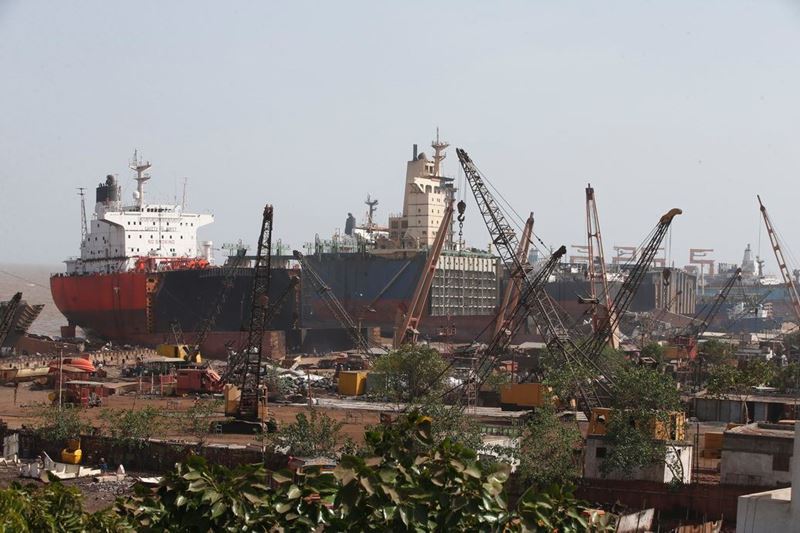
In a letter sent to European Commission members Jessika Roswall and Stéphane Séjourné, the stakeholders stated that the beaching method used by Shree Ram and YSI Recyclers in India poses risks in terms of environmental pollution, worker safety and competitive conditions.
The two facilities, like other ship recycling yards in India, use a method in which ships are dismantled directly on tidal mudflats. The statement noted that this method is not permitted in any EU member state and does not meet the requirements of Article 13(1) of the EU Ship Recycling Regulation.
The regulation requires all releases resulting from ship recycling to be controlled and operations to be carried out on impermeable surfaces. Stakeholders argued that pollutants cannot be fully controlled when dismantling operations are carried out in tidal areas.
Objections raised over environmental and monitoring conditions
The letter referred to environmental and toxicological studies conducted in Alang-Sosiya and other beaching areas. These studies reportedly identified pollution in soil, coastal waters, sediments and marine ecosystems associated with the direct dismantling of ships on beaches.
A recent major fuel oil spill at a neighboring shipyard on the Gujarat coast reportedly contaminated a wide area. The incident was cited as evidence of the difficulties in controlling pollutants when dismantling operations take place on tidal mudflats.
The statement noted that ship recycling facilities in Alang-Sosiya are exempt from environmental impact assessment and notification requirements under India’s Coastal Regulation Zone framework. It also stated that recovered and reusable materials containing asbestos are permitted to be sold for reuse.
The stakeholders acknowledged that individual facilities can undertake obligations beyond national legislation but argued that, without strong public oversight and environmental management, it remains unclear how compliance with EU standards can be maintained.
The Gujarat Pollution Control Board, responsible for overseeing Shree Ram and YSI Recyclers, was alleged to face staffing shortages, limited technical capacity, inadequate monitoring and sampling, and transparency issues. These conditions were said to raise concerns about the European Commission’s ability to ensure that the facilities comply with EU rules between inspections.
European facilities highlight competitive conditions
Approved ship recycling facilities operating in the EU and European Free Trade Association countries are reportedly capable of recycling the EU flagged fleet. These facilities are seeking the same environmental, health and safety standards to be applied to all operators.
Stakeholders argued that approving beaching facilities in India would increase the competitive pressure on the European ship recycling industry, which operates under stricter requirements.
The letter also argued that the proposal is inconsistent with the objectives of EU industrial maritime policies and the Clean Industrial Deal regarding the expansion of European ship recycling capacity, the circular transition and raw material security.
Ship steel highlighted as a source of secondary raw materials
The statement emphasized that ships are an important source of high quality secondary raw materials. It noted that between %70 and %95 of a ship’s weight can be recovered and converted into reusable materials.
The number of end of life ships is expected to increase fivefold over the next 10 years. At the same time, growing use of electric arc furnaces is expected to significantly increase demand for secondary raw materials from the European steel sector.
The European fleet could provide steelmakers with predictable volumes of secondary raw materials, according to the statement. Ship recycling in the EU would also recover copper, aluminum and various alloying elements for European industry in addition to steel.
These activities could help preserve existing employment and create new job opportunities, while recycling and processing would be carried out in accordance with EU environmental, health, safety and social standards.
Opposition to converting ship plates into rebar
The letter stated that a significant share of ship plates recovered from ship recycling facilities in Alang is directly converted into rebar.
According to the stakeholders, this practice is prohibited under Article 6.4 of the European standard EN 10080 for reinforcing steel and Article 1.6 of India’s IS 1786:2008 standard.
They argued that the use of materials directly produced from ship plates in construction could pose risks to quality and safety and distort competitive conditions in international trade.
Concerns over hazardous waste shipments to non OECD countries
The stakeholders also argued that approving Indian ship recycling facilities could allow the continued shipment of hazardous waste from Europe to developing countries.
They recalled that Article 39(1) of the EU Waste Shipment Regulation prohibits the export of hazardous waste from the EU to non OECD countries for recycling purposes.
They further argued that allowing EU flagged ships to be dismantled in non OECD countries where equivalent standards cannot be guaranteed, while the ships remain under Europe’s regulatory responsibility, would conflict with the underlying purpose of this prohibition.
Call for regulatory action from European Commission
The stakeholders called on the European Commission to apply the same standards to all listed facilities regardless of their geographic location and to remove the Indian beaching facilities from the proposed list.
They also called for the technical guidance for ship recycling facilities in third countries to be aligned with EU standards and for the beaching method to be explicitly prohibited for ship recycling.
The European Commission was also urged to support higher standards through the International Maritime Organization, strengthen the EU Ship Recycling Regulation and prevent rules from being circumvented through flag changes.
Stakeholders further called for measures to ensure that all EU owned ships are recycled at facilities complying with European rules and to expand European ship recycling capacity through measures such as the Circular Economy Act.





Comments
No comment yet.