


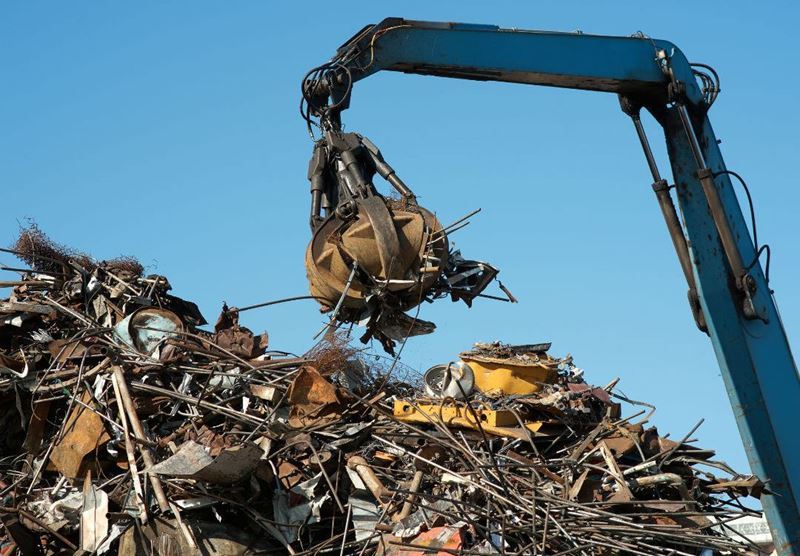
Speaking at a press conference held by the Interfax-Ukraine agency, Bubley stated that the export ban, which came into force on January 1, 2026, has weakened the scrap metal supply chain, forced companies to scale down operations, and led to job losses.
Bubley emphasized that restricting scrap exports without considering the balance between consumption and supply has had a direct negative impact on the sector. He also noted that Ukraine’s steel production declined during the same period. In January–February 2026, the country’s steel output fell by 13.3% year-on-year, dropping from 1.183 million tonnes to 1.026 million tonnes.
During this period, scrap purchases by metallurgical plants also declined significantly. Scrap procurement fell by 31.7%, from 257,800 tonnes to 176,000 tonnes, while total scrap supply decreased by 41.1%, from 313,600 tonnes to 184,800 tonnes. Bubley recalled that scrap exports had previously accounted for 20–25% of the total market, adding that scrap prices in the European Union reaching €300–330 per tonne made exports more attractive.
According to UAVtormet, the export ban is negatively affecting not only market participants but also public finances. Bubley stated that the state is losing approximately €12 million in foreign currency revenue per month and that tax revenues have declined by 200 million hryvnia. He also pointed out that reduced competition in the domestic market has increased the pricing power of metallurgical companies, pushing scrap prices down from UAH 8,000 per tonne to as low as UAH 4,000 per tonne.
Industry representatives argue that there is no real shortage of scrap supply. Serhiy Vovk, General Director of Ukrmet-Invest LLC, said that a significant portion of supplied scrap is not being purchased by metallurgical plants and that company inventories have reached 13,000 tonnes. Vladyslav Kleshchynsky, CEO of the Ukrmet group, also stated that metallurgical plants hold a dominant position in the market and are currently purchasing only 30–50% of available scrap. He added that companies have been forced to cut their workforce by 50% and that many facilities are operating at reduced capacity.
Mykola Klymovych, Director of Mirten LLC, noted that the scrap market has experienced a surplus in the 2022–2026 period and that exports play a critical role in absorbing this excess. Experts warn that if current export restrictions remain in place, even sharper declines in scrap generation may follow.
The employment outlook is also deteriorating. Approximately 2,000 people have already been laid off in the sector during the first two months of the year alone, and this figure could reach 4,000 by May if the current trend continues. Bubley added that many companies have already submitted notices regarding complete shutdowns or significant downsizing of their operations.




Comments
No comment yet.