


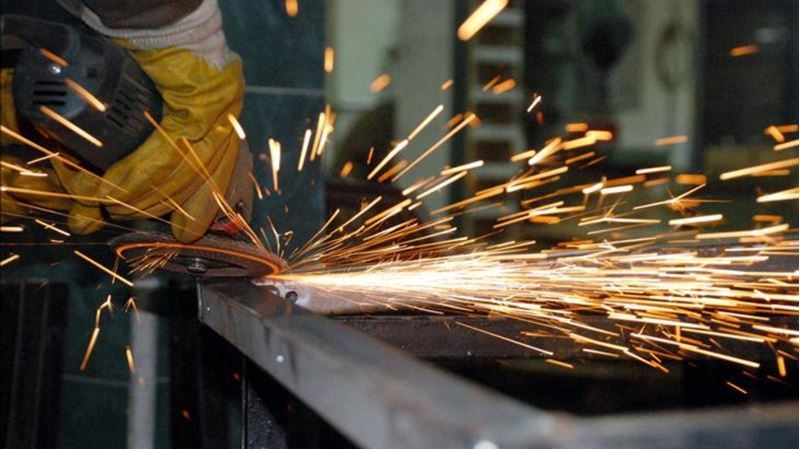
According to the January results of the ISO Türkiye Manufacturing PMI survey, the headline index edged down from 48.9 in December to 48.1, marking a slight deterioration.
PMI data, where readings above 50 signal improvement, showed that the index remained below the 50 threshold for the 22nd consecutive month. This indicated a moderate month-on-month deterioration in the overall performance of the manufacturing sector.
Survey findings revealed that weak demand conditions persisted in January, with the slowdown in new orders continuing. New export orders also lost momentum, recording a more pronounced contraction than total new orders. In line with softer order inflows, output volumes declined, extending the contraction in production to 22 months, with the pace of decline stronger than in December.
At the start of the year, firms reduced employment, purchasing activity, and stocks of inputs and finished goods. Input costs increased sharply in January, with inflation accelerating for the second consecutive month to its highest level since April 2024. Rising raw material costs particularly metals intensified cost pressures on manufacturers.
As higher costs were passed on to customers, output prices recorded their fastest increase in 21 months. Selling price inflation remained above its historical average.
Sectoral data pointed to more broadly based growth within manufacturing. Output expanded in five of the ten sectors covered by the survey, with the number of sectors recording growth reaching its highest level since May 2023.
The strongest growth was seen in the chemicals, plastics and rubber products sector, where production rebounded after a year and increased at its fastest pace since October 2020. The textiles sector also recorded its first increase in output in 31 months.
By contrast, the sharpest decline in production was reported in the non-metallic mineral products sector, where contraction was measured at its highest rate in four months. This sector also saw the most pronounced weakening in new orders. Despite the overall stagnation in total new orders, new export orders increased in five of the ten sectors, with the fastest recovery in foreign demand recorded in the wearing apparel and leather products sector.
In January, four sectors reported rising employment. The strongest job growth was seen in the food products sector, where hiring rose at its fastest pace since March 2025. Meanwhile, the non-metallic mineral products sector recorded its first job losses in three months.
Cost pressures intensified across all sectors at the start of the year. As in December, the steepest increase in input prices was observed in the electrical and electronic products sector. Although the mildest increase was recorded in the machinery and metal products sector, inflation in this area remained elevated.
With the acceleration in input cost inflation, all sectors raised their selling prices for the first time in three months. The highest output price inflation was once again recorded in the electrical and electronic products sector.





Comments
No comment yet.