


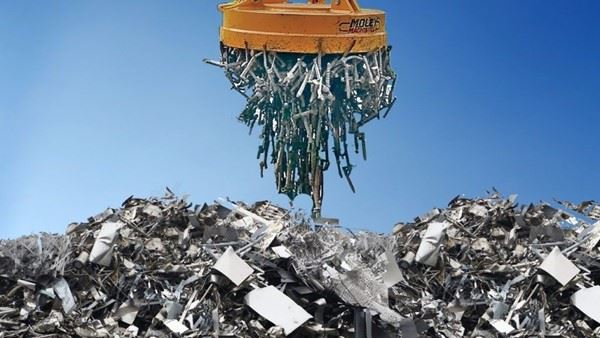
Bids for all grades of scrap metal at the Tahara mill have been reduced. As a result, the Japanese H2 scrap export price is JPY 50,700/t (USD 321/t) FOB Tokyo Bay, down 1,200 JPY/t (USD 8/t) from JPY 51,900/t (USD 329/t) in the previous week. In the Nagoya region, ferrous scrap prices also showed weakness, with H2 scrap metal prices hovering between 36,000-37,000 JPY/ton (228-234 USD/ton).
In Vietnam, even before Tokyo Steel's price cut announcement, buyers were not active in the market due to low demand for finished steel. Domestic scrap metal prices in the country have also fallen due to low demand and competition between electric arc furnaces (EAF) and blast furnaces (BF). In North Vietnam, the price of H2 equivalent 3-6 mm scrap metal decreased by 100 VND/kg (4 USD/ton) to 9,500-9,600 VND/kg (372-376 USD/ton). In the South, the price of the same grade of scrap metal dropped to 8,350-8,650 VND/kg (327-340 USD/ton).
A steel producer source said that demand for steel remains weak and the upcoming monsoon season has also adversely affected the market. Low iron ore and coke prices provided blast furnaces with a production cost advantage, causing the demand for scrap metal to remain low. H2 scrap offer prices from Japan to Vietnam decreased by 2-3 USD/ton to 372-375 USD/ton CFR. Buyer offers were evaluated as 365 USD/ton CFR Vietnam.
Korean steel producers continue to prefer cost-effective domestic scrap instead of imported scrap metal. The market is not expected to recover until the end of summer. Light grade A scrap metal, corresponding to H2, remained stable at KRW 395,000/ton (USD 285/ton), while heavy grade A scrap remained stable at KRW 425,000/ton (USD 307/ton). The scrap stock of Korea's eight major steel mills totaled 768,000 tonnes this week, down 2% from 799,000 tonnes in the previous week. The decline in stocks was more pronounced in the central region compared to the southern region, where the price reduction news was announced.
These developments cause significant fluctuations in Asian scrap metal markets and affect regional supply and demand balances.






Comments
No comment yet.