


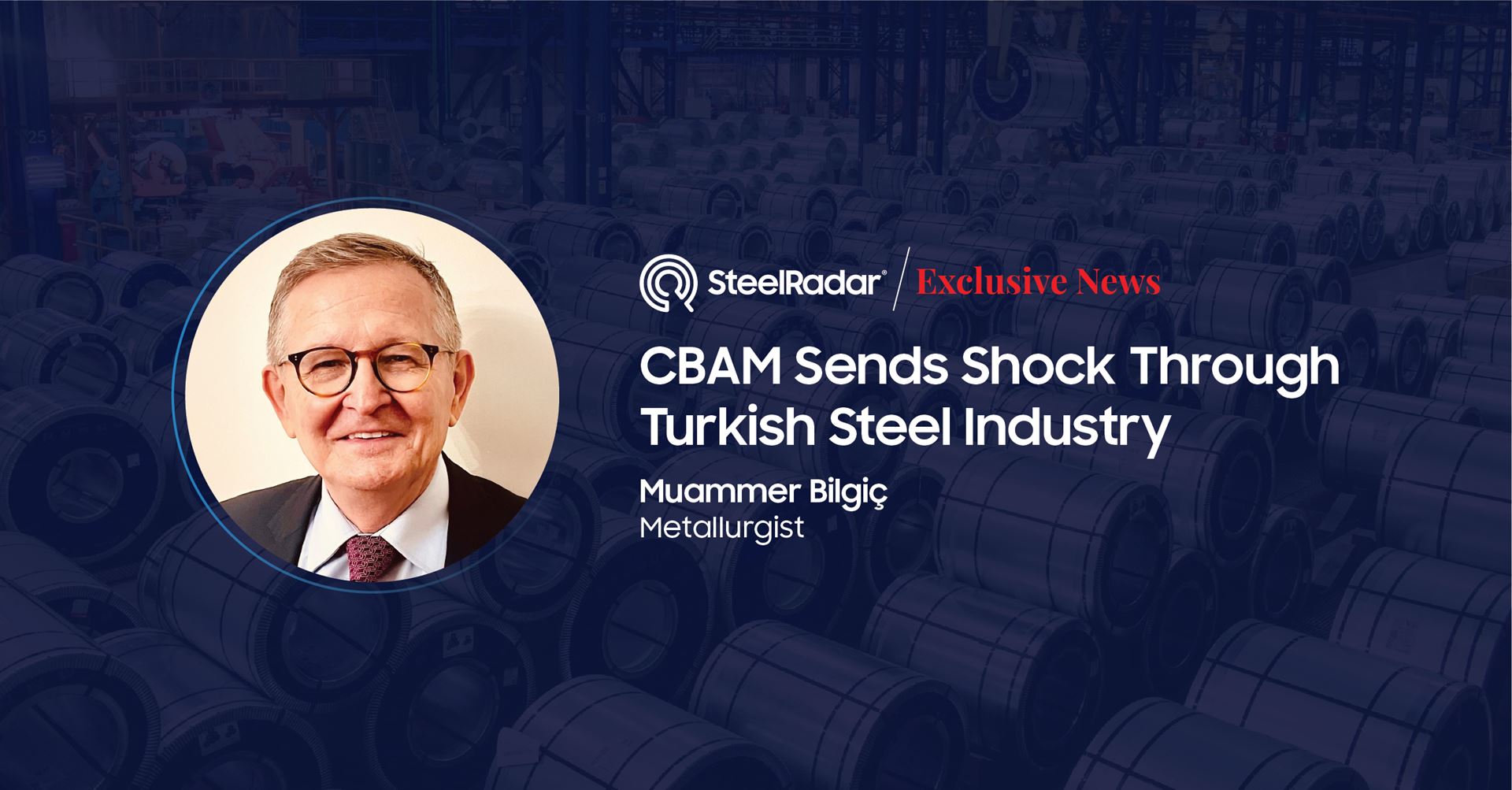
Bilgiç stated that the issue should be assessed from the perspective of whether the forecasts were wrong, whether this is a commercial game driven by external forces or a deep-rooted transformation, and whether something has been overlooked. He emphasized that if there is an error in perspective and it goes unrecognized, the sector will remain vulnerable to new shocks.
Recalling that the history of the process has long been known, Bilgiç underlined that it was already clear that benchmark or default values would serve as references and that the verification process would be the fundamental criterion. He stressed that these processes would not be left solely to individual countries and would be conducted meticulously. For years, modeling studies have discussed the additional costs that CBAM would impose on countries and sectors.
Bilgiç noted that the default values are very high and contain controversial differences. However, he emphasized that it has always been known that the system would operate based on verified values rather than default ones. “The European Commission may have deliberately set high default values to push producers toward the verification process and, by delaying the announcement of accredited verification bodies, to leave producers in an environment of uncertainty and encourage them to take decarbonization more seriously. Whether this approach is ethical can be debated; however, considering the decarbonization costs the EU has imposed on its own industry for years, the possibility of a reaction against those who fail to show sufficient sensitivity should be regarded as a risk.''
Bilgiç further stated that the main problem is that the announced benchmark values are very low and that the verified values of producers in Türkiye are not yet known. Assuming that the declared values were determined based on actual figures within the EU, there should not be a significant gap. However, since only a limited number of producers operate below the benchmark levels, it is highly likely that exports to the EU will be seriously affected by CBAM in terms of Scope 1 emissions.
Drawing attention to uncertainties in the sector’s own carbon footprint measurement and reduction processes, Bilgiç asked: “How many producers have verified their carbon footprint through local independent verification bodies? How many companies have declared SBTi-aligned 2030–2050 decarbonization commitments and prepared action plans? How many firms take into account that verification will be conducted on a final product basis and that liquid steel values alone are not sufficient? How many companies have treated decarbonization as a matter of corporate governance responsibility and verified their water footprint?” He emphasized that the main uncertainty stems not from the EU CBAM processes, but from Türkiye’s own carbon footprint measurement and reduction efforts.
“Acknowledging lack of preparedness and mistakes will be an important experience for producers”
Bilgiç stated: “If, due to being predominantly EAF-based steel producers, we are indeed much more advantageous than the rest of the world, then for those who correctly perceive the future, initiate transformation, and obtain verification in accordance with the relevant standards, the values to be revealed by accredited verification bodies should not be alarming. Exporters will either rely on their previously verified values, determine CBAM costs close to the actual figures, and decide whether to export, or they will acknowledge that they have not taken the process seriously enough and are not prepared for this extraordinary transformation, and therefore refrain from selling based on default values. Accepting a lack of preparedness and mistakes will be an important experience for producers.”
“The decisive factor is the actual grid emission value”
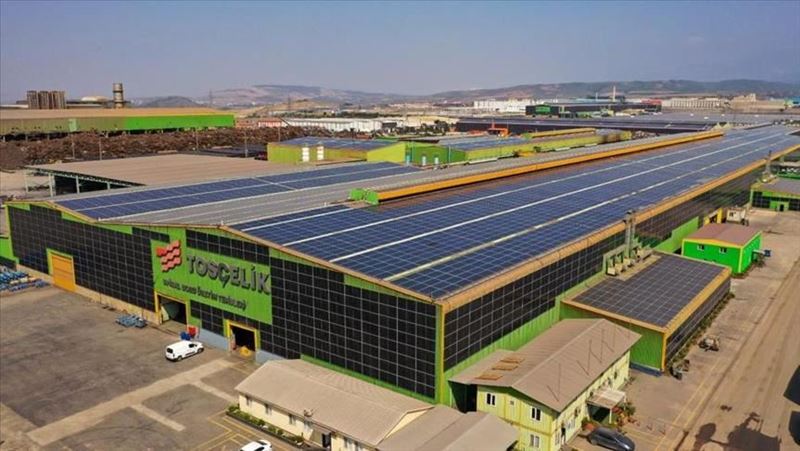
Bilgiç underlined that not only steel producers are unprepared, but also the central authority, which has underestimated the importance of electricity grid emissions under Scope 2 and failed to develop strategies accordingly. “If Scope 2 is included in the assessment, the CBAM cost risk would be incomparably higher than the potential cost under Scope 1. The impact of electricity grid emissions exceeding 450 gCO₂/kWh approximately twice the EU average on CBAM costs is being overlooked. The decisive factor here is not our installed renewable electricity capacity, but the actual grid emission value. The solution lies not in steel producers investing individually in solar power plants, but in the central authority programming a transition away from fossil fuels, resolving infrastructure, financing, and implementation barriers to renewable investments, and rapidly increasing the actual production of renewable electricity,” he explained.
Bilgiç concluded that the first shock of CBAM may stem from initial miscalculations; however, a second shock driven by Scope 2 emissions could be far more devastating for the Turkish steel industry, which exports 60% of its output to EU member and non-member European countries, and would not be resolved quickly. He also emphasized that similar mechanisms are likely to be introduced in other countries in the near future, and that acknowledging this reality and preparing accordingly will be critical to preventing further shocks.



Comments
No comment yet.