


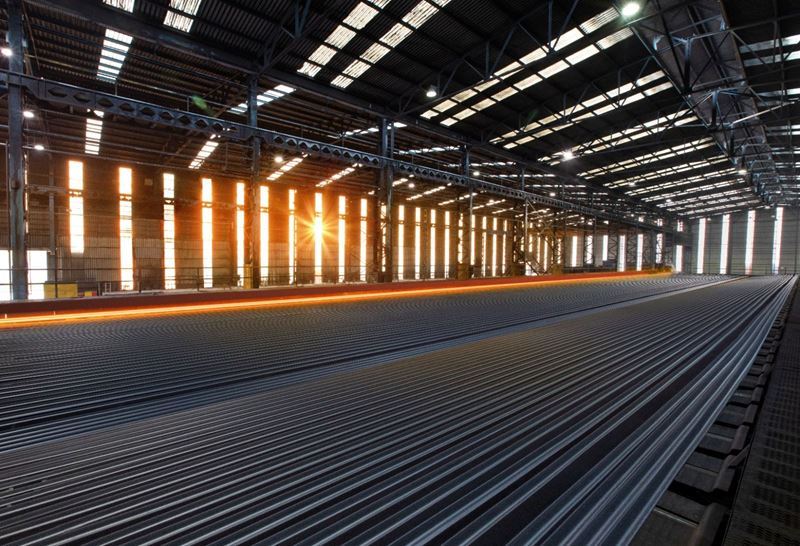
Türkiye, meanwhile, increased its steel production by 5.3% in the same period, reaching approximately 9.7 million tons. Kocaer Çelik achieved nearly 7% growth in production volume while maintaining its operational performance through its value-added product-focused manufacturing structure.
The first quarter of 2026 stood out as a period of deepening uncertainty for the global steel industry. Rising trade barriers, China-driven supply pressure, logistical disruptions, and geopolitical developments intensified competition across the sector, while global crude steel production declined by 2.3% during the quarter. China’s continued dominance with more than half of global production highlighted the structural persistence of competitive pressure worldwide. In contrast, Türkiye’s steel industry presented a relatively positive outlook on the production side, increasing output by 5.3% and retaining its position as the world’s seventh-largest steel producer.
Operational resilience maintained despite global uncertainties
During the period, Kocaer Çelik maintained a strong operational structure thanks to its flexible production capability, broad product portfolio, and geographically diversified sales network. The company’s production volume grew by nearly 7% in the first quarter. This performance, achieved despite fluctuations in global trade, logistical disruptions, and intensifying competition in export markets, demonstrated the company’s ability to adapt to changing market conditions.
The absence of sales to the United States this year due to tariffs that came into effect in June 2025, along with war-related disruptions in supply and shipment processes, caused some deliveries to shift into the second quarter, shaping the dynamics of the first quarter.
In the first quarter, Kocaer Çelik generated net sales revenue exceeding TRY 5 billion while sustaining operational profitability with TRY 715 million EBITDA and a 14.1% EBITDA margin. The increase in EBITDA margin compared to the previous quarter, despite ongoing global price pressure and rising costs and trade barriers, was regarded as an important indicator supporting the company’s efficiency-oriented production approach.
Value-added product strategy stood out
The company’s strategy focusing on value-added products also played a decisive role in first-quarter results. The share of these products in total sales volume reached 46.6%. The company’s production capabilities in energy transmission lines, solar energy infrastructure, steel structures, transportation, and infrastructure projects remained among the key factors supporting its competitiveness in global markets.
Exporting to nearly 140 countries, Kocaer Çelik continued to maintain a balanced regional distribution in sales revenues, while the share of foreign currency-denominated sales in total revenues remained in the 90–95% range.
Strong balance sheet structure maintained
Despite global market volatility during the first quarter, Kocaer Çelik preserved its strong balance sheet structure. The company’s net debt-to-EBITDA ratio stood at 0.9x, maintaining its low financial leverage profile. The company stated that it continues to focus on creating value through disciplined balance sheet management.
Hakan Kocaer: “Transformation in industry is no longer a choice”
Hakan Kocaer, Chairman of the Board of Kocaer Çelik, said in his assessment of the first-quarter results that the ongoing global transformation has made not only cost management, but also production flexibility, energy efficiency, and sustainability strategic priorities for industrial companies.
Kocaer stated:
“The first quarter of 2026 was marked by increasing uncertainties in global trade, continued cost pressures, and more intense competitive conditions. The successful results achieved by Kocaer Çelik under these challenging conditions are an important reflection of our technological production structure, agile management approach, and diversified portfolio of high value-added products. In particular, the contribution of our production infrastructure, which can rapidly adapt to changing market conditions, to our operational resilience has become clearly evident.”
Highlighting that competition in the global steel industry is no longer shaped solely by capacity, but increasingly by technology, sustainability, and product quality, Kocaer continued:
“Transformation in industry is no longer a choice, but one of the fundamental factors directly determining competitiveness. In line with this vision, we position our investments in digitalization, advanced manufacturing technologies, energy efficiency, and sustainable production at the center of our long-term strategy. While further strengthening our technological and agile production structure, we continue investments that support operational excellence. We believe Türkiye can achieve a much stronger global position through its high value-added production capability.”



Comments
No comment yet.