


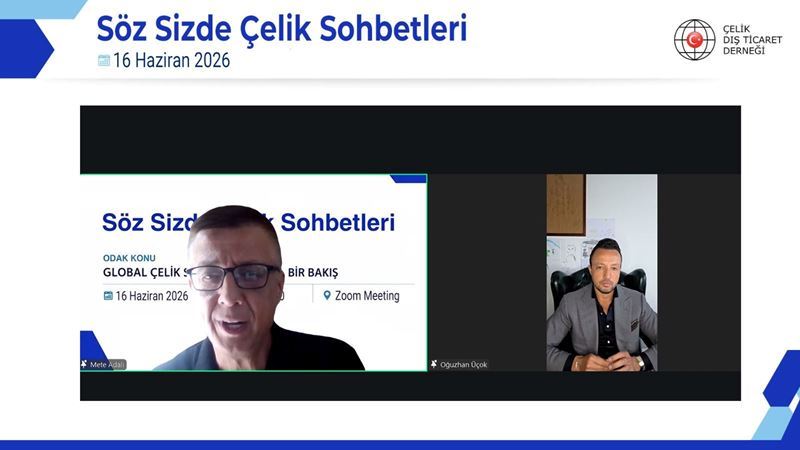
Vodina A.Ş. Chairman of the Board Oğuzhan Üçok, who approached cautiously the expectation that markets would recover rapidly in the event that the Strait of Hormuz is reopened through a possible peace agreement, emphasized that there is a significant time gap between the physical reopening and commercial normalization. Üçok said, “Even if the strait reopens, clearing the mines in the area, preparing the ships stranded inside for departure from ports, and allowing insurance companies to adapt their risk premiums to the new situation will take a considerable amount of time. The positive impact of the reopening of Hormuz on maritime trade will take at least 3 to 4 months, perhaps even longer.”
Summarizing the current situation in the dry bulk and coaster market as well, Üçok stated that the daily increases in the Baltic Dry Index (BDI) stem not from shipowners’ profitability but entirely from rising fuel costs. Expressing that the market is currently experiencing a serious shortage of cargo, Üçok stated that coaster shipowners are having difficulty keeping their vessels employed.
Increase in Container Costs Is Risk-Driven
Stating that the geopolitical risks centered on the Red Sea and Yemen have directly hit the container market, Oğuzhan Üçok said that the increase in container freight rates is a “risk cost” rather than a structural increase in costs. Saying that he does not expect the crises in the region to be resolved in the short term, Üçok made the following assessment: “As long as the problems in Yemen continue to exist, I believe that container costs will remain high. I think the attacks in the region will continue for much longer than I anticipated. Even if political and military tensions come to an end, logistics risks in the Mediterranean and its surrounding areas will not disappear completely unless government policies in the region change.”
A Protectionist Move from Europe: Carbon Tax and Pressure on Aging Vessels
Drawing attention to the fact that European shipowners are using new regulations as barriers to protect their own market share and competitiveness, Üçok referred in particular to carbon tax practices covering vessels above 5,000 gross tons. Explaining the basic rationale behind these regulations, Üçok stated:
“Europe is actually aiming to protect its own shipowners through these types of rules. They want to prevent shipowners operating 30- to 40-year-old vessels with low labor costs from undermining the market of European shipowners who bear high financing and operating costs. These regulations are a reality of life, and no one in global shipping will be able to escape them.”
Stating that ships can use biodiesel (biofuel) blends of 30% to 35% with the approval of main engine manufacturers in order to reduce carbon tax liabilities, Üçok said that emission levels are balanced through these pool systems that have been developed, but that this is not a long-term solution for older vessels.
“Turkish Shipowners Are Getting By on Their Own Resources”
Emphasizing that existing vessels will need to be renewed within the next 10 years at the latest, Üçok stressed that the biggest structural problem of the Turkish maritime sector is insufficient financing.
Drawing attention to the absence of a strong banking infrastructure in Türkiye capable of funding and financing the sector, Üçok concluded his remarks by saying, “Rather than benefiting from institutional financial support, Turkish shipowners are a capital class that, so to speak, tries to achieve things by scraping with its own fingernails and getting by on its own resources. Whether we have the capital infrastructure necessary to renew these vessels is the biggest question mark of the coming period.”




Comments
No comment yet.