


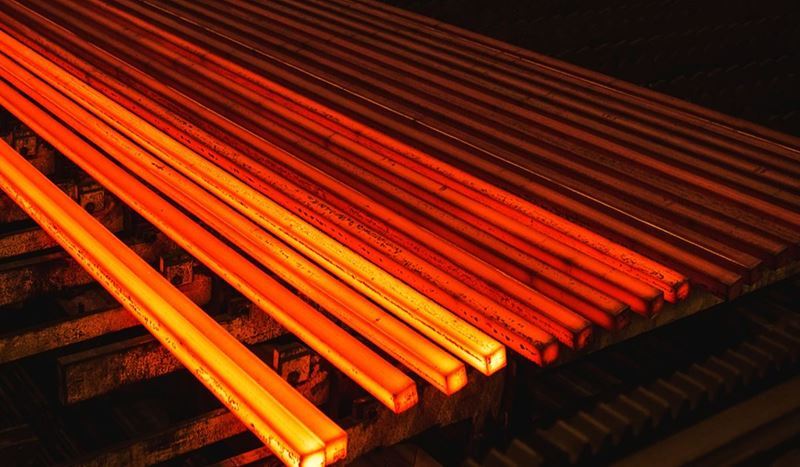
Khuzestan Steel Company (KSC), one of Iran’s leading producers, has sold 80,000 tons of billet for late August shipment. The two-lot deal, reportedly destined for the MENA region, was finalized at USD 430/t FOB.
Similar pricing levels prevail across the market. Iranian suppliers are quoting within the USD 420–425/t FOB range, while some Electric Arc Furnace (EAF) producers offering immediate delivery have raised their offers up to USD 435/t FOB. Meanwhile, Induction Furnace (IF) based producers are transacting at lower levels. IF billet prices are averaging around USD 405/t FOB, with smaller-scale producers offering below USD 400/t. Despite these lower offers, buyers are reportedly requesting discounts of USD 4–6/t.
Iran's rebar market, on the other hand, has seen price fluctuations in recent months. Prices started at around USD 445/MT in January 2025, but quickly dropped to USD 415/MT in March. After reaching this low point, prices started to recover slightly and stabilized around USD 430/MT in May and June. This fluctuation shows that the Iranian rebar market is affected by both local and international dynamics, such as changes in production capacity, trade restrictions or shifts in regional demand.
Iraq’s new tariff policies present fresh hurdles for Iranian producers
According to an official announcement this week, the Iraqi government plans to introduce new customs duties ranging from 20% to 30% on steel imports from Iran. This move is aimed at strengthening domestic producers in cities such as Basra and Baghdad and reducing reliance on foreign imports.
This decision is seen as a response to growing concerns over Iranian dominance in the market, especially following large-scale barter agreements between Chinese producers and Iraq involving rebar shipments in exchange for crude oil. While Iranian producers strive to maintain their foothold in the Iraqi market despite rising logistics and production costs, the proposed tariffs could directly impact their export volumes.
Seyyed Hamid Hosseini, a Board Member of the Iran-Iraq Joint Chamber of Commerce, described the move as Iraq’s effort to support its local industries. He stated, “The country has recently established rebar production units in cities such as Sulaymaniyah, Erbil, Karbala, and Basra, converting Iranian billet into finished rebar locally.” According to Chilan while highlighting the significance of rebar exports to Iraq, Hosseini added, “Iran exports USD 75 million to USD 100 million worth of rebar to Iraq each month, making it a major component of Iran’s non-oil exports to the country.”
A new chapter may require Iranian producers to rethink their strategies
With increasing restrictions on steel imports and stronger domestic industrial policies, Iraq’s evolving stance may force Iranian producers to reevaluate their traditional export routes. Losing Iraq as a key market, when combined with existing challenges such as energy shortages, high electricity costs, and limited access to international financing, could pose a serious contraction risk for Iran’s steel sector.
According to industry analysts, Iraqi duties in addition to the UAE's existing restrictions pose a new obstacle for Iranian producers. These current conditions may lead Iranian producers to turn to the domestic market or seek new opportunities in alternative markets such as Africa and Central Asia.



Comments
No comment yet.