


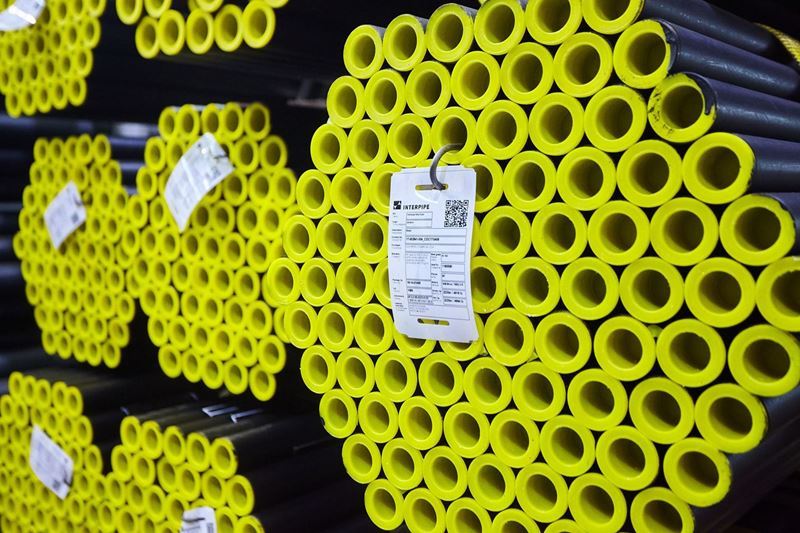
The company said that under the EU's revised steel safeguard mechanism, which entered into force on July 1, 2026, Ukraine was granted country-specific TRQs totaling 1,049,960 tonnes per year across nine product categories, according to the implementing regulation published on June 30.
Interpipe claimed that the annual quota of 80,670 tonnes allocated for Ukrainian seamless pipe exports was underestimated by at least 30%. The company said Ukrainian authorities had repeatedly informed the European Commission during the consultation process that the figure was based on incorrect data.
According to Interpipe, Eurostat-verified data show that a substantial share of Ukraine's seamless pipe exports to the EU during 2022–2024 was not fully reflected in the calculations used to determine the quota. The company argued that using the correct data would result in a quota at least 30% higher than the current allocation.
Interpipe also argued that the issue extends beyond a statistical error, claiming that the implementing regulation fails to fully reflect the preferential treatment for Ukraine approved by the European Parliament on May 19, 2026.
The company said Ukraine, an EU candidate country operating under wartime conditions, was assessed in the same way as major global exporters and countries with non-market excess steel capacity when calculating the most-favoured-nation (MFN) quota. It also noted that the same methodology applied to other free trade agreement partners was used for Ukraine without taking its exceptional circumstances into account.
Interpipe CEO Luca Zanotti warned that the current quota would have serious consequences for Ukraine's steel industry, which continues operating despite the war.
"The current steel quota represents a serious blow to Ukraine and its steel industry, which continues to operate under wartime conditions. It will have significant social and economic consequences for thousands of employees, their families, and communities that depend on Ukraine's steel sector. The purpose of the regulation is to address global non-market excess steel capacity, and Ukraine is clearly not part of that problem," Zanotti said.
He called on the European Commission to correct the data error in Ukraine's seamless pipe quota by the end of the third quarter of 2026, describing it as the only fair solution to rectify the miscalculation.



Comments
No comment yet.