


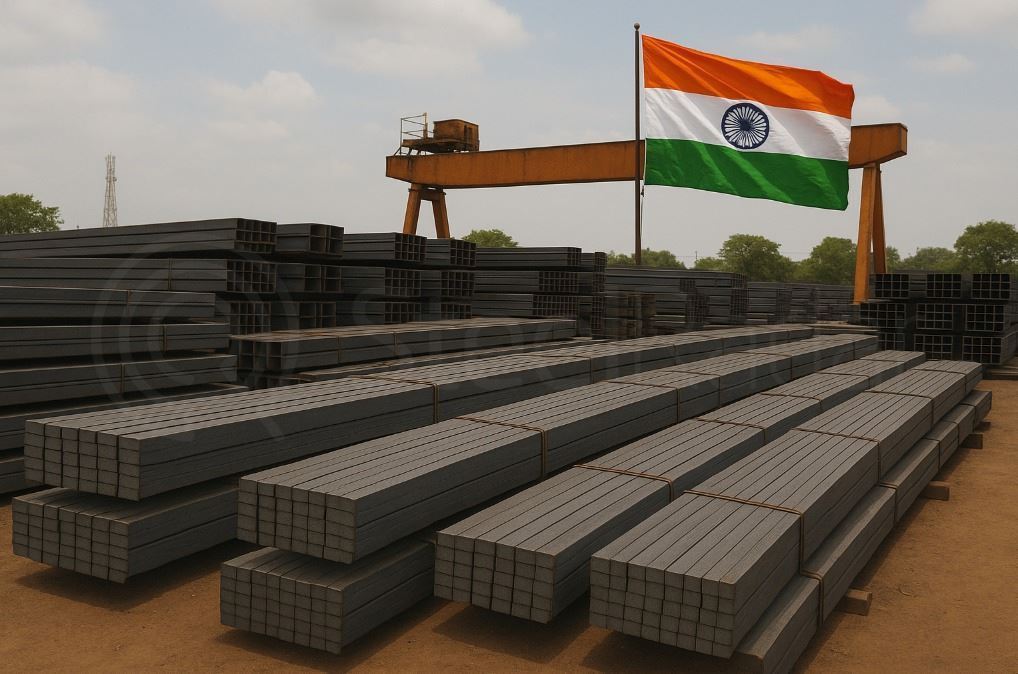
Although the market has shown a stagnant trend in recent weeks, new purchase expectations for the January–February period are creating cautious optimism in the sector. Slowing domestic demand and global price pressures continue to limit profitability, particularly for high-capacity producers. In the week of 17–23 November, domestic HRC traded at USD 530 and CRC at USD 598, while as of 25 November both product groups had decreased by around USD 5. Average prices in other market segments are approximately USD 315 for scrap, USD 443 for billets, and around USD 436 for rebar and flat products. Iron ore prices have remained stable at USD 104 for an extended period.
On the production side, the picture is clearly stronger. According to World Steel Association data, India’s crude steel output reached 13.6 million tons in October 2025, marking a 5.9% year-on-year increase. Cumulative production from January to October rose to 136 million tons, reflecting roughly 10% growth compared with the same period last year.
Despite weak demand, companies are bringing forward capacity expansion plans to maintain long-term strategic positions:
-
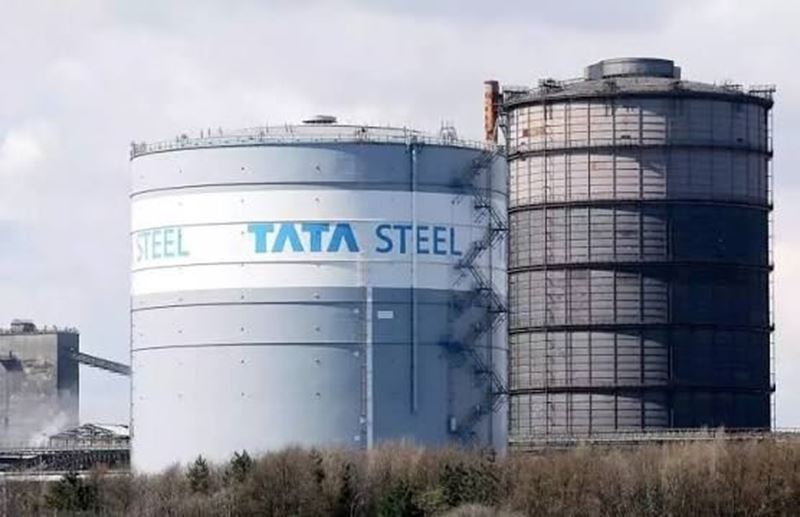
Tata Steel aims to double production at its Kalinganagar plant from 8 MTPA to 16 MTPA.
-
SAIL is modernizing production lines at Rourkela, improving efficiency.
-
Visakhapatnam Steel Plant nearly doubled its capacity, significantly expanding regional production strength.
-
The commissioning of India’s first domestic BOF converter through MECON–SAIL collaboration is considered a critical milestone for technological independence.
-
Investments in green steel and logistics at Vizianagaram, together with coastal highway–inland port projects, are seen as strategic moves that will reduce carbon footprint and enhance supply chain efficiency.
Alongside capacity and technology investments, the sector is also being supported by policy measures. India’s Ministry of Steel has suspended the implementation of 42 quality standards for three years and 13 special steel standards for one year, aiming to facilitate import access for the MSME segment and ease supply pressures.
As part of India’s goal to diversify its steel production geography, AID has proposed establishing a new steel production zone in Gadchiroli, Maharashtra, with incentives. Provided adequate incentives, many secondary producers are reportedly ready to set up plants in the area.
Over 90% of India’s coking coal—accounting for 35–45% of crude steel production costs—is imported, with Australia as the largest supplier. India has recently been exploring alternative sources such as Mozambique and Indonesia to reduce reliance on Australia.
Indian companies are also expanding their portfolios in critical metals. Adani Group signed an MoU with Chile’s state-owned Codelco to jointly evaluate three copper projects in Atacama and Antofagasta. Several companies, including JTL Industries, are pursuing copper and other strategic metals, accelerating diversification in line with the country’s industrial policy. Globally, strategic steps by Indian capital include Vedanta’s smelting plant investment in Saudi Arabia and Vulcan Elements’ rare earth magnet production project in the United States.



Comments
No comment yet.