


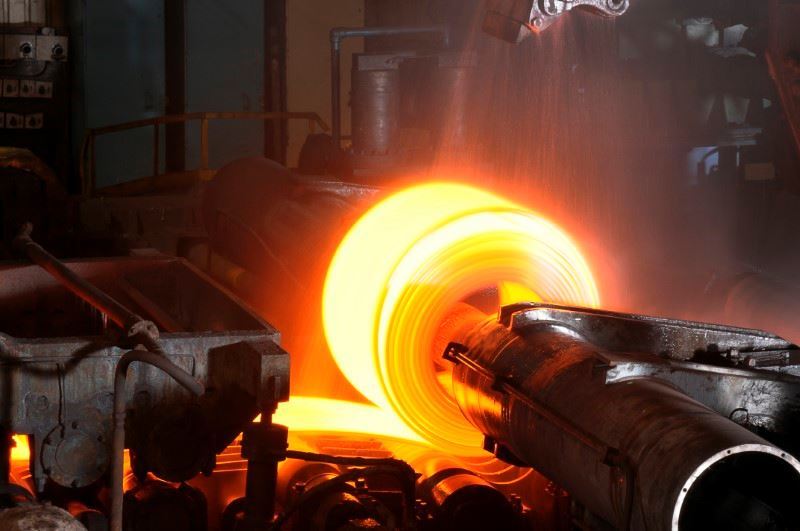
The price differential between Indian hot rolled coils (HRCs) and cold rolled coils (CRCs) reached a nine-month low of INR 8,000/tonne ($108) on September 21. This level was around INR 8,850/ton ($119) in December'20. The spread widened to a record high above INR 16,000/t ($215) on June 21.
It shows that in the three months since July, average monthly CRC prices have dropped from INR 79,500/tonne in July to INR 77,500/tonne in August and INR 73,400/tonne in September.
In addition, HRC prices varied less, while cold rolled coils varied more. For example, since June 21, when the spread reached a record high, CRC prices have increased by 2.29% compared to May'21, against 1.66% for HRC. In July '21, CRC prices decreased by -4.61% versus -3.46% of HRC. Aug '21 shows that CRC prices decreased by -2.29% and HRC prices increased by 2.72%. On September 21, HRC fell -1.71% against the much deeper fall of -5.39% for cold rolled coil, which narrowed the gap sharply this month. 18% VAT is not included in the stated prices.
Why did the gap widen?
Exports affect domestic prices: The gap widened above the INR 16,000/tonne levels in June, as exports, especially from Europe, were very brisk at that time and released the auto segment demand, which had been suppressed as we emerged from the pandemic. HRC and plate exports increased from 0.32 million tons in February'21 to over 0.81 million tons in March'21 and continued to increase until August 21. However, HRC exports have traditionally been at a higher level compared to other flat rolled products. Interestingly, CRC exports began to balloon steadily. It increased from 30,000 tons to 85,682 tons in March'21 by February 21, and reached 0.18 million tons on August 21.
Average HRC FOB Index price increased from $765/ton in March'21 to $926/ton in April'21, followed by the psychological barrier to $1,027/ton and $1,030/ton in June and July, respectively. The rise is not surprising. High export prices also pushed up domestic prices. In May-July, trading level HRC prices were high, especially cold rolled coils reached record highs around INR 80,000/ton.
China withdraws export tax refund: The country has lifted export duty on hot rolled coils and cold rolled and galvanized products from 1 August'21 from 1 May'21 to keep its processed steel on its shores against crude steel production cuts. This move boosted Indian exports, as end-users globally were not keen on booking China-to-China cargoes, which were becoming more expensive. China's steel exports recorded a steady decline from 6.46 million tons in June to 5.67 million tons in July and 5.05 million tons in August. This move by China has given Indian producers more room to export these months.
Demand from South East Asia has slumped: However, European quotas have been exhausted and demand from South East Asia, a traditional export destination, has come under pressure due to Covid restrictions, export bookings have been quiet since July and prices are $895 this month / ton. It rose slightly to $905/ton in August and then decreased to $875/ton in September, bringing down the domestic flats prices of CRC in particular.
Commercial mills resume production: Commercial cold rolling mills, most of which were out of operation due to the upgraded technology and low prices of primary mills, returned to the market when they saw that the domestic prices of cold rolled coils were so high from April-May. CRC prices have been particularly affected in the last few months, with more supply injections in the market.
Automotive slowdown: Several automakers, including Maruti Suzuki (60%) and Mahindra and Mahindra (40-50%), announced production cuts in September due to a shortage of sawdust. Demand from auto and auto by-products slowed down in August-September. CRC is generally used in the interior and exterior of cars.
In particular, China is expected to reduce its production and exports of hot-dip galvanized iron (HDGI). Korean HDGI manufacturers have already raised their offers in anticipation of a decline in Chinese sales in the coming months. Local manufacturers in China have stopped selling HDGI, pending further market orders. Indian producers can take advantage of this scenario by exporting higher volumes of CRC and HDG at more favorable prices.
The festive season in India could boost sales of automobiles and consumer durables in India, although not a major flat steel consumer. In anticipation of high demand, India's largest automaker, Maruti Suzuki, has asked its dealers to return to previously planned production levels. It also plans to increase production in October-November and has told vendors that they will regain lost volumes in the next 3-4 months, which is good news for steel.
Market participants are unclear as to whether the spread will widen. However, both CRC and HRC prices are likely to increase. HRC prices are supported by rising housing demand.




Comments
No comment yet.