


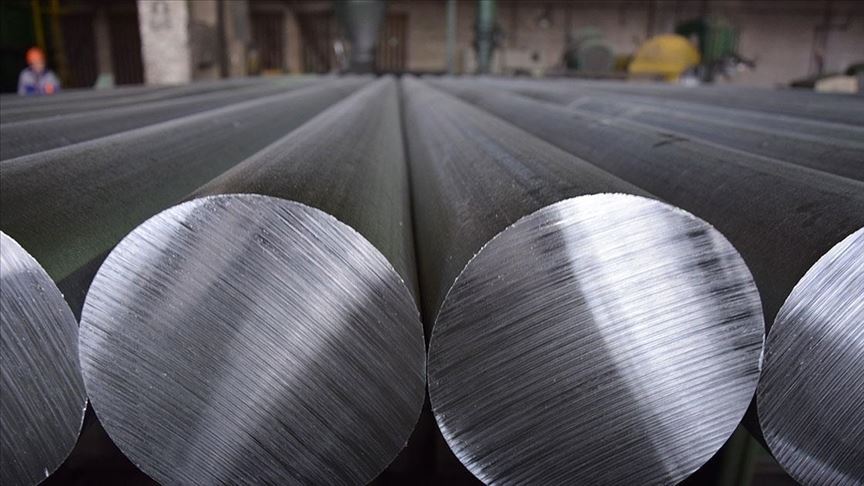
While the commodity market continued its upward trend with the effect of Russia-Ukraine tensions last week, nickel reached its highest level since August 2011 with 11,1629 dollars, while gold increased its rise by 2 percent for the third week in a row.
Geopolitical risks caused the rises in the commodity market to dominate last week.
Analysts stated that the news flow on the developments on the Russia-Ukraine border throughout the week caused high volatility in asset prices, while the statements made by US President Joe Biden after the markets closed on Friday indicated that the volatility in asset prices may continue for a while.
Biden asked a journalist, "Do you believe Putin has decided to invade Ukraine?" "Yes, I believe Putin has decided that now." While replying, he stated that he had reason to believe that Russia would attack in the coming weeks.
The USA Federal Reserve (Fed) minutes were another factor affecting the commodity market.
Increasing uncertainties on the issue after the contradictory statements of Russia and the USA about Ukraine and the meeting minutes of the US Federal Reserve (Fed) revealing a less hawkish picture than expected increased demand in commodity markets.
The continuation of geopolitical risks caused investors to turn to gold, which is seen as a safe haven. The ounce price of gold, which reached its highest level since June 1, 2021 at $ 1,902, carried the upward trend for the third week in a row, ending the week with an increase of 2 percent.
Last week, silver 1.4 percent, copper 1.6 percent, palladium 1.1 percent, lead 3.3 percent, platinum 3.8 percent, aluminum 2.6 percent, nickel 3.6 percent, increased. Nickel also hit $11,1629, the highest level since August 2011.
Protests by indigenous people against the Las Bambas mine in Peru caused copper prices to rise. The fact that Russia is among the world's leading countries in aluminum and nickel production has had an upward impact on aluminum and nickel prices.
Analysts said that the predictions that an economic sanction could be imposed on Russia caused concerns about the supply and supply of aluminum and nickel.
Brent oil breaks 8-week bullish streak
Brent oil, which took a break from its 8-week upward series, finished the week with a decrease of 1.9 percent.
The strengthening of expectations for additional oil supply from Iran to the market was effective in the decrease in prices.
Negotiations are continuing in Vienna, the capital of Austria, for the full and complete implementation of the Iran nuclear deal. Informing the senators about the negotiations in the French Senate, French Foreign Minister Jean-Yves Le Drian noted that a decision on the nuclear agreement with Iran could be reached within a few days.
Iranian Deputy Foreign Minister and Chief Negotiator Ali Bakiri also stated that they are closer than ever to a final agreement in the talks, in a message he shared on his social media account on Wednesday.
If the negotiations are concluded positively, it is evaluated that approximately 1 million barrels of oil per day can be supplied to the market with the lifting of sanctions on Iranian oil.
Natural gas, on the other hand, increased by 12.9%. In addition to geopolitical risks, the forecasts that the weather might get colder and the demand for natural gas might increase affected prices upwards.






Comments
No comment yet.