



The outlook for the Gulf Cooperation Council (GCC) steel market is becoming increasingly uncertain as geopolitical tensions disrupt key maritime routes and raise concerns about raw material flows. Market participants say the potential closure of the Strait of Hormuz and broader logistical risks are already affecting trade activity, with shipments suspended and new deals slowing across the region.
Traders in GCC countries warn that if shipping through the Strait of Hormuz remains restricted, some previously contracted cargoes could be declared under force majeure. Several buyers in the United Arab Emirates report that shipments scheduled for this week have already been suspended. At the same time, suppliers are becoming more cautious in concluding new transactions as they reassess logistical, insurance and freight risks linked to the escalating situation.
Even in cases where vessels are technically able to transit the Strait of Hormuz, traders note that the economic impact could still be significant. War risk insurance premiums have surged, while bunker fuel costs are increasing as shipping companies consider longer alternative routes. If security concerns also affect traffic through the Red Sea, vessels may be forced to reroute around the Cape of Good Hope, substantially increasing voyage distances. Market participants say these factors could fundamentally alter the cost base of steel products moving between Asia, the Middle East and Europe.
The uncertainty comes at a time when the region’s semi-finished steel market was already facing tightening supply conditions. Asian suppliers have reportedly delayed or suspended some shipments of billet to the GCC, creating gaps for rolling mills that rely heavily on imported feedstock. Meanwhile, market talk about disruptions to Iranian exports of iron ore, pellets and direct reduced iron (DRI) has increased concerns about raw material availability for some regional producers.
Against this backdrop, several steelmakers in the United Arab Emirates had recently been seeking around 150,000 tonnes of billet, particularly ECAS-certified material, for delivery between mid-May and mid-June. The additional demand was largely linked to planned maintenance at upstream facilities and existing supply commitments to affiliated companies. However, with cargo availability tightening and some shipments suspended, the feasibility of these procurement plans is now uncertain.
Market participants note that the current situation differs from previous geopolitical disruptions that occasionally benefited regional mills through higher prices. This time, many producers are themselves exposed to supply risks, especially those dependent on imported raw materials or semi-finished steel.
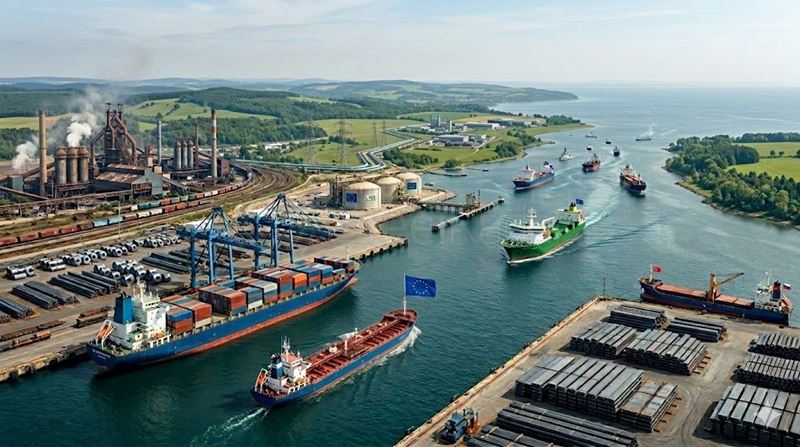
The disruptions are also raising concerns beyond the GCC. Since 2025, steel exports from the region to the European Union have been gradually increasing, supported by exemptions from the EU’s safeguard measures. Saudi hot-rolled coil (HRC) and hot-dip galvanized coil (HDG) from the UAE have been among the products entering the European market under these conditions.
Trade data indicate that around 165,000 tonnes of Saudi HRC were imported into the EU during the second half of 2025. Over the same period, the UAE shipped roughly 130,000 tonnes of HDG to European buyers. The final batches of material from GCC countries that are not subject to EU protective measures are expected to arrive during the first half of 2026. However, traders say the current shipping disruptions could put these deliveries at risk.
Another concern among market participants is whether further escalation could affect maritime routes beyond the Persian Gulf. Some traders are closely monitoring the security situation around the Red Sea, fearing that any disruption there could further complicate the movement of steel and raw materials between Asia, the Middle East and Europe.
For now, trading activity across the GCC steel market has slowed as buyers and sellers adopt a cautious wait-and-see approach. Industry sources say the coming weeks will be critical in determining whether logistical disruptions translate into tighter supply, price volatility or adjustments to production and export flows across the region.





Comments
No comment yet.