


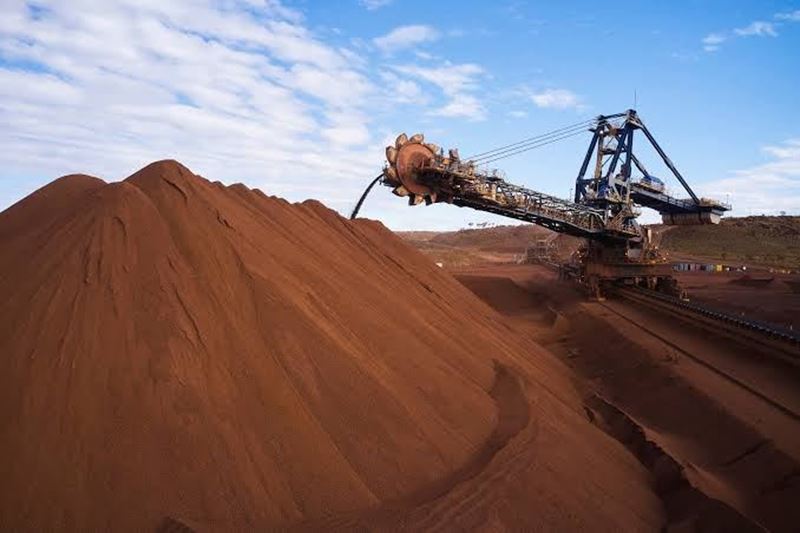
Australian mining company Fortescue shipped 52.7 million metric tons of iron ore in the fourth quarter of the 2026 fiscal year, which ended in June. Although the company’s shipment volume declined by 5% compared to the 55.2 million metric tons recorded in the same period last year, it exceeded market expectations.
While the analyst consensus compiled by Visible Alpha stood at approximately 52.48 million metric tons, Fortescue’s reported shipment of 52.7 million metric tons exceeded expectations by about 220,000 metric tons. Thus, despite a y-o-y decline, the company delivered a stronger quarterly performance than the market had anticipated.
The company stated that the primary reason for the y-o-y decline in shipments was weak performance at its hematite operations in the Pilbara region. Hematite production at the Chichester Hub and Solomon Hub facilities—which account for a significant portion of Fortescue’s output—plays a decisive role in the company’s total iron ore shipments.
Fortescue’s main product, the Pilbara Blend, has an average iron grade of 57–58% Fe, which is below the 62% Fe quality benchmark accepted as a reference in the international iron ore market. Consequently, the company’s products trade at a discount relative to reference prices due to this quality difference. This price difference can vary seasonally depending on demand from Chinese steel producers and changes in the supply of high-grade ore.
In terms of shipment volume, Fortescue maintains its position as the world’s fourth-largest iron ore producer, with annual production exceeding 200 million metric tons, trailing Vale, Rio Tinto, and BHP. Vale ranks first with annual shipments of approximately 310–330 million metric tons, while Rio Tinto, with a production volume of 320–330 million metric tons, and BHP, with 280–290 million metric tons, are ahead of Fortescue in the global rankings.



Comments
No comment yet.