


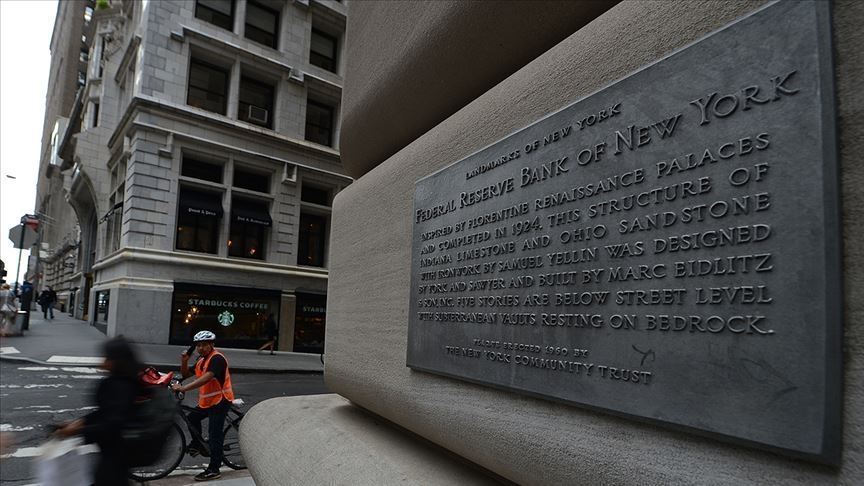
The US Federal Reserve (Fed) released the minutes of the Federal Open Market Committee (FOMC) meeting held on July 27-28.
The minutes of the last meeting, where the policy rate was kept constant in the range of 0-0.25 percent, showed that Fed officials discussed the timing and mechanisms of reducing asset purchases at the July meeting.
In the minutes, which reveal that the Fed is considering preparations to begin reducing its asset purchases later this year, all members agreed that the economy has made progress towards the Committee's maximum employment and price stability goals since December, but that most members have not yet met the standard of "significant progress" in the maximum employment target. decision has been reported.
In the minutes, it was noted that most members stated that the "significant progress" standard was achieved in the price stability target.
Some members prefer to wait until early 2022 to reduce their asset purchases.
"Looking ahead, most members indicated that it would be appropriate to begin slowing the pace of asset purchases this year, provided the economy recovers broadly as expected," the Fed's minutes said. statement was included.
Members agreed that the committee would notify before making changes in policy, with some officials indicating that a decrease in the pace of asset purchases is more likely to become eligible early next year.
In the minutes, it was stated that the members expressed various views on reducing their asset purchases at the appropriate pace, while also stating that the standards for raising the target range for the federal funds rate are different from the standards for reducing asset purchases and the timing of these actions will depend on the course of the economy.
Some members drew attention to the upside risks to inflation.
In the minutes of the meeting, where the uncertainty and risks regarding the economic outlook were also discussed, it was noted that many members stated that the uncertainty is quite high as the slowdown in vaccination progress and the developments regarding the delta variant pose downside risks to the economic outlook.
"Some members noted upside risks to inflation, linked to concerns that supply disruptions and labor shortages could continue longer than anticipated and have larger or more lasting effects on prices and wages than currently assumed," the minutes said. assessment was included.
In the minutes of the Fed, it was stated that members concerned about inflation argued that it would be more prudent to start reducing their asset purchases in a relatively short time due to the risk that the latest inflation readings may be more permanent than expected.
It was noted in the minutes that members pointed out that inflation increased above expectations this year in general, and that the increase in inflation was attributed to supply constraints in the goods and labor markets and to the increase in consumer demand as economic activity returned to normal.
In the minutes, it was emphasized that some members drew attention to the risks that the increasing new types of coronavirus (Kovid-19) cases due to the spread of the delta variant may cause delays in returning to work and school, and therefore reduce the economic recovery.
Concerns about fixedcoins reflected in the minutes
The Fed's minutes also revealed that officials had addressed the potential threat of stablecoins to financial stability.
Noting the lack of transparency and an underdeveloped regulatory framework regarding "new financial regulations" such as stablecoins, the minutes underlined the need for close monitoring of stablecoins and the development of an appropriate regulatory framework.






Comments
No comment yet.