


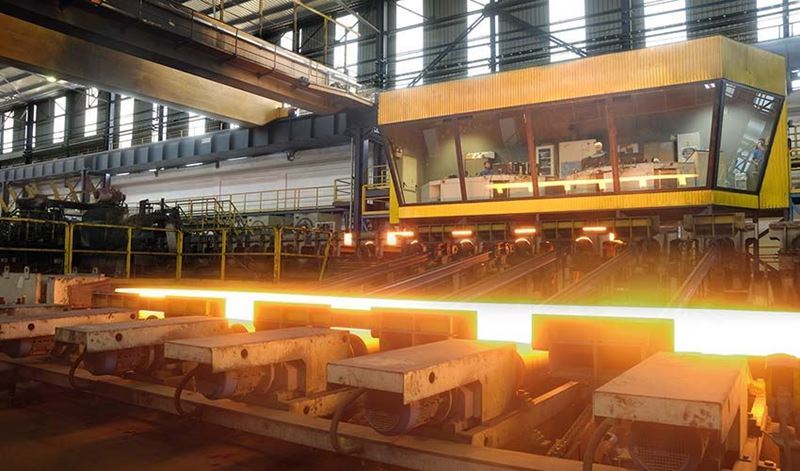
Organizations representing Europe’s steel end-user sectors — ACEA, APPLiA, CECE, Cecimo, CEIR, CEMA, FEC, Metal Packaging Europe, Orgalim and Pneurop — warned in a joint statement published on 6 January that the European Commission’s draft regulation aimed at protecting the EU steel market could have serious negative impacts on downstream manufacturing industries.
In the statement, the associations acknowledged the need to ensure a level playing field for the European steel sector and to address global overcapacity. However, they stressed that the new parameters proposed by the Commission would excessively restrict the European market and that a “fairer and more balanced” approach is needed between the demands of European steel producers and the requirements of steel users.
Up to 47% cut in import quotas, out-of-quota duties to rise to 50%
Under the Commission’s draft proposal, total import quota volumes for steel products would be reduced by nearly half, while the out-of-quota customs duty — currently set at 25% — would be increased to as much as 50% for certain product groups. The associations warned that if import volumes remain at 2024 levels, the combined effect of tighter quotas and higher duties could force downstream industries to absorb additional costs of between €5 billion and €9 billion per year.
According to the Commission’s own assessment, the new measures would lead to an average increase of 3.25% in EU steel prices. However, the associations described this as a “minimum estimate,” noting that price increases in some steel categories could reach as high as 30%. They warned that this would undermine the competitiveness of both companies relying on imported steel and businesses dependent on EU-produced material.
‘Melt and pour’ rule would hit SMEs: origin verification not feasible for small shipments
One of the strongest criticisms focused on the proposed “melt and pour” rule, which would require mandatory origin verification for certain steel products. The associations argued that this requirement would impose a heavy administrative burden, particularly on small and medium-sized enterprises (SMEs), and that documenting production origin for low-value or small-volume shipments is “in many cases practically impossible.”
They therefore called for the rule to be implemented in a far more cautious, practical and phased manner.
Supply risks for specialty and high-grade steels due to insufficient EU capacity
Steel users also warned of inevitable supply shortages in specialty and high-grade steels used in complex industrial applications. These products are supplied by a limited number of producers globally, while EU production capacity is insufficient to meet demand. As a result, the draft regulation could “seriously jeopardize product availability” in these critical segments.
Cost impact will intensify when combined with CBAM and the phase-out of free ETS allowances
The associations further noted that when combined with the additional costs arising from the implementation of CBAM and the gradual phase-out of free ETS allowances, the new steel safeguard measures would create a “cumulative and heavy cost burden” for European downstream industries.
They added that companies have increasingly been forced to shift procurement from CFR to DDP terms in order to mitigate CBAM-related risks, further driving up supply chain costs.
Call to exclude close trading partners such as Switzerland
The statement also argued that applying the measures to close trading partners such as Switzerland — which do not contribute to global overcapacity and are key suppliers for high-end industrial applications in the EU — would be “unjustified and harmful.” The associations called for these countries to be excluded from the scope of the proposal.
“If adopted as it stands, it will harm Europe’s steel users”
The ten associations urged European policymakers to handle the proposal more carefully, in a balanced manner and in line with market realities during the legislative process. They warned that, in its current form, the draft poses a serious threat to Europe’s steel users and downstream sectors.





Comments
No comment yet.