


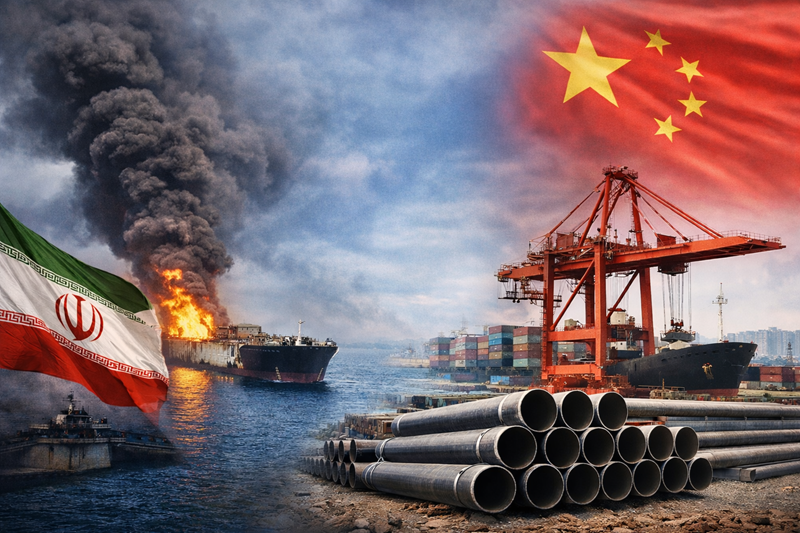
Shipping through the Strait of Hormuz between Iran and Oman has come to a standstill due to the conflicts. Iran attacked ships in the region in retaliation against the United States. The strait constitutes a significant portion of oil trade and is also an important route for China’s steel exports to the Gulf. The region has become China’s second-largest market amid trade barriers imposed by other countries, accounting for 16% of China’s exports last year.
According to reports from four Chinese steel consulting firms and one steel trader, some Chinese producers have halted sending new cargoes to the Gulf due to disruptions in shipping. A steel trader in East China said, “There is no other option. Shipping companies are currently not allocating vessels to destinations near the Persian Gulf markets.” Speaking on condition of anonymity as they were not authorized to speak to the media, the trader added, “Without ships, you don’t have a freight guide; without both, it’s difficult for us to make offers,” and stated that they are closely monitoring developments in the region.
Despite rising protectionism in traditional markets such as Vietnam and South Korea, the shift toward the Middle East has been one of the key factors behind the surprisingly resilient exports from China to these countries over the past three years. Shanghai Metal Market analysts noted in a report published on Monday that China’s steel exports to Middle Eastern countries are likely to decline in the short term, which would increase domestic supply pressure and push prices down.
(Source: Reuters)





Comments
No comment yet.