


In 2026, China’s total steel demand is expected to record an approximate 1.3% decrease, while indirect exports through sectors such as home appliances and automotive are projected to account for around 16% of total steel demand, partially offsetting the decline.
It was stated that inventories of major steel products held by Chinese steel mills decreased by 1.1% in the final week of the year, reaching 3.81 million t. In addition, Chinese buyers continue to show limited interest in seaborne coking coal, as domestically sourced coal remains cheaper. Safeguard duties of 11 to 12% imposed for three years on certain flat steel products originating from China, Vietnam and Nepal highlight the strengthening of protectionist tendencies in global trade.
Vietnam has become a net importer of approximately 5.5 million t due to anti dumping duties on Chinese origin HRC. India, supported by strong domestic demand, has remained a net importer for the past two years and recorded net imports of around 2 million t in 2025. Under this environment, export prices for Chinese origin flat steel products continue to be shaped by regional demand conditions. Chinese HRC offers are heard at around 505 USD/t CFR Türkiye for Q195 and 525 USD/t CFR Türkiye for S235, while the domestic HRC price stands at 468 USD/t.
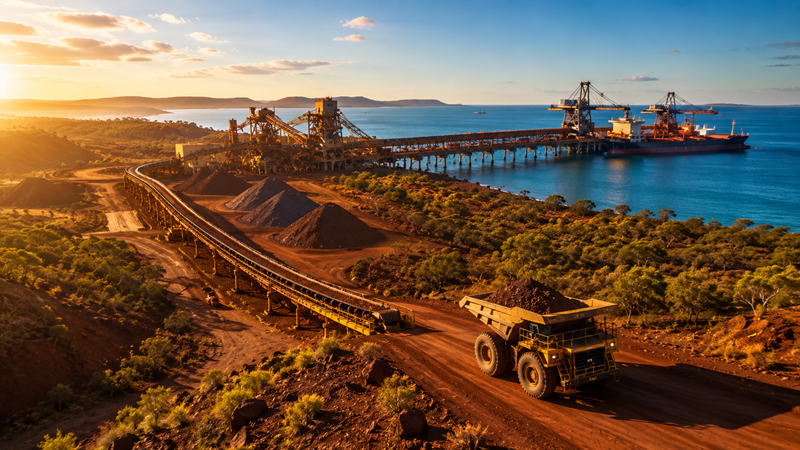
Iron ore markets are no longer driven solely by supply demand dynamics, but also by climate regulations and industrial policies. Despite its high grade, shipments from Simandou to China in 2026 are expected to reach 15 to 20 million t; however, logistical constraints related to rail and port infrastructure continue to limit volumes. As a result, Simandou is emerging more as a medium grade blend rather than a replacement for Pilbara, while Pilbara ores, which offer consistent quality, remain important for Chinese producers. With the surplus remaining limited, price pressure is easing, with 61% Fe CFR North China at 105.80 USD/t and 65% Fe CFR North China at 121.70 USD/t.
Imported scrap prices in India and Pakistan showed a limited increase despite weak demand, supported by market activity in Türkiye and rising freight costs in Pakistan. In India, shredded scrap CFR Nhava Sheva is assessed at 355 USD/t.
India lifted restrictions on the import of low ash metallurgical coke as of 3 January 2026, returning to a more liberal import policy. Despite this move, shipments of coke from Indonesia are reported to remain resilient. Indonesian coking coal is priced at 103 USD/t.
With annual growth exceeding 9%, India continues to stand out in global steel demand. ASEAN 5, MENA, and Central and South America are also expected to emerge as key demand centers in the coming period.
In 2026, the center of gravity of global steel demand is expected to shift toward rapidly industrializing regions such as India, Southeast Asia and the Middle East. At the same time, CBAM will reshape competitive conditions. While Chinese steel may remain relatively advantageous in terms of carbon taxation compared to Indonesia and India, it will face higher carbon costs when competing against lower carbon intensity producers such as Japan, South Korea and Taiwan.




Comments
No comment yet.