


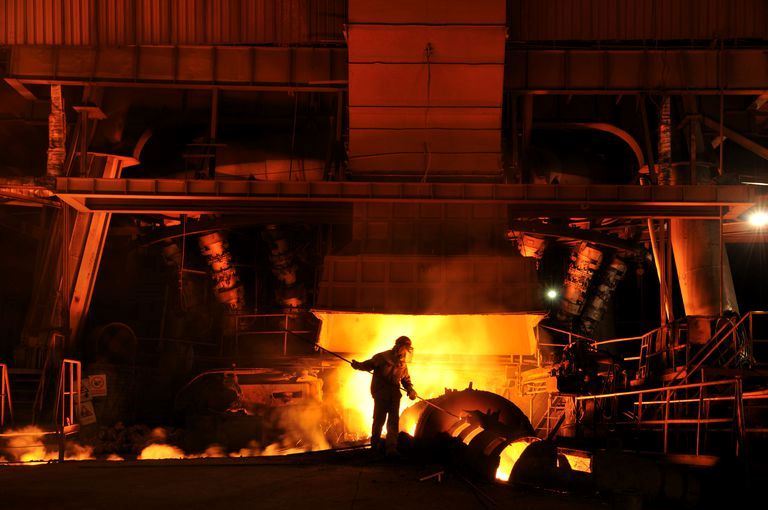
Tangshan City, China's largest metallurgical center, has announced an air quality plan for the Winter Olympics and Paralympic Games, which will be held in Beijing and Zhangjiakou on February 4-20 and March 4-13, 2022, respectively.
Restrictions were placed on the production of coke and sinter, iron and steel smelting to reduce the level of environmental pollution, as was customary during major events in China, before the start of the Olympics and before its end in Tangshan. Depending on the degree of compliance with environmental standards, businesses will have to reduce production by 30-50%.
According to the Chinese consulting firm Mysteel, similar restrictions on the time of the Games will apply in the province of Hebei. These are expected to be announced later this year. This could lead to a 30-35% reduction in steel production in the region within two to three months.
However, restrictions on the smelting of pig iron and steel in Tangshan have been in effect since March 2021. Steel production volume in the region in the first half of this year amounted to 64.4 million tons, which is 7.2% less than the previous year. In the same period of 2020. In the whole of Hebei province, 121.5 million tons of steel were melted in the January-July period, which is 0.8% less than the same period of the previous year.
Chinese experts expect new measures to be taken to reduce steel production and exports in China. Specifically, according to S&P Global Platts, China may impose a 10-15% export duty on hot rolled thin and plate steel. In the first half of 2021, Chinese companies shipped 9.21 million tons of these products abroad, accounting for 32% of the total foreign sourcing volume for this period.




Comments
No comment yet.