


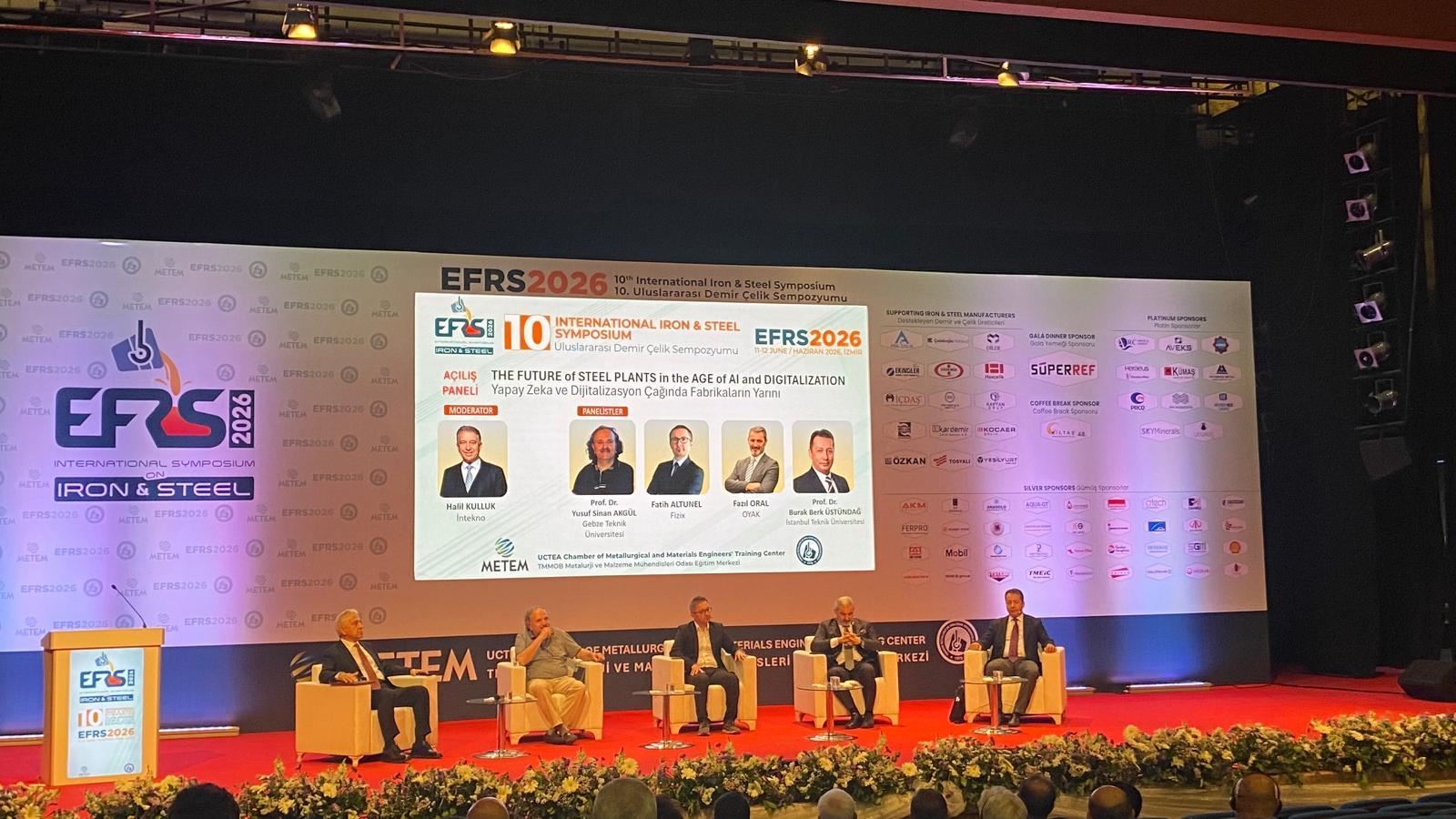
The panel, which brought together industry representatives to discuss technology, innovation, and the future of heavy industry, was moderated by Intekno Group Chairman and CEO Halil Kulluk. During the session, Fazıl Oral from K2C Consulting and other expert panelists examined the role of artificial intelligence in industry and the risks and opportunities that factories will face in the future.
Oral noted that artificial intelligence had its first major test in social media, emphasizing that such systems can trap individuals in echo chambers and contribute to polarization. He stated: “If systems like artificial intelligence are not defined within regulation and are not embedded in areas where states are involved, capital will act solely to maximize its own benefit. Capitalism does not care about the impact of AI on humanity; it only focuses on output.”
“We Are Technology Consumers, We Use AI Like Snacks”
Highlighting the difference between societies’ desire for deep learning and their approach to technology, Oral stressed that societies that do not produce concepts can only remain consumers of technology. He argued that Turkish society predominantly uses artificial intelligence as a simple “question-and-answer” mechanism, describing this approach as consuming AI “like snacks.” He said, “If you use AI like this, you only watch it like television. Instead, you should challenge it, demand that it critically analyzes you, and force it to find unorthodox correlations. That is how AI develops.” He also noted that global companies such as Amazon have recently begun imposing restrictions on unstructured AI usage.
Digitalization, Economic Value and Potential Balance
Another key topic of the panel was the historical economic weight of digitalization. It was stated that the share of economic digitalization, which was around 10–20% in the early 2000s, rose to 45–50% by 2015 with the rise of smartphones and the platform economy. However, after 2015, particularly with the advancement of GPU technology and the commercialization of artificial intelligence, this trend began to shift.
With the 2022 generative AI revolution, it was noted that the economic digitalization ratio fell below even 10%. This decline was not due to a slowdown in digitalization, but rather because the potential offered by AI far exceeded existing economic applications.
Real-Time Process Management and The Risk Of Monopolization
It was emphasized that traditional machine learning previously processed only static data (such as license plate recognition and parking systems), whereas today generative AI produces new information and context not from data itself, but from “attributes.”
At its current stage, AI is no longer merely a statistical tool in factories; it has evolved into an intelligent decision-maker that monitors ERP and CRM systems in real time. While this transformation is expected to generate a major wave of efficiency in industry, it also carries the risk of global consolidation and monopolization around platforms that control both power and data.
In closing remarks, it was underlined that the planet and its ecosystem are the most valuable assets we have, and that AI-driven digital transformation in industry should be designed in a way that enhances competitiveness while protecting this ecosystem.




Comments
No comment yet.