


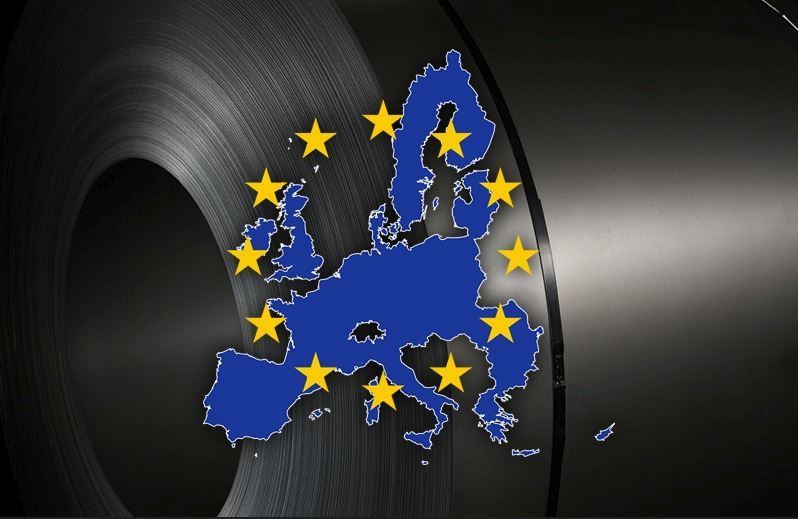
Across long and flat steel products, prices in Europe remain broadly stable with a slight upward bias, varying modestly by country. Rebar is assessed at €680–730/t EXW in Italy, €700–720/t EXW in Spain, and €665–700/t CPT in Germany. In the flat steel segment, hot-rolled coil is offered in the €700–710/t range in Germany and Italy, while galvanized and CRC products continue to hold above the €800/t level. Plate prices in the European market have stabilized around €760–770/t EXW, with rising slab costs and energy-related pressures providing additional support to pricing levels.
On the import side, competitive pressure remains evident across the European market. Turkish-origin HRC offers, including anti-dumping duties, are reported at €620–630/t CFR Italy, while Indian material remains the most competitive source at €580–600/t. Algerian-origin products are positioned at a higher segment, around €725–740/t DDP Italy. Rising Asian slab prices at $600–620/t CIF Europe continue to lift the overall cost base, particularly in plate and flat steel segments. In wire rod and SBQ, anticipated price increases of approximately €100/t are expected to exert further upward pressure on downstream product pricing, with this trend likely extending through the second half of the year.
The upcoming TRQ framework, expected to enter into force on 1 July, is set to significantly reshape import dynamics from a trade policy perspective. The system is projected to reduce total import quotas by approximately 47% compared to 2024 levels, while increasing out-of-quota tariffs from 25% to 50%. As country-specific quota allocations are finalized, domestic market pricing is expected to become more aggressive, although ongoing uncertainty continues to maintain a cautious stance among buyers. Against this backdrop, third-quarter contracting is likely to reflect tighter supply conditions and a firmer pricing environment.
The Tube & Wire exhibition held in Düsseldorf between 13–17 April did not materialize the widely anticipated price increase momentum in the European steel market. While many participants expected producers to revise offers upwards during the event, prices remained broadly stable, and in some cases producers continued to offer discounts under competitive pressure. Nevertheless, underlying market conditions continue to reflect weak demand and persistent uncertainty, which constrain pricing power. The European Union’s increasingly stringent trade defense mechanisms, CBAM-related cost uncertainties, and the forthcoming TRQ system have collectively contributed to a slowdown in import flows. In this context, many buyers have postponed purchasing decisions due to carbon cost exposure and unclear quota allocations, while exporters increasingly highlight the growing complexity and unpredictability of supplying the European market.
Overall, despite weak demand conditions, rising costs, trade barriers, and supply constraints continue to limit downside flexibility in European steel pricing, supporting expectations of a tighter market structure in the second half of the year.





Comments
No comment yet.