


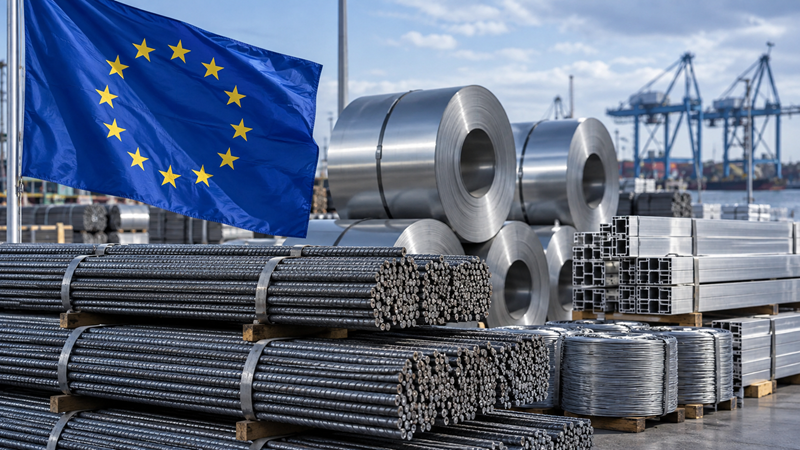
The European Parliament’s plenary has approved its negotiating position on the proposed changes to the EU Carbon Border Adjustment Mechanism (CBAM) by 464 votes in favour, 50 against and 159 abstentions.
MEPs supported expanding the scope of CBAM beyond basic materials to include finished steel and aluminium products such as fasteners, wires, springs and household items. Parliament called for a broader list of products to be covered than the one proposed by the European Commission.
The text also introduces an exemption for electricity flows from non-EU countries used by grid operators to ensure the stability of the electricity network.
Rules to be tightened against CBAM circumvention
Parliament called for a lower threshold for treating minor modifications to products as violations, with the aim of preventing companies from avoiding CBAM obligations through small changes to imported goods.
The rules should only target practices specifically designed to circumvent CBAM and should not affect ordinary business decisions aimed at reducing companies’ costs.
MEPs also proposed allowing the European Commission to apply default emissions values based on the product’s actual country of origin when a specific form of circumvention is identified.
A safeguard measure that would allow certain products to be temporarily excluded from CBAM during price shocks was rejected. Instead, Parliament called for a mechanism to temporarily direct CBAM revenues to sectors affected by price increases in the relevant products.
The proposals also include a simplified reporting system and technical assistance framework for least developed countries. An option to deduct carbon credits under Article 6 of the Paris Agreement from CBAM obligations was removed from the text.
Temporary decarbonisation fund proposed for 2027-2029
The European Parliament also adopted its position on the proposed Temporary Decarbonisation Fund, which is intended to support EU producers operating in export markets, with 433 votes in favour, 97 against and 146 abstentions.
MEPs called for financial support from the fund to be available throughout the 2027-2029 period rather than starting only in 2028.
They also called for all downstream companies using CBAM-covered products as production inputs to be eligible for support from the fund. Instead of returning unused revenues to member states, Parliament proposed directing them towards the EU’s international climate finance commitments under the Paris Agreement.
CBAM rapporteur Mohammed Chahim said the compromise adopted by Parliament would close loopholes in the mechanism, strengthen measures against circumvention and expand the scope of covered products.
Pascal Canfin, rapporteur for the Temporary Decarbonisation Fund, said the measure would support European producers in export markets where carbon pricing is not applied and provide a solution for sectors affected by high fertiliser costs.
The European Parliament will now begin negotiations with EU member states to agree on the final text of the legislation.





Comments
No comment yet.