


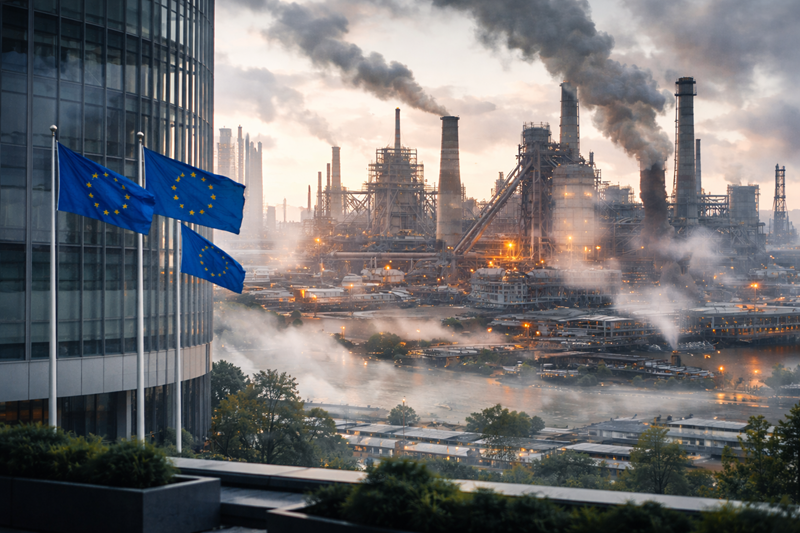
A new study has revealed that the European Union’s (EU) Clean Industry Initiative, aimed at reducing pollution from heavy industry, has been transformed into a “Dirty Industry Deal” under pressure from major industrial lobbies. The Brussels-based Corporate Europe Observatory (CEO), which conducted the research, recorded over 750 meetings between EU officials and lobbyists from 26 February 2025 to 3 February 2026, noting that this has effectively turned the Clean Industry Initiative into a subsidy mechanism for Europe’s largest polluters.
The CEO report stated: "One year later, it is clearer than ever that this is more of a Dirty Industry Deal. While supporting the weakening of regulations that protect the public and the environment (known as ‘simplification’), this deal creates a series of complex mechanisms to channel money to the EU’s most polluting companies."
Heavy industry dominates lobbying activities
The study found that, across 16 departments of the European Commission, an average of more than three lobbying meetings took place per day. Of these meetings, 90% represented corporate interests, while only 8% represented civil society. The most intensive lobbying activity occurred in the office of Commissioner for Internal Market Stéphane Séjourné, with 131 meetings per year; this was followed by Commissioner for Climate Action Wopke Hoekstra, with 60 meetings. In contrast, Commissioner for the Green and Competitive Transition Teresa Ribera attended only 20 meetings, almost entirely absent. The CEO links this imbalance to business efforts to weaken environmental and worker protection requirements.
According to the report, trade associations representing Brussels-based metal and mining, steel, nuclear energy, and automotive sectors dominated meetings with EU officials. In second place was the French energy and nuclear company Électricité de France (EDF), while the automotive sector, although third in the number of meetings, had the largest financial power with 190 lobbyists and an annual lobbying budget of around EUR 15 million.
The CEO report also notes that lobbying activities are not limited to corporate influence but also serve to implement national industrial policies at the EU level, with France playing a leading role in this process.





Comments
No comment yet.