


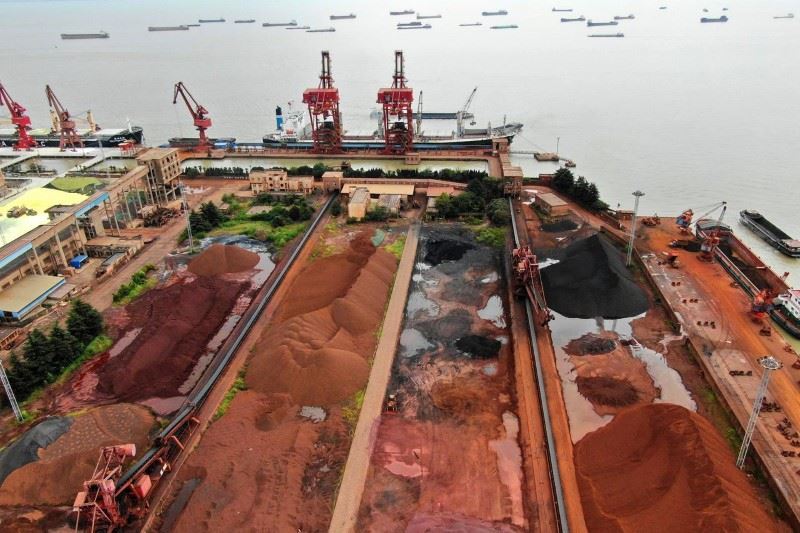
Steel production accounts for about 15% of China's carbon emissions. On Monday, the government set 2030 as the new deadline for peak emissions versus the previous 2025 target for the sector.
"This is a major adjustment on the timeline that gives more room for the steel industry to reach peak emissions on a regular basis," said researcher Mysteel analyst Xu Xiangchun.
"Hurrying to meet carbon targets can lead to excruciating economic costs," he said.
According to Fastmarkets MB, 62% of the iron fines imported into northern China are changing hands at $149.64 per tonne during morning trading, the highest level since August 31st. The metal rebounded more than 70% from the November drop with expectations of more stable growth in 2022.
Iron ore futures in Singapore rose 3.8 percent to $153 per tonne, the highest level since August 31, trading at $148.20 as of 16:20 local time.
President Xi Jinping said last month that climate goals must not compromise the supply of commodities that "ensure the normal life of the masses."
Policy change could jeopardize China's goal of achieving peak emissions by 2030, according to Greenpeace East Asia analyst Li Shuo.
“Traditional sectors like steel will need to peak much sooner to make room for sectors like transportation that are still developing.”




Comments
No comment yet.