


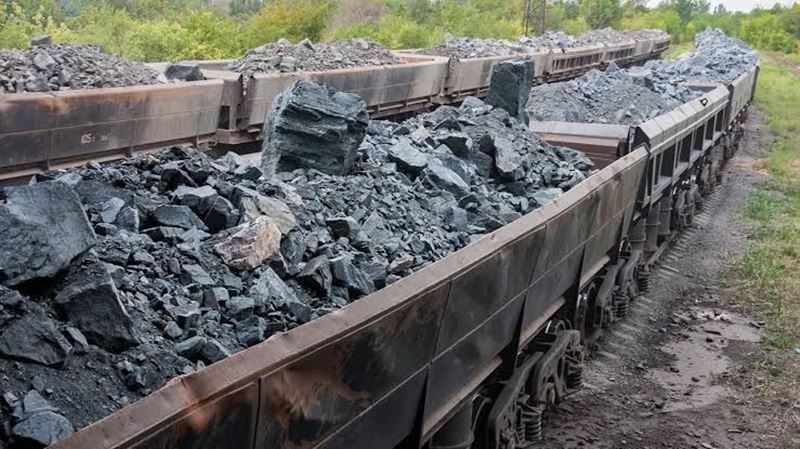
Beijing's trade policies and green steel strategy are seen as developments that could reshape the long term balance of Australia's iron ore industry, the country's largest export sector.
The new leadership teams at BHP and Rio Tinto, the world's two largest publicly listed mining companies, are facing China's policies aimed at increasing its influence over steel production and the iron ore supply chain. One of the key priorities for BHP's new CEO Brandon Craig and Rio Tinto CEO Simon Trott will be navigating China's evolving strategy toward the sector.
Australia produces around 900 million tons of iron ore annually, making the sector critical to the country's economy, with around %70 of production exported to China. Iron ore remained Australia's largest export in 2025, generating AUD 121 billion (USD 85 billion).
China increases pressure in contract negotiations
Through the China Mineral Resources Group, established in 2022, Beijing aims to centralize iron ore imports and strengthen the bargaining power of domestic steel producers. As part of this strategy, the company has reportedly suspended purchases of certain products from BHP and Fortescue during ongoing contract negotiations.
China is also seeking to conduct import payments in yuan and use Chinese reference prices instead of international benchmark indices for pricing.
One of the main reasons behind Beijing's approach is the profitability gap between mining companies and steel producers. BHP's iron ore business has an EBITDA margin of %62, while Rio Tinto and Fortescue each report margins above %50. In contrast, many Chinese steel producers continue to struggle with profitability due to weak market conditions and excess capacity.
Although this pressure has not yet had a significant impact on the financial performance of mining companies, market participants believe pricing pressure could intensify during each round of annual contract negotiations.
Green steel transition could reshape iron ore demand
Alongside its pricing policies, China is accelerating investments aimed at reducing carbon emissions from its steel industry. Most steel production is still based on coal fired blast furnaces, and the sector accounts for around %9 of global greenhouse gas emissions.
While many green hydrogen projects in Western countries have been delayed or scaled back due to high costs, China has designated green hydrogen as a strategic industry under its latest Five Year Plan. According to Rystad, China's green hydrogen investment reached USD 3.7 billion last year, nearly double the level recorded in the United States.
China is also incorporating the steel industry into its emissions trading system, exposing coal intensive steel producers to carbon costs.
Demand for high grade iron ore may increase
As direct reduced iron (DRI) production becomes more widely adopted for green steel manufacturing, demand is expected to shift toward higher grade iron ore. Current technologies generally require iron ore with at least %67 iron content, while Australian iron ore averages around %62. Some Fortescue products contain less than %60 iron.
In contrast, the Simandou iron ore project in Guinea, jointly developed by Rio Tinto and partners, is expected to supply significantly higher grade ore.
NeoSmelt project gains importance
To enable the use of lower grade ore in low carbon ironmaking, BHP and Rio Tinto are collaborating with BlueScope Steel, Mitsui Iron Ore Development, and Woodside Energy on the NeoSmelt pilot project. The initiative aims to develop technologies capable of converting lower grade iron ore into low emission iron.
However, achieving commercial scale remains one of the industry's biggest challenges.
Greater use of scrap could reduce iron ore demand
According to industry experts, China's efforts to expand electric arc furnace production and increase scrap steel usage could significantly reduce iron ore demand.
Currently, scrap based steel accounts for around %10 of China's total steel production, compared with around %70 in the United States.
If China raises its scrap usage ratio to %50, approximately 400 million tons of primary steel production could be replaced by scrap based production, eliminating demand for around 640 million tons of iron ore annually. Rising demand from fast growing markets such as India is not expected to fully offset this decline.
Miners shift toward new growth opportunities
In response to these developments, BHP, Rio Tinto, and Fortescue are expected to accelerate investments in decarburization, strengthen cooperation with Chinese steelmakers, and diversify their business portfolios.
At BHP, copper overtook iron ore last year to become the company's largest EBITDA contributor for the first time, while Rio Tinto continues to expand its investments in lithium, copper, and aluminum.
Analysts believe China will continue to rely on Australia's low cost iron ore supply in the short term. However, they also note that green steel and recycling focused policies could significantly reshape the structure of the global iron ore trade over the longer term.




Comments
No comment yet.