


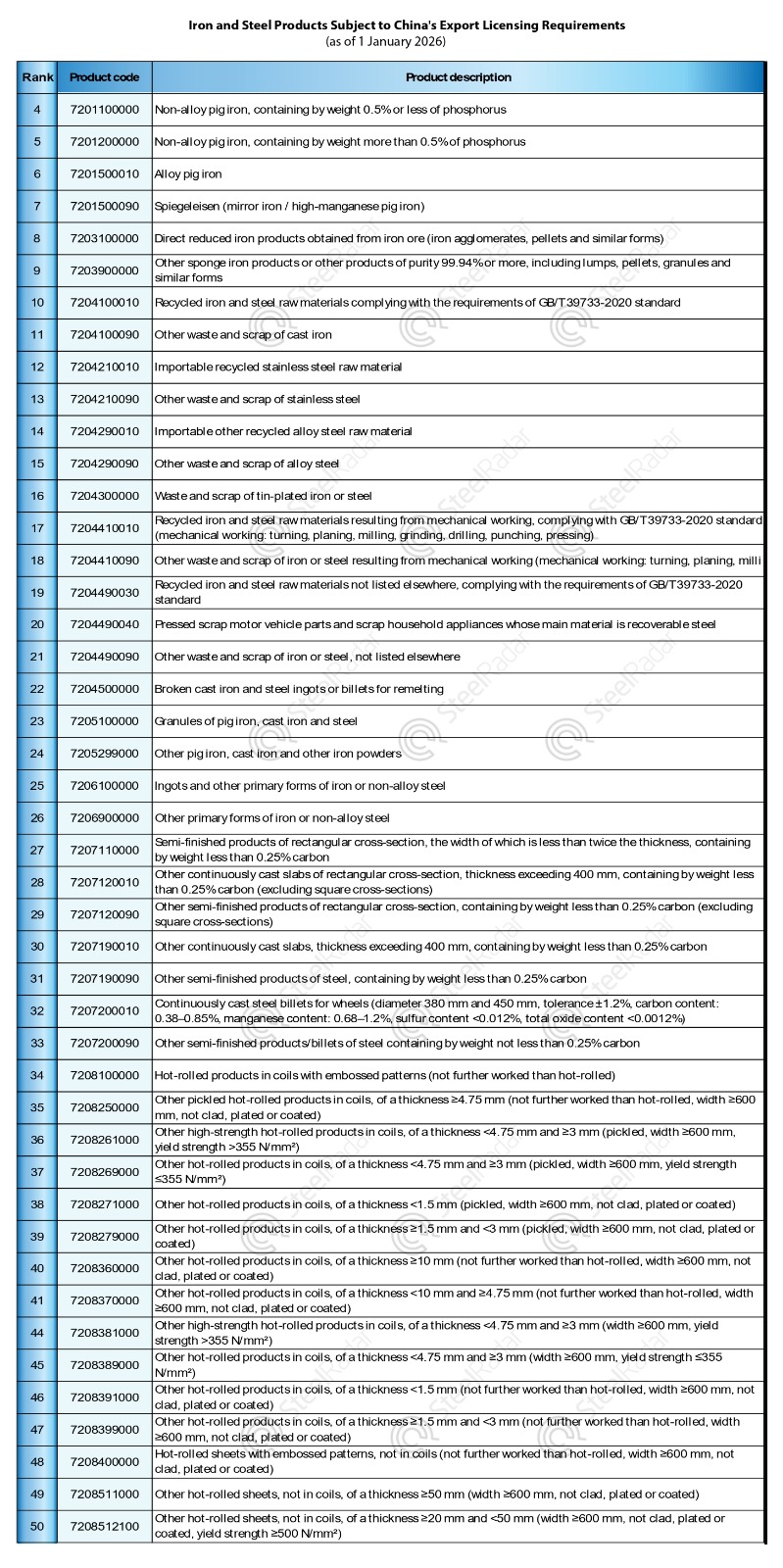
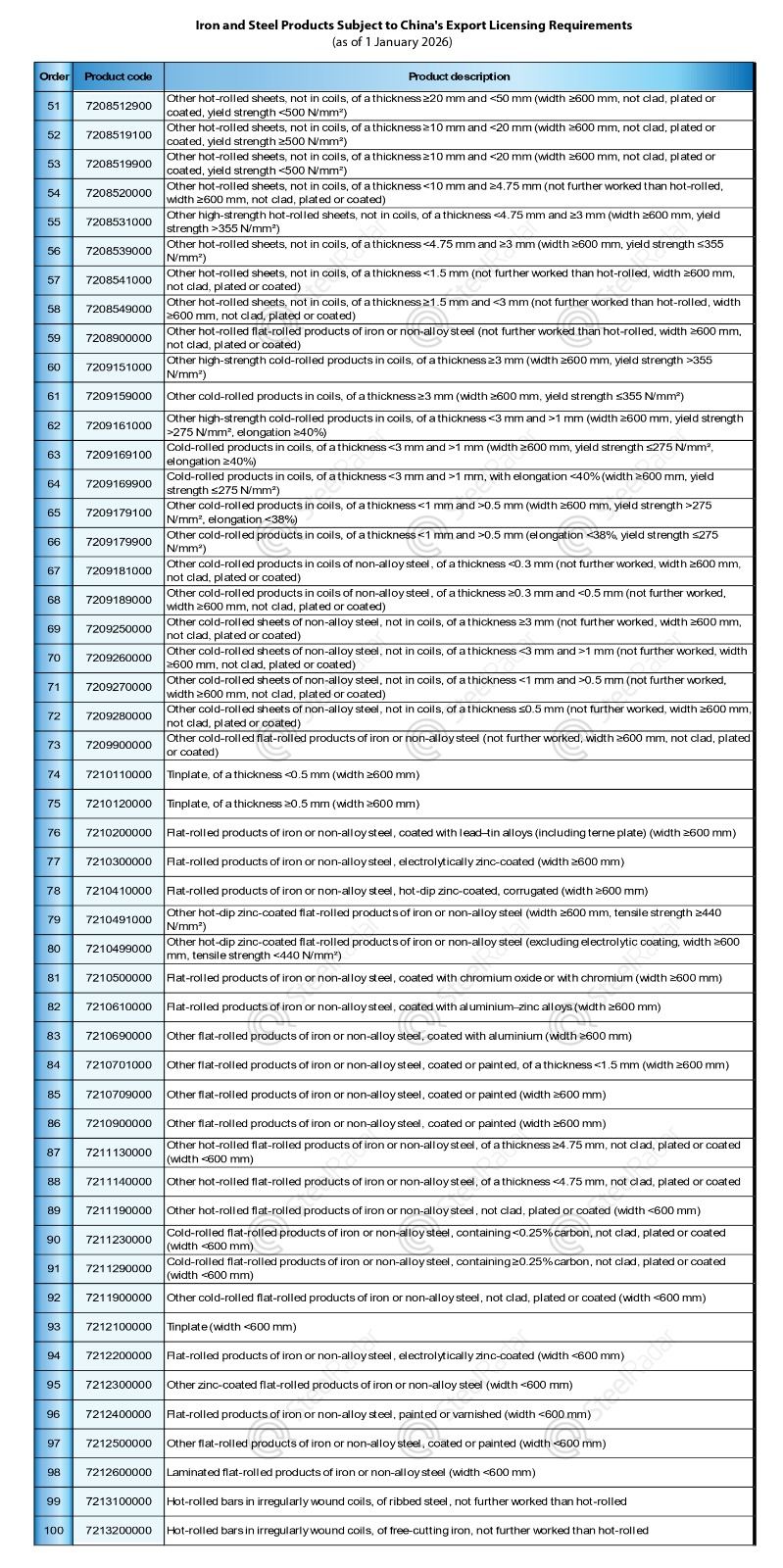
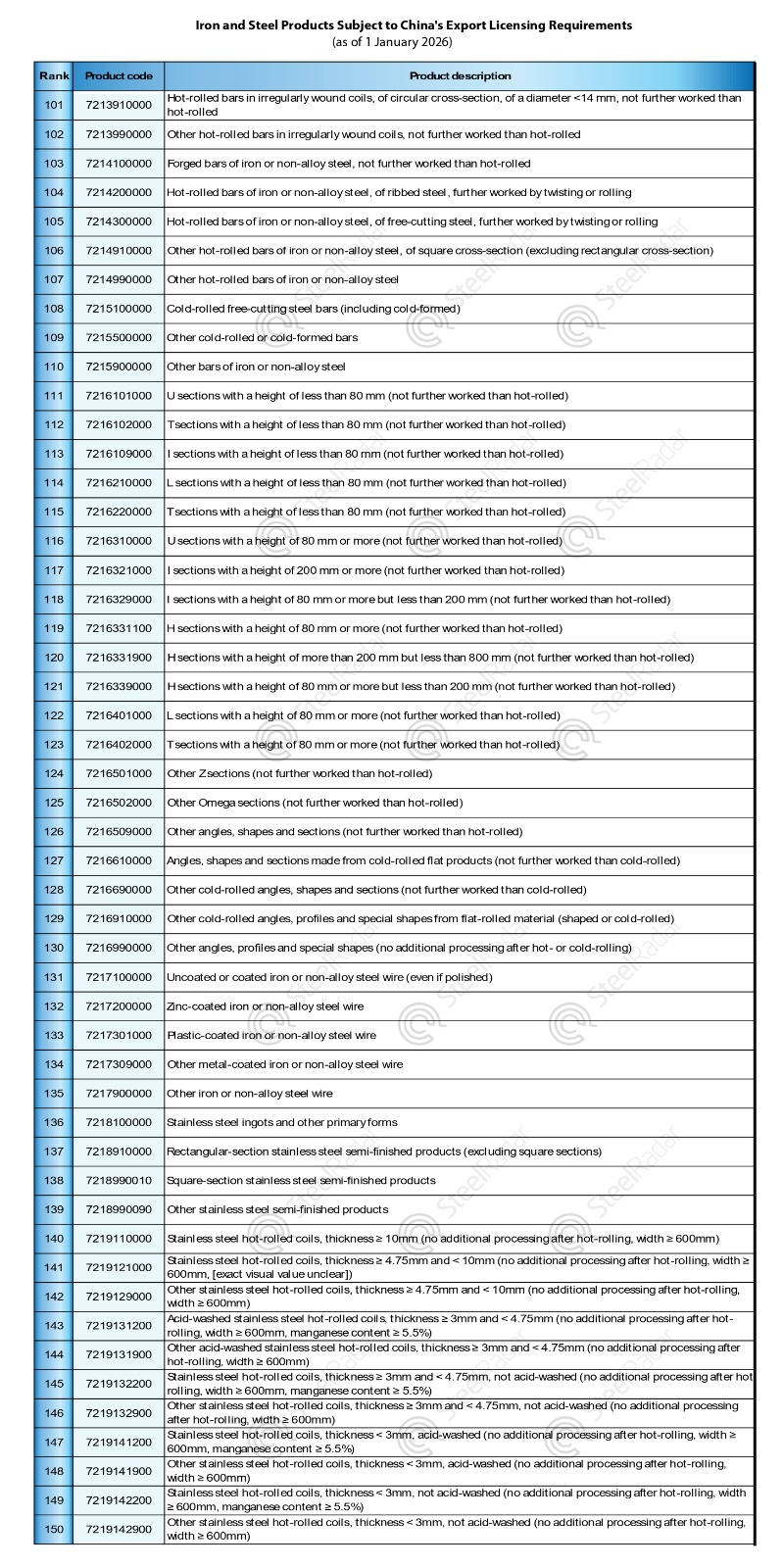
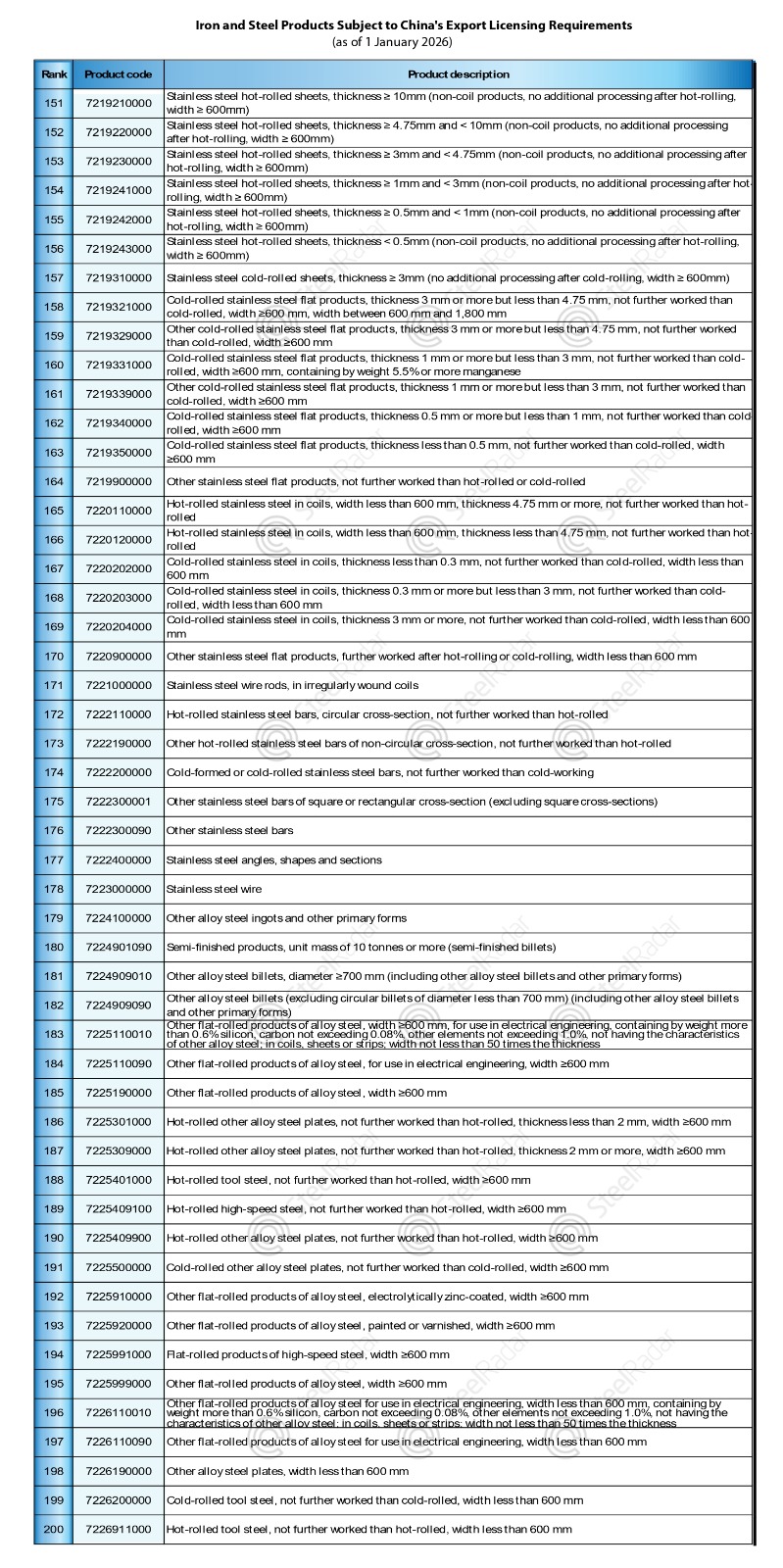
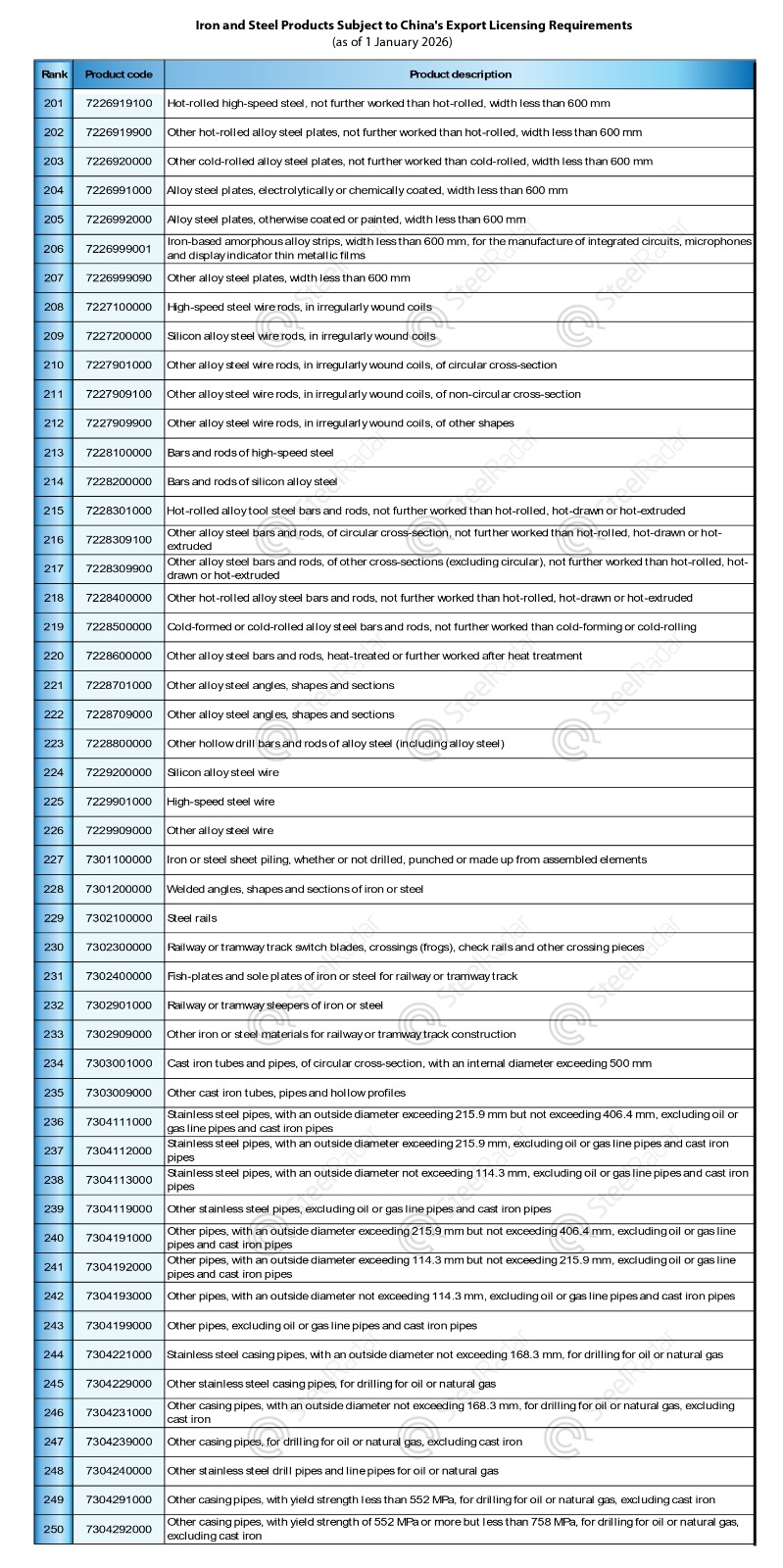
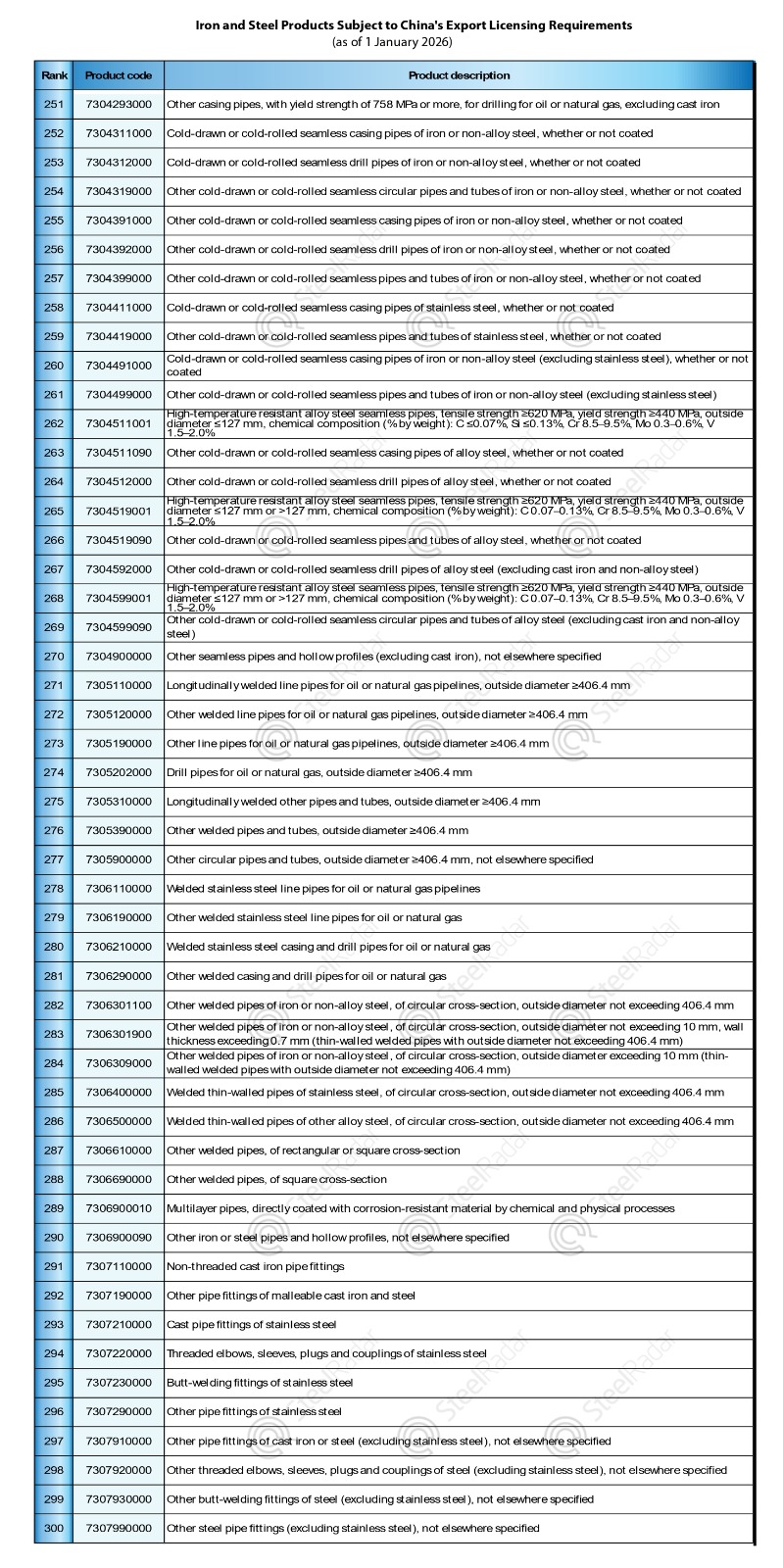
The decision was taken within the framework of relevant legislation, primarily the Foreign Trade Law of the People’s Republic of China, the Regulation on the Administration of Import and Export Commodities, and the Measures for the Administration of Export Licences. Accordingly, amendments were made to the Catalogue of Goods Subject to Export Licence (2025), and certain steel products were added to the list. Details of the products brought under the licence requirement are provided in the annex.
Under the new regulation, foreign trade companies exporting these products will be required to apply for an export licence based on the export contract and a product quality inspection certificate issued by the manufacturer. Licences will be issued by the Ministry of Commerce and provincial-level commerce authorities within their respective jurisdictions. In addition, authorised commerce authorities in certain sub-provincial cities, including Shenyang, Changchun, Harbin, Nanjing, Wuhan, Guangzhou, Chengdu, and Xi’an, will also be able to issue licences.
Licence applications submitted by enterprises under the supervision of the State-owned Assets Supervision and Administration Commission of the State Council in Beijing will be processed directly by the Licence Bureau of the Ministry of Commerce. Applications from other enterprises will be reviewed through the commerce authorities of the provinces or authorised sub-provincial cities where they operate. Matters not covered by the regulation will be handled in accordance with Announcement No. 65 of 2024 jointly issued by the Ministry of Commerce and the General Administration of Customs.
China’s move to introduce export licences is widely seen as an effort to strike a balance between the country’s strong steel export performance in recent years and mounting pressures in global trade. As the world’s largest steel producer, China increased its steel exports by 6.7% year on year to 107.72 million metric tons in the January–November period of 2025, indicating that annual export volumes remain close to record levels.
Meanwhile, weak domestic demand stemming from the long-struggling real estate sector has pushed exports to become the primary outlet, prompting many countries to adopt measures aimed at protecting their domestic steel industries. Countries arguing that low-priced Chinese steel is distorting markets have recently introduced anti-dumping investigations, additional duties, and various trade restrictions.
The list of certain steel products subject to export licence administration is as follows:



Comments
No comment yet.