


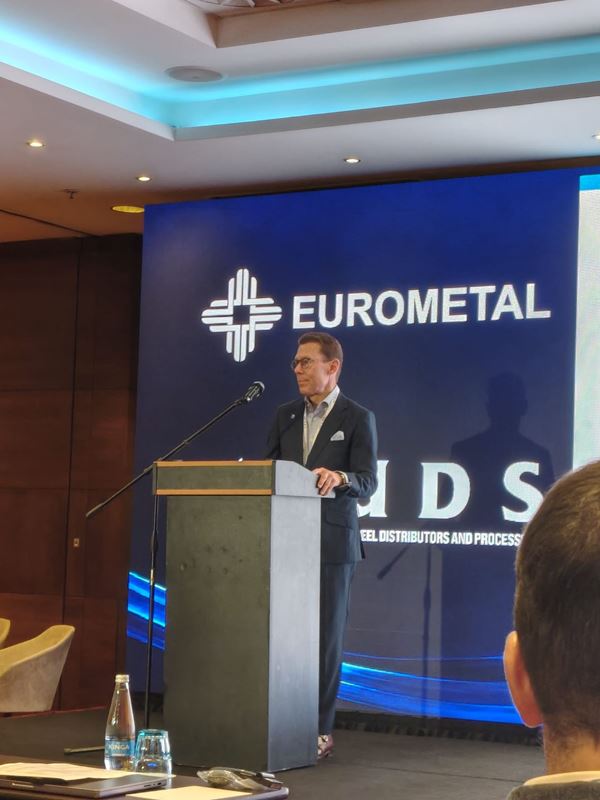
Mellor emphasized that since the beginning of the year, the sector has faced geopolitical instability, energy disruptions, protectionism, freight volatility, and changing trade dynamics, noting that these developments have been reshaping steel flows and market sentiment.
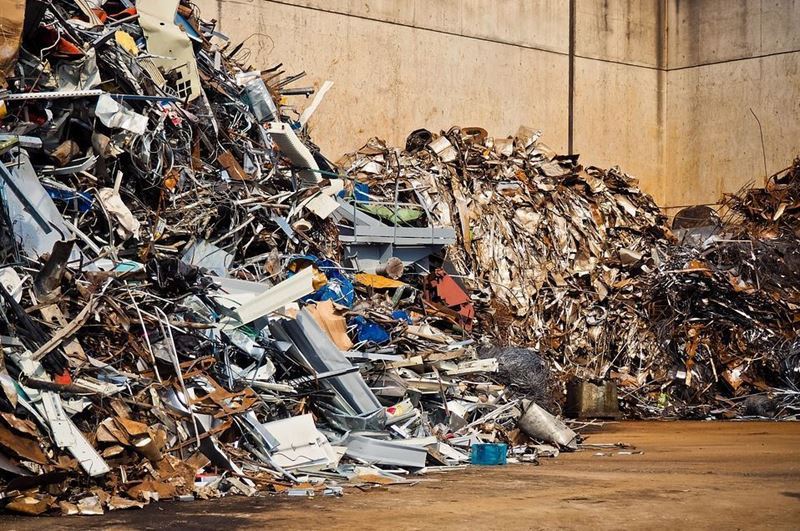
Mellor stated that recycled steel is no longer viewed merely as a secondary raw material, but has become the resource at the center of truly green steel. He stressed that the industry must adapt to structural changes, arguing that the recyclers of the future will not simply be raw material suppliers but partners positioned at the very heart of the global steel industry. He further insisted that the steel industry will increasingly be shaped by recycled steel.
Signals from the future: construction, automotive, and artificial intelligence
Speaking during the session titled “Recycled Steel: The Driving Force of the 2050 Steel Industry?”, futurist Tom Cheesewright said that current signals in the market are confusing. While electric arc furnace production and demand for advanced electrical steel continue to grow, he pointed out that global disruptions caused by conflicts and tariffs are occurring at the same time.
In his presentation, Cheesewright focused on three key areas. Referring to the construction sector, he explained that some countries with rapidly declining populations are rebuilding existing infrastructure rather than launching new projects, while countries experiencing rapid population growth are striving to expand infrastructure quickly. He added that countries such as India require more infrastructure but do not want to build it using outdated technologies.
Regarding the automotive sector, Cheesewright stated that fewer new vehicles are expected to enter the market as cars continue to exceed their anticipated service lives. As a result, he said that the automotive sector will become a declining source of recycled steel in volume terms. He added that a greater focus on quality will make recycling processes more challenging, although he does not expect a wholesale shift toward aluminum.
On artificial intelligence, Cheesewright stated that the technology is already bringing significant changes to steel production and cited the example of ArcelorMittal. He noted that the company has reduced the time required to bring a new steel formulation to market to one-fifth through the use of AI applications, optimized recycled steel procurement, and enabled greater use of lower-quality materials. He also observed that artificial intelligence is already having an impact by reducing the supply of recycled steel generated from production processes.
Following the presentation, Mellor stated that recyclers often focus on immediate concerns such as freight rates, trade flows, and market volatility, but emphasized that structural changes of this nature could redefine the entire industry over the next 25 years.
A new era of technology and hybrid approaches
Later in the meeting, a panel moderated by George Adams, CEO of U.S.-based SA Recycling, was held with the participation of Tom Cheesewright, Adam Szewczyk, Head of Data Management at the World Steel Association, Sanjay Mehta, President of MTC Business and the Material Recycling Association of India, and Denis Reuter, Chief Operating Officer of Germany-based TSR Group.
Speaking during the panel, which focused heavily on artificial intelligence and emerging technologies, Sanjay Mehta stated that new technologies in India are not replacing the workforce but are instead being used to improve productivity and product quality. He confirmed that this hybrid approach has been adopted throughout the recycling sector.
Denis Reuter noted that his company is working to integrate artificial intelligence into sorting activities within its shredding operations and highlighted the areas where AI is delivering the greatest benefits.




Comments
No comment yet.