


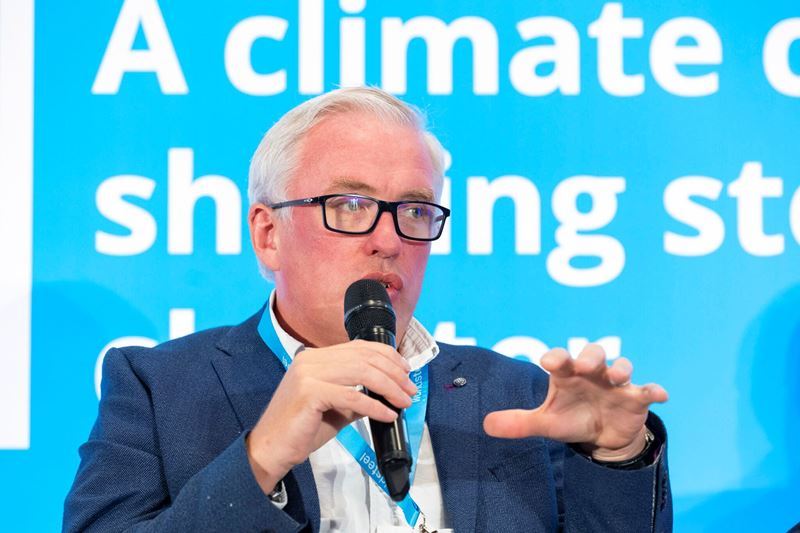
Speaking at the World Steel Association Open Forum 2026, Ben Kinder stated that financing and risk management are critical to achieving the global steel industry’s decarbonization goals.
Kinder noted that the global green transition requires average annual investments of $9.2 trillion in physical assets, emphasizing that the biggest bottleneck in the process is not a lack of technology or ambition, but the effective mobilization of capital. He also stressed that risk transfer markets must evolve in a way that provides greater stability and reduces volatility.
Highlighting the key technologies driving the steel sector’s decarbonization journey, Kinder pointed to hydrogen-based direct reduced iron (H-DRI), carbon capture and storage (CCS), electric arc furnaces (EAFs), and green iron trade. He noted that these technologies require substantial capital investment and, in many cases, have not yet reached full commercial maturity. Recalling that global crude steel production amounts to approximately 1.9 billion tons per year, Kinder stated that investment momentum cannot accelerate without the establishment of reliable risk frameworks.
Commenting on the approach of financial institutions toward emerging technologies, Kinder said that technologies without long operating track records, supply chains that are still under development, and long-term liability risks create significant concerns for lenders. He added that insurance mechanisms are among the key enablers that allow projects to secure financing from the concept stage through completion.
Kinder outlined three key strategies for the steel sector: adopting value chain-based rather than project-based risk assessments, involving insurers from the earliest stages of feasibility studies and site selection, and placing risk management at the center of investment planning.




Comments
No comment yet.