


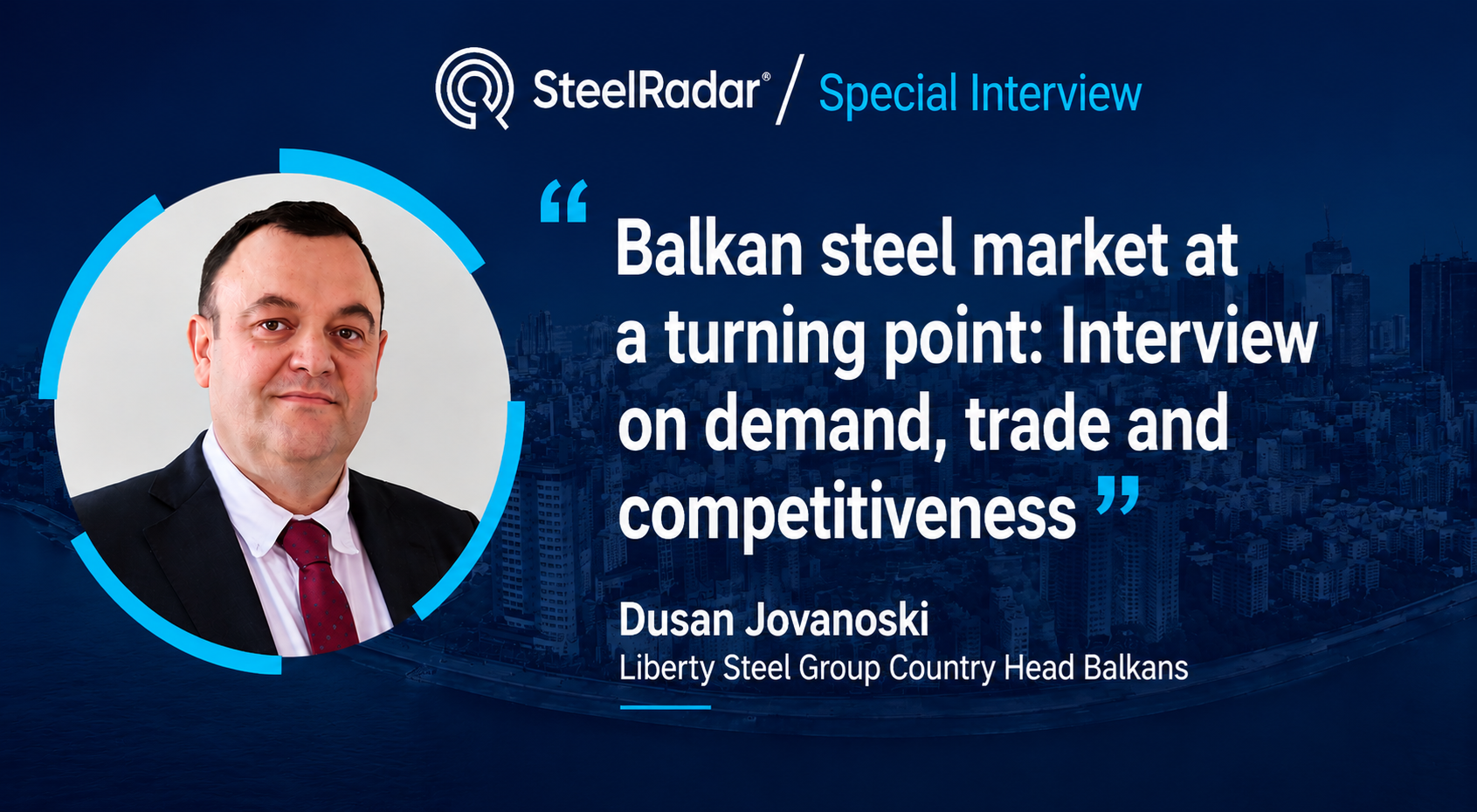
“EU and non-EU countries in the Balkan steel market will increasingly diverge”
As trade measures, CBAM, energy costs and decarbonisation investments reshape competitive conditions in the European steel market, Balkan countries are also being directly affected by this transformation. In particular, regulatory differences between EU and non-EU Balkan countries are leading to an increasingly visible divergence in sourcing and purchasing strategies.
Speaking to SteelRadar, Dusan Jovanoski, Liberty Steel’s Sales Manager for the Balkans, assessed current market conditions in North Macedonia and the Balkans, purchasing behaviour, Türkiye’s position in the region and decarbonisation. Jovanoski said he does not expect 2027 to be an easy year for the industry, adding that companies capable of adapting quickly to the new market structure from commercial, operational and technological perspectives will be in a stronger position.
First of all, could you tell us about yourself?
Throughout my 12 years of experience in the steel industry, including roles at ArcelorMittal and Liberty Steel Group, I have had the opportunity to work across different markets and closely follow the structural changes taking place in the European and Balkan steel industries. For the past five years, I have served as Sales Manager for the Balkan region. This combination of commercial and strategic experience has given me a broad perspective on the development of the regional steel market and the challenges faced by producers, traders and customers.
Western Balkans could become an alternative market
How do you assess the current steel market in North Macedonia and the Balkans? What do you see as the main factors currently affecting demand and prices?
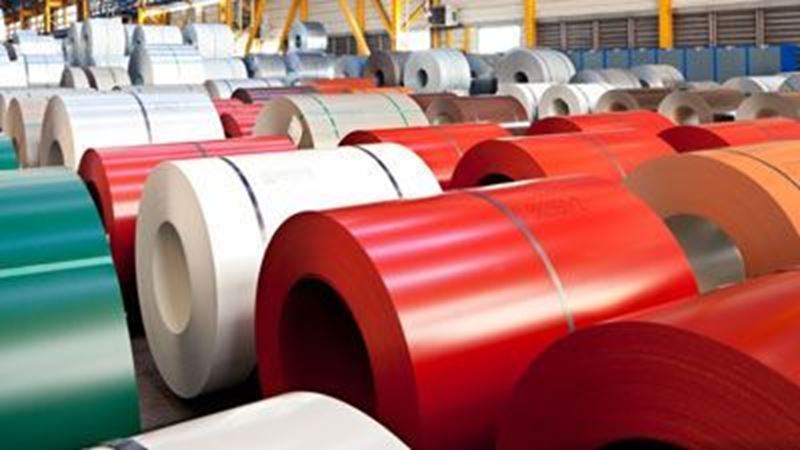
Although North Macedonia is a relatively small market, its position within the regional steel industry is more important than its domestic consumption might suggest. The country has important steel producers operating in both flat and long products. Liberty Skopje is a significant producer of coated and cold-rolled flat products, while Makstil is one of the leading producers of quarto plate. Dojran Steel operates in the long products segment.
The presence of these producers makes an important contribution to steel demand and industrial activity in Macedonia. However, due to limited domestic consumption, a significant share of production is exported, making the country highly exposed to developments in the broader Balkan and European markets.
One of the characteristics of the Macedonian market is its relatively open trading environment. Depending on the product and origin, companies can import from third countries without facing the same level of trade restrictions applied in the EU, such as anti-dumping measures or quotas. As a result, suppliers from China, Türkiye, Ukraine and other origins play an important role in the market.
For the time being, this has contributed to relatively stable supply and demand conditions across Macedonia and the wider Western Balkans, including Serbia, Bosnia and Herzegovina, Albania, Kosovo and Montenegro. However, I believe the market is approaching an important turning point.
The new EU steel trade regime, which entered into force on 1 July 2026, introduced an annual duty-free quota of 18.3 million tonnes for covered steel products, while volumes exceeding the quota are subject to a 50% duty. This represents a significant change in Europe’s trading environment.
The implications for the Balkans could be considerable. Suppliers that lose or face restricted access to EU markets will naturally look for alternative markets. Due to its geographical proximity, logistical advantages and relatively open trading environment, the Western Balkans represent a natural alternative market. Türkiye, in particular, is likely to strengthen its presence in the region.
This additional competition could put downward pressure on prices even at a time when certain production, energy and logistics costs continue to rise. As a result, price movements in the Balkans may increasingly diverge from developments in EU markets.
Inventories and speculation influence purchasing behaviour
What changes have you observed in buyers’ purchasing behaviour recently? Are companies restocking, or are they purchasing mainly according to short-term requirements?
Another important development is the difference in purchasing behaviour between EU and non-EU Balkan countries.
The Balkan market is effectively divided between EU member states and non-EU countries, and purchasing patterns are increasingly diverging due to their different regulatory environments. CBAM and the new EU steel quotas have had a particularly strong impact on purchasing decisions in countries such as Greece and Bulgaria, which are important markets for Turkish suppliers.
Ahead of the implementation of CBAM, we saw significant speculative purchasing. Customers with sufficient financial capacity increased their inventories substantially. In some cases, they purchased enough material to cover six to twelve months of projected requirements. A similar situation occurred before the introduction of the new quota system in the third quarter of 2026.
Therefore, apparent demand during certain periods was stronger than underlying consumption would suggest. In reality, part of this increase was driven by inventory accumulation and speculation rather than genuine growth in end-user demand.
This distinction is very important when assessing the market. Higher shipments do not necessarily mean higher consumption. In some cases, demand was simply brought forward as customers sought to secure material ahead of regulatory changes.
Financing is one of the main challenges to decarbonisation
Sustainability and decarbonisation are becoming increasingly important in the European steel industry. How do you think this transformation will affect competitiveness, investment requirements and trade for steel producers and processors in the Balkans?
Decarbonisation will be one of the biggest structural challenges facing the Balkan steel industry over the next decade.
The direction is clear. Traditional blast furnace/BOF production is coming under increasing pressure, while electric arc furnaces (EAF), DRI and other low-carbon technologies are becoming increasingly important. European producers are already undertaking major transformation projects. According to EUROFER’s 2026 industry report, there are 20 EAF projects representing a total capacity of 44.1 million tonnes and 13 DRI projects representing 26.9 million tonnes of capacity for the 2026-2030 period, although some projects remain on hold.
For the Balkans, the main challenge is that the financial capacity of many countries and companies is significantly more limited compared with the major economies of Western Europe. Governments are generally not in a position to support greenfield EAF-DRI investments on the same scale seen in some developed EU markets.
This creates a serious competitiveness issue. Producers in non-EU Balkan countries may face rising costs due to CBAM, quotas, carbon requirements and the broader transition towards low-carbon production, while not having access to the same level of financial support available to EU producers.
At the same time, EU producers are increasingly protected by Europe’s trade policies. The new EU Steel Regulation is clearly designed to protect the European steel industry from the effects of global overcapacity and trade diversion.
Therefore, having a free trade agreement with the EU alone may not be sufficient to guarantee long-term competitiveness. Countries such as North Macedonia and Serbia may have preferential market access, but producers will still need to address fundamental issues such as energy costs, carbon intensity, technology and investment.
Energy is particularly important in this context. The European steel industry continues to identify high and volatile electricity prices as one of the biggest obstacles to industrial competitiveness, electrification and decarbonisation.
For Balkan producers, access to competitively priced energy could become one of the key factors determining which companies remain competitive in European markets.
Türkiye remains among North Macedonia’s strong suppliers
Türkiye is one of North Macedonia’s important steel suppliers. How do you assess the current steel trade between Türkiye and North Macedonia?
Türkiye is already one of North Macedonia’s important trading partners in steel, and I expect this relationship to remain important.
Turkish steel producers have a particularly strong position in hot-rolled coil (HRC), including supplies to tube producers and steel service centres. Their competitiveness is supported by attractive pricing and well-established logistics to the Balkan region.
However, it is important to correctly understand who Turkish steel is competing against. In many cases, the main competitor for Turkish producers is not European producers but imports from China, which can be even more aggressive in terms of pricing.
This is particularly important in Macedonia and other non-EU Balkan markets, where purchasing decisions remain highly price-sensitive. As a result, lower-cost suppliers from China and Türkiye remain in a strong position.
At the same time, domestic producers continue to play an important role. In Macedonia, Liberty Skopje holds an important position in supplying coated products to the local market alongside imported material. This creates a market structure in which domestic production, European supply and competitively priced third-country imports coexist.
Geopolitical tensions affect costs and supply chains
How are wars, political tensions and economic uncertainties around the world affecting the steel industry in North Macedonia and the Balkans?
The geopolitical environment has also become an important factor for the steel industry. Wars, political tensions, sanctions, trade restrictions and economic uncertainty have a direct impact on production costs and supply chains. Energy prices, freight costs, raw material availability and logistics conditions can be affected very quickly by geopolitical developments.
For Balkan producers, this creates an additional competitiveness challenge. Countries that cannot secure energy at competitive prices may find it increasingly difficult to compete with producers in regions where energy and other input costs are lower.
Therefore, the issue is no longer simply whether demand exists. It is becoming increasingly important whether producers can manufacture and deliver steel at a competitive total cost while meeting increasingly stringent environmental and trade requirements.
“Product availability will be almost as important as price”
Looking ahead to the remainder of 2026 and towards 2027, what are your expectations for steel prices, demand and overall market conditions in North Macedonia and the Balkans?
Looking ahead, I expect the steel market to increasingly diverge between EU and non-EU countries.
In EU markets, I expect prices to receive stronger upward support as a result of the new trade measures, more restricted import opportunities and, hopefully, an improvement in underlying demand. The EU’s latest steel data illustrate how challenging the recent period has been: although European steel demand has started to show a limited recovery, production has fallen to record-low levels while imports have captured an unprecedented share of the market.
However, the situation in non-EU Balkan markets could become much more complex. Producers that lose part of their traditional EU markets may redirect volumes towards neighbouring countries, increasing competition and placing additional pressure on prices. Therefore, price and demand trends may not move in the same direction across the entire region.
Despite this, I expect real demand to improve gradually. Government-supported infrastructure projects are likely to provide an important source of consumption, particularly in countries where construction and infrastructure investment have remained relatively weak in recent years.
Another important development will be how customers adapt to the new EU quota and CBAM environment. I expect buyers’ purchasing strategies to become increasingly sophisticated. We may see restocking increase towards the end of quota periods, followed by very rapid customs clearance and purchasing activity when new quota periods open. In this environment, production reliability and timely delivery will become increasingly important. Product availability will be almost as important as price.
At the same time, some customers will continue sourcing from third countries and accepting the risks associated with quota duties because the price difference between European and imported steel can be extremely high. For certain products and under certain market conditions, the difference can reach EUR 300-400 per tonne. This is a gap that many customers cannot ignore.
The regulatory framework is also still evolving. The EU is reviewing the scope of the new Steel Regulation, with the Commission expected to complete its assessment by the end of 2026. Implementation of the “melt and pour” requirement will add another layer of complexity to international steel supply chains, particularly where raw materials and semi-finished products pass through multiple countries.
CBAM also entered its definitive implementation phase on 1 January 2026. Carbon costs are therefore no longer merely a future regulatory issue but are becoming a tangible commercial factor. In August 2026, the European Commission continued to update technical parameters for implementation, including default values for the definitive period.
“2027 will come with new challanges and opportunites”
Overall, I believe the Balkan steel market is entering a new era. For many years, price, availability and logistics were the main factors determining purchasing decisions. Going forward, trade policies, carbon intensity, quota availability, energy costs and the origin of raw materials will become equally important.
For Balkan producers, the biggest challenge will be maintaining competitiveness while investing in decarbonisation and adapting to an increasingly protectionist and more heavily regulated European market.
For buyers, the key challenge will be balancing price with security of supply and regulatory risk. For producers, success will increasingly depend on operational efficiency, reliable delivery, competitive energy costs, technological investment and the ability to quickly understand and adapt to changing trade rules.




Comments
No comment yet.