


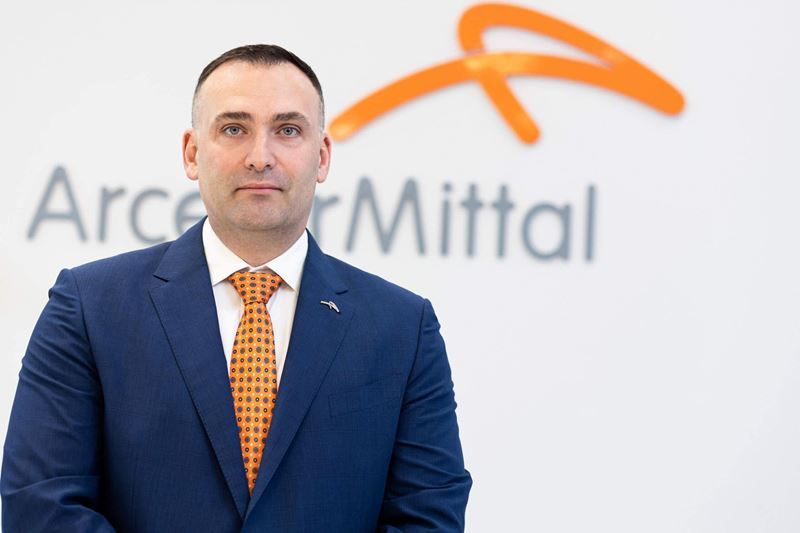
Longobardo listed the challenges facing Ukraine’s steel industry, stating that Russian attacks ranked first, followed by the cost and predictability of electricity supply.
The statement noted that Ukrainian industry continues to face significantly higher electricity costs compared with its competitors in the European Union. Longobardo emphasized that Ukrainian industrial companies continue to pay substantially more for electricity than their EU counterparts.
According to the statement, the share of energy in steel production costs has increased significantly, while electricity and natural gas accounted for around 40% of ArcelorMittal Kryvyi Rih’s cost structure, nearly three times higher than in 2020.
Electricity prices reached USD170/MWh in August
The statement noted that electricity prices temporarily declined in the second half of August due to lower electricity demand in Ukraine. The decline in demand was attributed to production facilities being taken offline after being destroyed or damaged by Russian attacks.
ArcelorMittal Kryvyi Rih paid an average CPT electricity price of $170/MWh in August, while prices are expected to increase to higher levels during the winter months.
Call for changes to long-term electricity auctions
The statement noted that long-term electricity contracts introduced by the Ukrainian government are expected to reduce the risk of price volatility. However, it said that the majority of the initial auctions were won by traders.
According to the statement, this outcome demonstrates that the current model used for long-term electricity auctions needs to be revised so that final consumers can also benefit from the mechanism.
The CEO emphasized that Ukrainian industry should be able to purchase electricity months in advance at competitive prices, calling for amendments to Cabinet of Ministers Resolution No. 499 to establish an effective mechanism for long-term electricity auctions.
Five-point proposal for regulatory changes
Mauro Longobardo outlined five proposals to make long-term electricity auctions more effective:
- Increasing the volume of electricity offered in special bilateral contract auction sessions from the current 0.5–2% level to a level that would allow fair price formation in the long-term market,
- Setting the starting price at the weighted average day-ahead market price of the previous period and applying a discount of at least 30%,
- Removing the minimum participation requirement or reducing it to two participants,
- Revising contract performance guarantees to prevent sellers from determining the guarantee amount at their own discretion,
- Setting the minimum size of auction lots at 50–60 MW.
Longobardo also expressed hope that the government would implement these changes rapidly ahead of the winter, warning that delays would increase pressure on producers, employees and industrial regions.




Comments
No comment yet.