


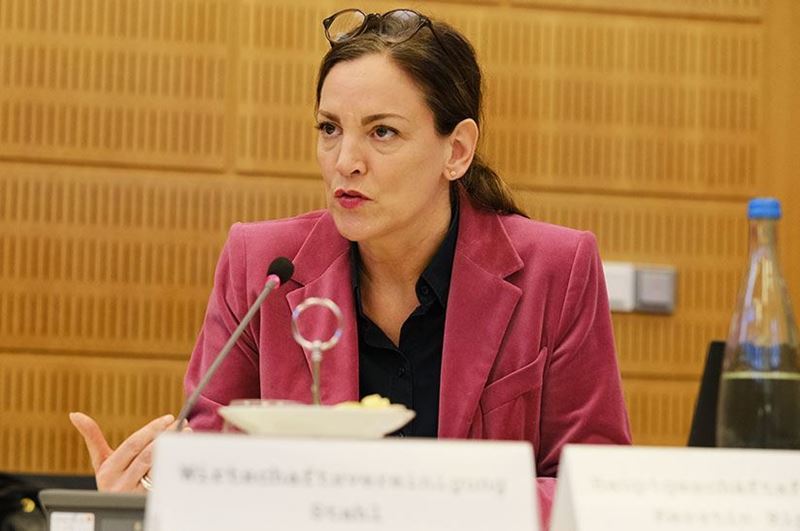
The association pointed out that the discussion held at the European Parliament’s Committee on Industry, Research and Energy (ITRE) is taking place at a critical juncture. According to WV Stahl, the commitments made under the Steel and Metal Action Plan (SMAP) have not yet been reflected in the recently unveiled Industrial Accelerator Act (IAA).
WV Stahl emphasized that, in particular, the linking of sustainability requirements with binding "Made in EU" criteria must be explicitly incorporated into the draft legislation.
WV Stahl CEO Kerstin Maria Rippel stated, "If the political commitment to the European steel industry is to be taken seriously at all, these pledges must be backed by legislative measures. Promises to this effect were made last year by Commission President Ursula von der Leyen and Chancellor Friedrich Merz. Now, these words must be followed up with concrete legislation."
Stating that the steel industry in Germany and Europe is facing an existential threat, Rippel expressed that the Industrial Accelerator Act could serve as a powerful signal from Brussels. She noted that the act could be utilized to define steel as a strategic sector and to establish a lead market for low emission, EU-produced steel.
Addressing the current discussions surrounding the IAA, WV Stahl warned that different policy instruments should not be conflated. The association noted that advanced regulations such as the ongoing negotiations on a new trade instrument following safeguard measures should not be used as a pretext against binding "Made in EU" criteria within the framework of the IAA.
"Trade defense instruments and 'Made in EU' criteria have distinct and complementary objectives," Rippel assessed. "Trade defense instruments are necessary to limit the impact of the uncontrolled growth of global steel overcapacity. Meanwhile, 'Made in EU' requirements support the investments that will strengthen the competitiveness of companies operating in the EU. Playing these two instruments off against each other would be a grave strategic mistake."
WV Stahl stressed that the proposed IAA must combine sustainability criteria with clear "Made in EU" requirements. The association requested that the scope of implementation be limited to the EU-27 and EFTA countries, and that investments in European value creation be strengthened in a targeted manner.
Concluding her remarks, Rippel stated, "If Europe wants to protect its industrial base, steel must be recognized as the backbone of strategic value creation not only in market discussions but also in legal texts. The right roadmap was laid out a year ago with the Steel and Metal Action Plan. What is needed now in Brussels and Berlin is strategic foresight and political courage during the implementation phase."



Comments
No comment yet.